
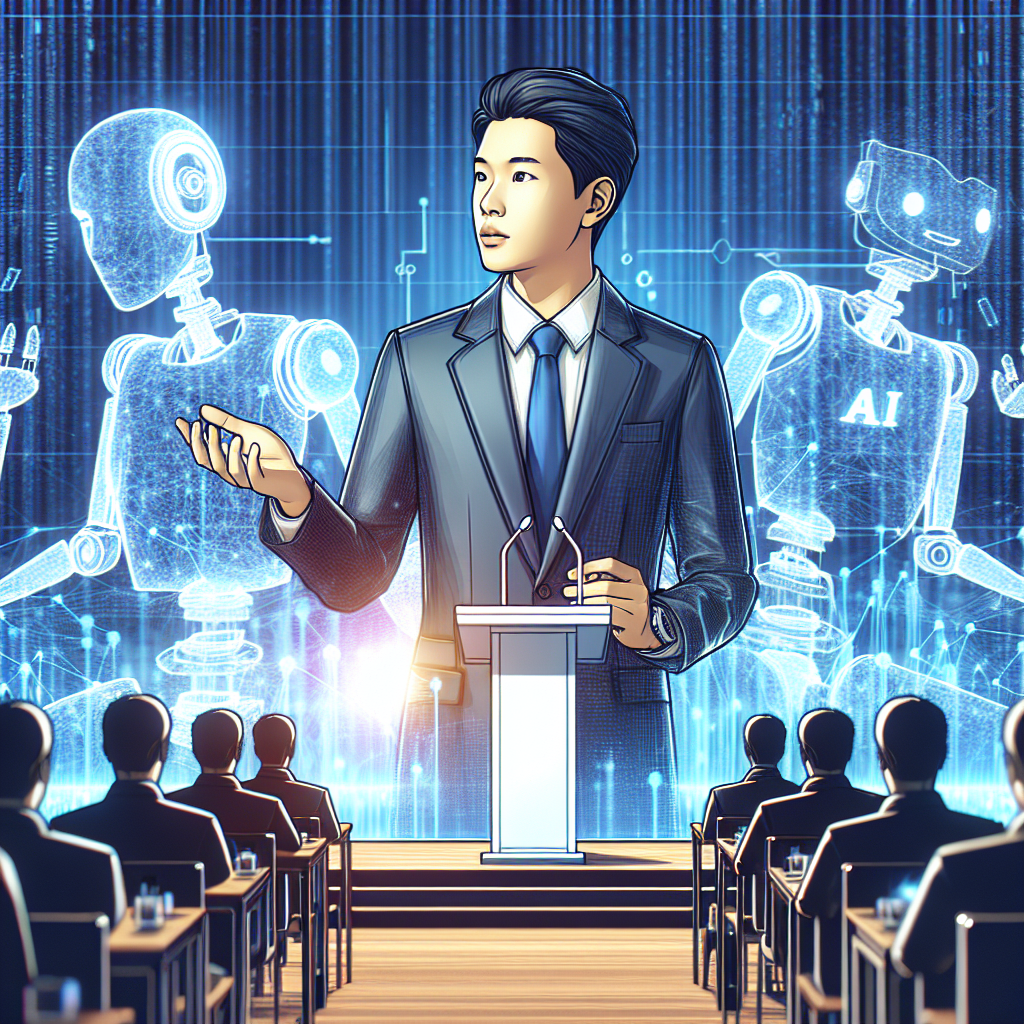
Nvidia’s Jensen Huang Warns AI May Replace Jobs Without Innovation
The AI Revolution: A Double-Edged Sword
Artificial Intelligence (AI) is rapidly transforming industries across the globe, but not without raising major concerns. Nvidia CEO Jensen Huang recently addressed the darker side of this technological advance—massive job displacement if innovation doesn’t keep pace. During a recent event, Huang stressed that while AI presents extraordinary opportunities, it also poses significant risks to the global workforce.
“AI will inevitably automate a wide range of tasks,” Huang stated, cautioning against complacency. Without a parallel wave of creativity, entrepreneurship, and upskilling, society may face economic challenges stemming from increased unemployment.
AI’s Impact on the Job Market
AI is already integrated in countless sectors including finance, healthcare, retail, logistics, and even creative industries. While most companies welcome AI for its efficiency and scalability, its rapid adoption has prompted questions about long-term human job security.
Key trends shaping the AI job market include:
- Automation of repetitive, rule-based tasks
- Growth in demand for AI-skilled workers and data scientists
- Decline in traditional roles such as clerical support and assembly line work
- Emergence of hybrid roles involving AI oversight and human intuition
What’s most alarming is how fast the transition is happening. Roles that once required human judgment and decision-making are now being augmented—or replaced—by intelligent systems.
Jensen Huang’s Perspective: Innovation as a Lifeline
As the head of Nvidia, one of the world’s leading AI hardware companies, Huang is at the center of the AI revolution. His recent comments emphasize the need for human-driven creativity and reinvention to buffer the disruptive impact of AI.
“Innovation is the antidote to job loss,” said Huang, highlighting the pivotal role of education, startups, and digital literacy in reshaping the future labor market. He suggested that the next generation of job creators will be those who effectively use AI as a tool rather than a replacement.
To survive and thrive in an AI-dominated future, Huang recommends:
- Investing in STEM education and AI literacy
- Fostering entrepreneurial ecosystems
- Encouraging governments and institutions to support reskilling initiatives
- Creating roles that AI can’t easily replicate—jobs that require empathy, strategy, and innovation
What Roles Are Most At Risk?
Experts forecast that low to mid-skill roles are most vulnerable to automation. These include jobs in manufacturing, customer service, and data entry. However, Huang warns that even white-collar jobs aren’t immune as large language models (LLMs) and advanced neural networks evolve.
Sectors facing significant disruptions include:
- Administrative Services: AI can already manage calendars, data input, and task scheduling
- Finance: Robo-advisors and AI auditing tools are reducing the need for human intermediaries
- Journalism: Content generation models are capable of producing articles and summaries
- Healthcare: Diagnostics, imaging, and patient monitoring are increasingly automated
While these changes can lead to cost reduction and operational efficiency, they also point to the critical need for workforce reallocation and reeducation.
Opportunities in the Age of AI
Despite the concerns, Huang remains optimistic about the opportunities AI can bring—if individuals and systems are willing to adapt. The key is creating new industry verticals where human creativity is enhanced, not replaced, by artificial intelligence.
Promising job sectors include:
- AI Ethics and Compliance: Ensuring responsible and unbiased AI applications
- Human-AI Interaction Design: Developing intuitive tools to improve user experience
- AI Maintenance and Training: Monitoring and refining machine algorithms
- Creative Fields: AI-assisted content creation, music production, and digital art
- Environmental Tech: Using AI for climate modeling and sustainable practices
Moreover, startups leveraging AI-as-a-service (AIaaS) are emerging rapidly, offering tools and platforms that allow smaller businesses to compete with enterprise-level companies—unlocking entirely new economic ecosystems.
The Importance of Collaborative Efforts
Huang’s message isn’t just a call to tech companies—it’s a wake-up call for governments, academic institutions, and businesses to collaborate on building inclusive AI strategies. Without joint action, the skills gap will widen, leaving a significant portion of the workforce behind.
Strategic action steps include:
- Incentivizing companies to invest in employee reskilling programs
- Integrating AI and data science into public education curriculums
- Supporting startups and small businesses to innovate with AI tools
- Establishing regulatory frameworks for responsible AI usage
Nvidia’s Role in Shaping the AI Future
Nvidia plays a central role in the evolution of AI. Its GPUs fuel data centers, AI research, robotics, autonomous vehicles, and edge computing. However, Huang is quick to point out that hardware alone won’t solve the AI-job dilemma.
To that end, Nvidia is investing heavily in developer tools, AI training platforms, and collaborative software to encourage innovation at all levels—from hobbyists to enterprise developers. The company runs programs to promote ethical AI practices and open-source development that democratize access to cutting-edge technologies.
Final Thoughts: Innovation Over Replacement
The rise of AI shouldn’t signify the fall of human employment. Instead, it’s a crossroads—a moment where strategic innovation must replace stagnation. Jensen Huang’s candid warning is a timely reminder that while automation is unavoidable, its consequences don’t have to be dire.
By investing in innovation, upskilling, and ethical development, society can pivot AI from a job destroyer to a powerful economic enabler. The companies and countries that lead this transition will be those that don’t just build better AI—but build better systems around it to empower people.
In this new era, creativity, adaptability, and a commitment to learning will be the most valuable currencies.