
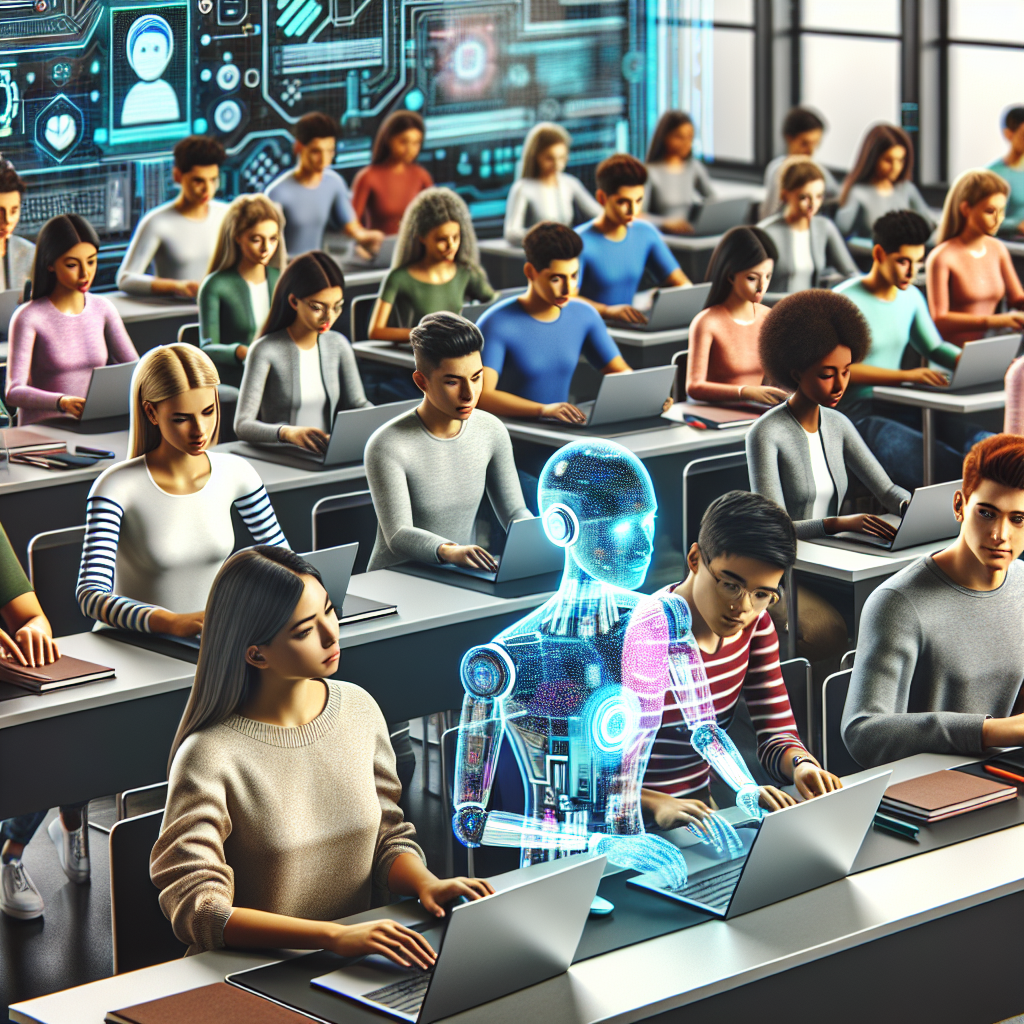
Revolutionizing Education: How One Teacher Uses ChatGPT for Maximum Classroom Efficiency
As artificial intelligence rapidly reshapes industries, educators are discovering innovative ways to keep up. In this digital age, one forward-thinking educator is leading the way by successfully integrating ChatGPT into her classroom—enhancing both productivity and learning experiences.
Meet Lindsey Biggs, a 5th-grade teacher at The Agnes Irwin School in Pennsylvania, who has embraced AI as a functional teaching assistant. While AI continues to stir debate in education, Biggs is proving how tools like ChatGPT can revolutionize classroom management, planning, and engagement.
Why Teachers Are Turning to AI Like ChatGPT
Educators are perpetually stretched for time—balancing lesson planning, grading, and administrative tasks often leads to burnout. AI tools, particularly ChatGPT, offer a way to reduce these burdens.
ChatGPT, developed by OpenAI, is a conversational AI tool:
- Capable of generating coherent, natural-sounding responses
- Efficient at content generation and summarization
- Useful for brainstorming, language assistance, and automation
With its extensive capabilities, ChatGPT unlocks new opportunities for teachers to streamline tasks and dedicate more time to connecting with students.
Inside Lindsey Biggs’ ChatGPT-Powered Classroom
Biggs began using ChatGPT in early 2023, quickly realizing its potential for transforming her workflow. Rather than replacing her expertise, she uses the technology to amplify it.
1. Efficient Lesson Planning
Lesson planning, once a time-consuming chore, now takes mere minutes. Biggs inputs prompts such as, “Design a 5E lesson plan for teaching electric circuits to 5th graders,” and receives structured responses tailored to her grade level and curriculum goals.
She uses ChatGPT to:
- Generate lesson outlines
- Create differentiated learning tasks
- Suggest classroom activities aligned with learning objectives
“It’s like having a co-teacher helping me brainstorm and refine ideas,” says Biggs.
2. Customizing Student Support Materials
Every student learns differently. ChatGPT helps Biggs adapt content to various learning styles and needs. She can quickly rewrite reading passages at different levels or produce accessible summaries for English language learners.
Examples include:
- Simplifying science vocabulary for struggling readers
- Turning dense historical content into engaging narratives
- Creating practice problems aligned with IEP goals
3. Streamlining Parent Communication
Teachers often spend hours crafting professional, empathetic email updates to parents. With ChatGPT, Biggs drafts emails based on tone and message goals, then edits for a personal touch.
She prompts the AI with instructions like: “Write a friendly email explaining a new classroom behavior policy to parents.”
This allows her to focus on transparency and consistency, without getting bogged down in email fatigue.
4. Supporting Student Creativity and Independence
Perhaps most exciting is how Biggs introduces students to AI itself. She teaches digital literacy skills by letting them interact with ChatGPT through guided prompts during writing assignments or research tasks.
Important safeguards are in place. She supervises use and emphasizes responsible AI interaction to help students understand:
- How to question biased or incomplete responses
- That AI isn’t a replacement for human thinking or research
- The importance of editing and verifying AI-generated content
The Results: Enhanced Engagement and Time Savings
Biggs reports seeing tangible changes in her teaching workflow and classroom dynamics:
- More time for one-on-one student support thanks to reduced prep time
- Higher student engagement, particularly with creative writing and inquiry-based projects
- Improved feedback loops with quicker communication to students and parents
“It’s made my teaching more thoughtful,” says Biggs. “I can evaluate what matters most and personalize learning more effectively.”
Addressing Concerns: Ethical & Practical Considerations
AI in the classroom isn’t without critics. Educators fear students might misuse AI for cheating, or that tech reliance could weaken critical thinking skills. Biggs acknowledges these concerns and implements policies to guide ethical AI usage.
Her approach includes:
- Teaching AI as a tool, not the answer
- Discussing the limitations of AI-generated content
- Encouraging students to revise and reflect on AI-assisted work
By modeling mindful usage, Biggs aims to equip students for a tech-integrated future while preserving the integrity of human learning.
How Other Teachers Can Start Using ChatGPT
Teachers curious about adopting ChatGPT don’t need to overhaul their entire approach. Biggs recommends starting small to build comfort and confidence.
She suggests:
- Using ChatGPT for brainstorming lesson ideas
- Trying it to rephrase or scaffold student instructions
- Evaluating AI results critically to maintain educator oversight
Free versions of ChatGPT are widely accessible, and schools may consider incorporating premium versions as part of edtech strategies.
Professional development in AI literacy can help bridge gaps and empower educators ready to innovate.
The Future of AI in Education
Lindsey Biggs’ classroom is a compelling model for what’s possible when educators embrace AI thoughtfully. By reshaping how teachers allocate time and interact with students, ChatGPT has the potential to elevate educational outcomes on a wider scale.
With the right training and implementation, generative AI tools could soon become as common as whiteboards—offering both teachers and students smarter, more adaptive educational environments.
In the words of Biggs: “AI isn’t taking over—it’s giving us the space to be more human in our teaching.”
As the 2025 school year approaches, educators everywhere would do well to follow her lead: blending innovation with intention to create meaningful change.