
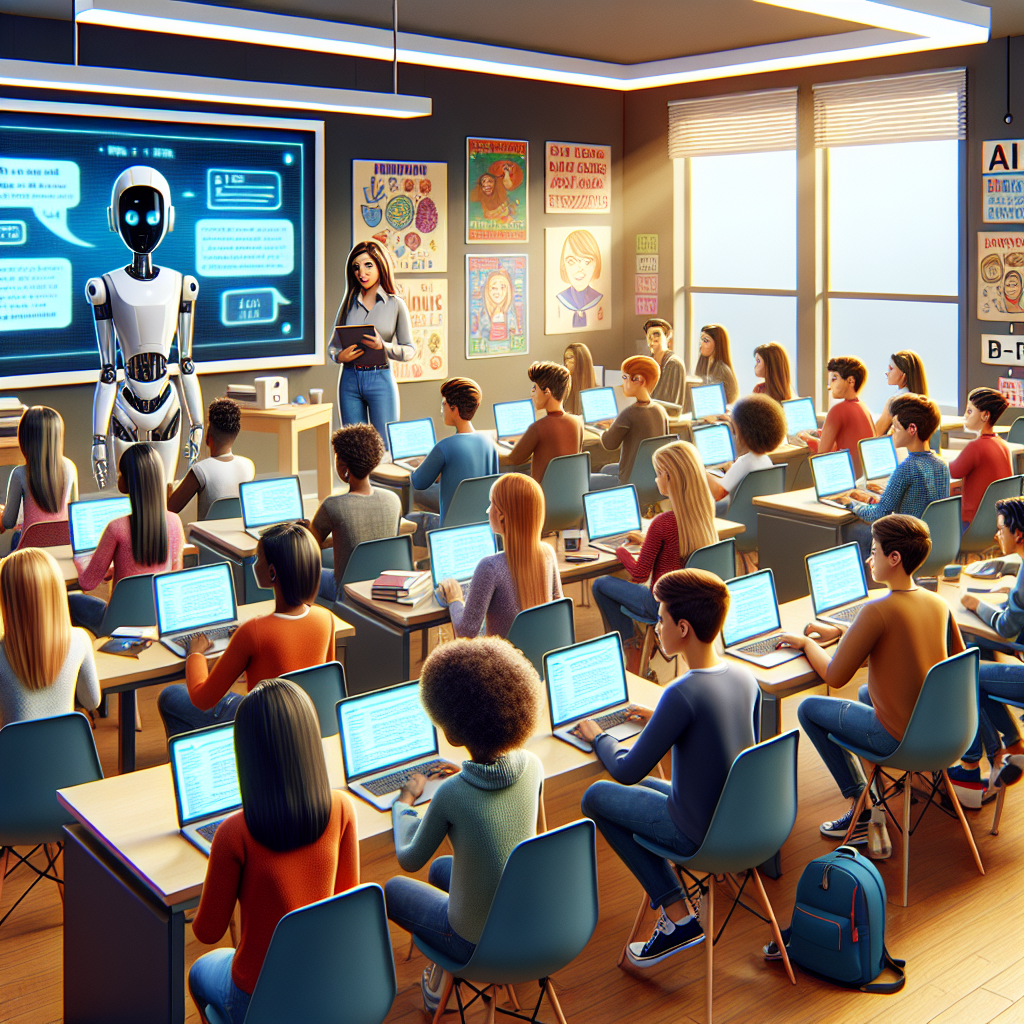
The Evolution of Creativity: How AI Is Changing the Way Writers Think and Create
Introduction: A New Creative Partnership
In a striking shift across creative industries, artificial intelligence (AI) is transforming not only how content is created—but how writers think. Once confined to science fiction, AI tools like ChatGPT, Claude, and other large language models (LLMs) are now embedded in the writing process itself, altering everything from brainstorming to editing. As academic institutions, publishing houses, and digital creators grapple with this new reality, the central challenge isn’t simply about plagiarism or originality—it’s about the redefinition of the creative process.
So how exactly is AI changing the landscape for writers? Let’s explore how this technology is influencing thought patterns, content creation methodology, and even what it means to be a writer in the 21st century.
AI as a Cognitive Companion: Rethinking Originality
AI-driven writing tools function as more than just automated typewriters or grammar checkers; they serve as cognitive partners that shape ideas before they’re even put onto paper. For many writers, especially students and professionals in fast-paced industries, AI offers an adaptable brainstorming assistant.
- Enhancing ideation: Writers now rely on AI for generating content structures, summarizing articles, or providing alternative perspectives.
- Accelerating research: LLMs can rapidly provide contextual knowledge, boosting both writing speed and quality.
- Challenging writer’s block: Instead of staring at a blank screen, creatives can ask AI to craft the first sentence or paragraph, which often sparks fresh approaches.
But with this convenience comes a deeper concern: Are writers outsourcing their most vital function—thinking?
The Line Between Inspiration and Substitution
One of the most controversial aspects of AI in writing is its blurred boundary between inspiration and substitution. While many students and professionals use AI to support their initial drafts, others rely so heavily on these tools that their own voices become diminished or unidentifiable.
This shift poses key ethical questions:
- When does AI-assisted writing become AI-generated content?
- How do academic institutions measure authentic student output when AI is used behind the scenes?
- Can storytelling maintain its emotional and cultural connection when mediated through an algorithm?
Schools and educators are especially divided. Some welcome the tool as a teaching aide to enhance comprehension and compositional confidence. Others fear a decline in critical thinking, arguing that dependence on AI limits the capacity for original analysis and nuanced interpretation.
From Process to Product: Changing Writing Habits
Traditionally, writing required iterative processes—drafting, re-writing, deep reflection, and careful editing. AI has disrupted this slow-burn model. Writers now have access to real-time feedback, grammar improvements, and even tone adjustments with a few clicks.
This enables a shift in writing habits:
- Speed over depth: Writers can produce content quickly, but sometimes at the expense of nuance and personal voice.
- Data-driven decision-making: AI can optimize headlines and keywords to boost SEO, changing not just the text but the intent.
- Template-based creativity: With LLMs providing formats and outlines, many blogs and articles now follow formulaic structures.
While these shifts can benefit industries driven by efficiency—like marketing or journalism—they may hinder the organic, often chaotic nature of creative literary writing.
New Skills for a New Era: What Writers Must Learn
As much as AI rewrites how we write, it also demands that writers develop new competencies. Instead of replacing human creatives, AI reshapes the skill sets needed to thrive in a hybrid cognitive workspace.
Here are essential skills writers are cultivating in the AI era:
- Prompt engineering: Crafting effective inputs to get quality outputs from AI systems becomes critical for productivity and originality.
- Critical editing: Writers must now review AI-generated content for coherence, factual accuracy, and tone alignment.
- Human filter application: Storytelling requires emotional resonance. Writers need to infuse AI drafts with human insight and cultural context.
In short, AI literacy is becoming just as important as grammar, structure, or vocabulary knowledge.
AI in Education: A Double-Edged Sword
High schools and universities are undergoing a pedagogical pivot. On one hand, banning AI tools has proven difficult, even futile. On the other, curriculum must now integrate AI in a way that promotes responsible usage while preserving intellectual integrity.
Many institutions are adapting by:
- Encouraging students to disclose when and how AI was used
- Designing assignments that require personal reflection or unique experience AI can’t replicate
- Teaching students ethical AI use and critical evaluation of auto-generated content
This approach fosters a philosophy where AI is embraced as a tool—not a crutch or shortcut.
Redefining Authorship: Who Owns the Words?
As AI continues to influence creative output, legal and philosophical questions around authorship intensify. If a writer uses an AI to draft half of their article, who owns the rights to that work? If generative models are trained on existing literature, do original authors deserve credit?
While legislation is still catching up, one thing is clear: standards surrounding creative ownership are evolving rapidly. Writers and creators must balance collaboration with AI against concerns of authenticity, ownership, and ethical behavior.
Future Outlook: Human + AI = Supercharged Creativity
Despite the challenges, the future of writing with AI is far from bleak. In fact, this marriage of human ingenuity and machine intelligence offers powerful possibilities.
What’s on the horizon for writers using AI?
- More nuanced, context-aware AI that understands voice, style, and emotional tone
- Increased co-writing platforms where humans and algorithms collaborate in real time
- Personalized AI tutors that support individual writing development
Far from replacing writers, AI empowers them—but only if they remain actively engaged in the creative process, rather than passive recipients of machine output.
Conclusion: Creation in the Age of Augmented Intelligence
AI is no longer a novelty in the writer’s toolkit—it’s a central partner, reshaping how stories are told, arguments are built, and messages are crafted. But even in this AI-enhanced landscape, the human element remains irreplaceable.
Voice, emotion, perspective—these are the intangible qualities that machines can mimic but never fully replicate. For writers, educators, and creatives alike, the key lies in embracing AI as a tool of augmentation—not automation. With careful balance and conscious intent, the future of writing looks more collaborative—and more creative—than ever before.