
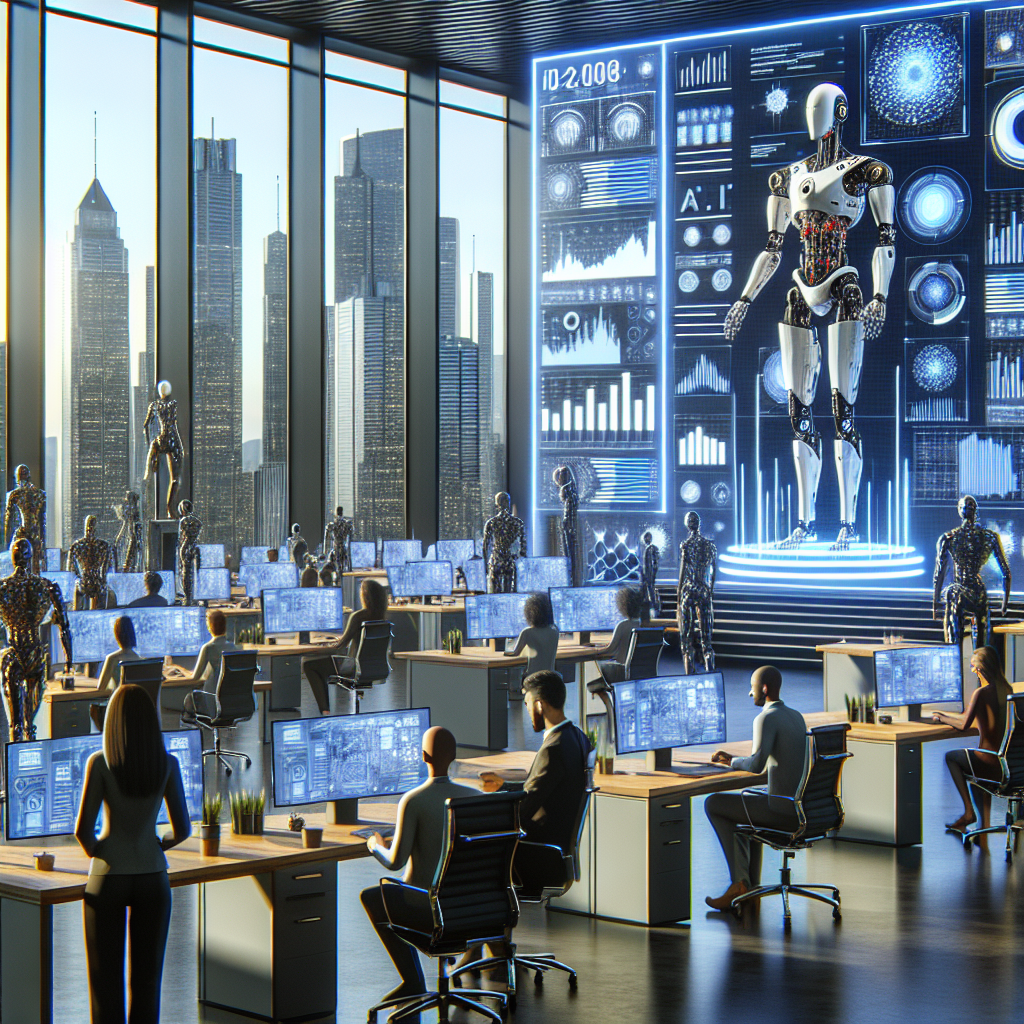
The Growing Influence of AI on White-Collar Jobs: Insights from Top Tech Leaders
Artificial intelligence is quickly reshaping the landscape of white-collar work. As AI tools become more capable and accessible, many industries are faced with a critical question: What does this mean for traditional office jobs? Top tech leaders and AI pioneers are now weighing in with projections that range from cautious optimism to significant disruption by as early as 2025.
AI’s Rapid Advancement: A Tipping Point for Office Work
Over the past year, we’ve witnessed unprecedented growth in generative AI tools such as ChatGPT, GitHub Copilot, and Google Bard. These tools can now perform tasks like writing reports, analyzing data, generating code, and even crafting presentations — functions typically handled by knowledge workers.
According to Dario Amodei, CEO of leading AI company Anthropic, we’re only scratching the surface. In a recent interview, Amodei emphasized that although AI isn’t replacing office workers en masse yet, the foundation for widespread disruption is solidifying fast.
“Today’s models are just the beginning,” said Amodei. “Within the next year or two, the capabilities of these systems will expand dramatically.”
Why 2025 Could Be a Turning Point
Amodei and other tech experts believe that by 2025, generative AI will have reached a point where it can handle more than just low-level administrative tasks. We’re looking at a scenario where AI might:
- Draft comprehensive reports without human input
- Interpret complex spreadsheets and automate analysis
- Produce usable software code from simple prompts
- Manage workflows and even perform customer service interactions
Such advancements threaten to transform or eliminate various roles in finance, human resources, law, journalism, and other predominantly white-collar sectors.
However, Full Replacement Isn’t Immediate
Despite this growing capability, Amodei is careful to point out that complete job replacement won’t happen overnight. His assessment aligns with research findings from other AI scholars and economists: while automation can take over certain tasks, it rarely eliminates entire occupations in one go.
Instead, we’re likely to see a reallocation of tasks: humans collaborating with AI to increase efficiency, rather than being rendered obsolete right away.
What Other Tech Leaders Are Saying
Amodei’s insights reflect broader concerns and predictions from industry giants. Executives at major firms like Google, Microsoft, and OpenAI are echoing similar messages — urging companies and workers alike to prepare for a “hybrid future.”
Many believe that AI will eventually become a “digital co-worker,” fundamentally enhancing how we approach work but also potentially reducing the need for certain positions.
Microsoft’s Predictions
An internal Microsoft report from early 2024 suggested that AI could automate up to 40% of the time spent on basic tasks across consulting, law, and finance. This could allow humans to focus more on strategic thinking and creativity, but also indicates which roles might shrink or shift priorities.
OpenAI’s Perspective
OpenAI has released similar forecasts. Their testing with GPT-powered tools found that many mid-level professional tasks — such as drafting legal memos or coding product features — could be significantly accelerated with AI assistance. This doesn’t directly equate to job loss but does suggest a massive shift in how work is executed.
The Skills AI Might Outpace First
Not all white-collar skills are equally vulnerable to automation. AI tends to excel in areas that involve large amounts of text, repetition, and logical structuring. Here are some of the tasks at highest risk:
- Email drafting and customer communications
- Marketing copywriting and content generation
- Data entry and financial modeling
- Routine legal documentation
- IT troubleshooting and scripting
On the flip side, AI still struggles with roles that require deep emotional intelligence, abstract reasoning, or nuanced judgment — for now. That includes leadership positions, project strategy, and interpersonal conflict resolution.
How Businesses Are Responding
Businesses across industries are not sitting idle. Many are already:
- Re-evaluating hiring strategies to include AI literacy as a key skill
- Offering internal training programs for staff to effectively leverage AI tools
- Reviewing workflows to determine where AI can be best integrated
Companies that adapt early are expected to gain a competitive edge, especially in streamlining operations and cutting labor costs. However, there’s growing concern about potential inequality between firms that can invest in AI versus those that cannot.
What Does This Mean for White-Collar Workers?
For professionals within white-collar industries, the writing is on the wall: AI is not just coming — it’s here. While the pace of adoption will vary by sector, the general trajectory points towards major skill shifts.
Experts recommend that individuals begin to:
- Upskill in areas that are AI-proof, like critical thinking, strategy, and interpersonal communication
- Learn how to use AI tools effectively to stay competitive and increase productivity
- Stay informed about policy changes and workplace rights related to AI integration
Looking Ahead: Hope or Uncertainty?
The trajectory of AI in the white-collar workplace is complex. On one hand, it offers incredible opportunities to enhance productivity and innovation. On the other, it poses clear risks for job displacement and organizational upheaval.
As Dario Amodei and other leaders continue to sound the alarm — or perhaps the wake-up call — it’s evident that waiting on the sidelines is not an option. Individuals, businesses, and policymakers must take a proactive approach in navigating the AI-driven transformation of work.
Final Thoughts
The insights from top tech leaders are not just predictions — they’re a glimpse into a rapidly unfolding future. Whether AI becomes a colleague, a catalyst, or a competitor will depend largely on how we adapt. By 2025, the impact on white-collar jobs may not be complete, but one thing is certain: the evolution is already underway.