
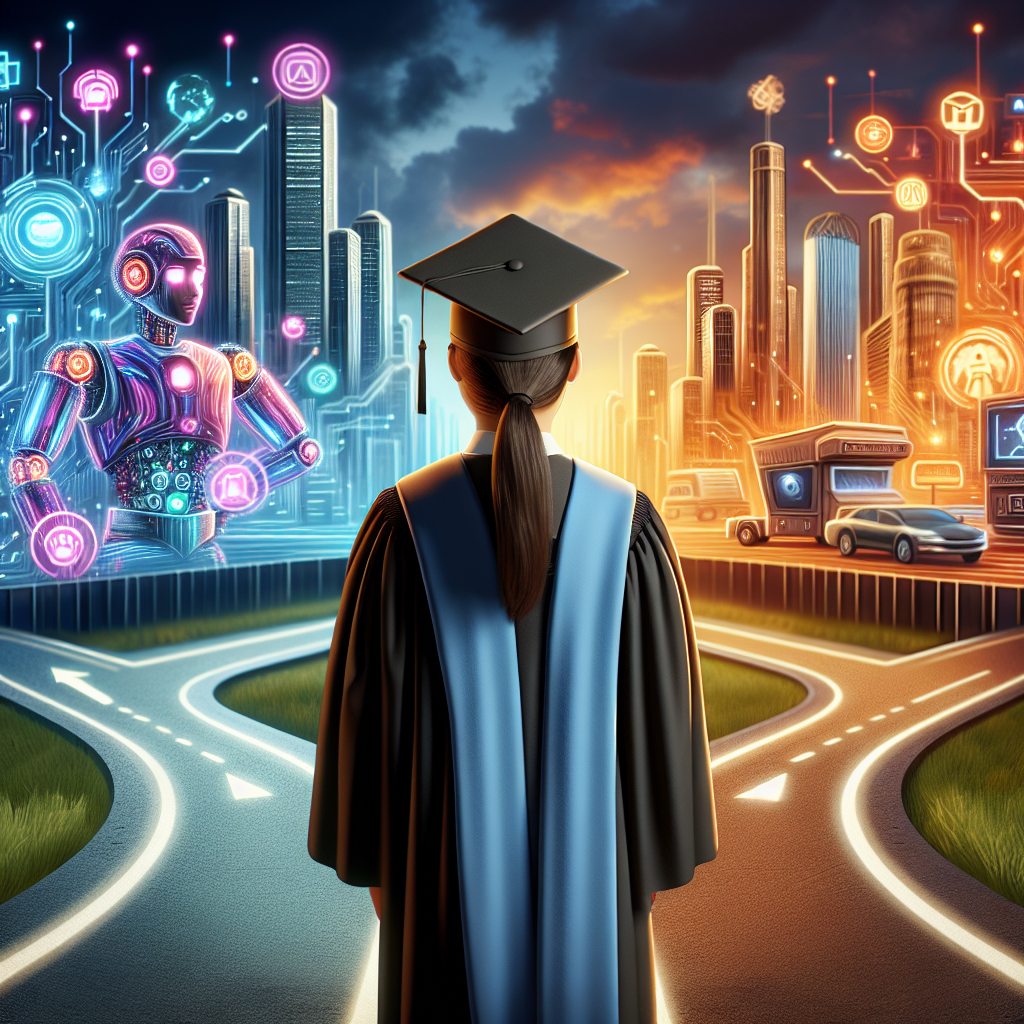
Adapting to the AI-Driven Future of Work
The rapid advancement of artificial intelligence (AI) is transforming the global workforce at an unprecedented rate. As automation becomes increasingly capable of handling sophisticated tasks, professionals across industries are rethinking how they can stay relevant and competitive.
In a recent interview with CNBC, Coursera CEO Jeff Maggioncalda shared his insights on how graduates and lifelong learners can future-proof their careers. His advice is rooted in data, trends, and years of leadership in one of the world’s top online education platforms. The crux of his message is clear: upskilling and adaptability are essential in the AI era.
Why AI Is Reshaping the Job Market
AI technologies such as machine learning, natural language processing, and robotics are rapidly evolving, creating seismic shifts in various sectors. According to a report by the World Economic Forum, it’s projected that AI will displace approximately 85 million jobs by 2025—but it will also generate 97 million new roles better suited to the new division of labor between humans, machines, and algorithms.
This shift doesn’t just affect tech companies. AI’s influence spans industries like:
- Finance: AI-driven trading and fraud detection
- Healthcare: Diagnostic tools and patient care automation
- Manufacturing: Smart factory automation and predictive maintenance
- Retail: Personalized marketing and supply chain forecasting
With so many roles at risk of being automated or fundamentally changed, professionals must focus on skills that humans uniquely offer.
Coursera CEO’s Top Tip: Develop Human-Centric Skills
Jeff Maggioncalda emphasized one key takeaway: build uniquely human capabilities. While AI can analyze data and perform repetitive tasks, it still lacks certain core human attributes. According to Maggioncalda, learning to excel in these competencies gives you a significant edge.
Here are the top human-centric skills Maggioncalda believes are critical:
- Emotional Intelligence (EQ): The ability to recognize, understand, and manage emotions is vital in leadership, teamwork, and customer relations.
- Creative Thinking: AI struggles with originality. Human creativity will remain crucial in areas like design, innovation, storytelling, and strategy.
- Judgment and Problem-Solving: Sound decision-making, especially in ambiguous situations, is something machines still cannot replicate.
- Ethical Reasoning: As AI raises questions about bias, privacy, and automation, professionals who understand ethics will be in high demand.
- Adaptability: The job market is evolving fast. Those who can embrace change and retrain as needed will thrive.
Why “Learning How to Learn” Matters More Than Ever
Another standout tip from Maggioncalda is to adopt a growth mindset and commit to lifelong learning.
“The shelf life of skills is shrinking,” he emphasized. This means that graduating from college is no longer the end of one’s educational journey—it’s just the beginning.
With new tools, platforms, and programming languages emerging constantly, professionals should get comfortable with the idea of continuous learning. A few practical steps include:
- Take online courses regularly to stay updated. Platforms like Coursera offer certifications in trending fields such as AI, cybersecurity, data science, and digital marketing.
- Set learning goals every quarter or year. Treat personal development the way companies treat quarterly objectives.
- Embrace microlearning. Short lessons and skill-based modules can fit into busy schedules more easily than full-time academic courses.
Blend Technical and Soft Skills for Long-Term Success
One of the most powerful strategies for staying competitive is to combine technical know-how with strong interpersonal communications. While AI handles automation, humans are still invaluable for:
- Team collaboration across diverse work environments
- Client and stakeholder communications
- Business strategy and trend forecasting
- Product vision and innovation
Professionals who can both code and communicate, or who understand both systems architecture and user experience, will be uniquely positioned to lead in hybrid environments.
The Role of Online Learning in the Future of Work
Maggioncalda also highlighted the growing importance of online learning platforms like Coursera. As companies shift toward reskilling and cross-functional education programs, online platforms are making advanced education highly accessible.
Some major benefits include:
- On-demand access to top-tier content from institutions like Stanford, Yale, and Google
- Certifications that demonstrate current, market-relevant skills
- Affordable and flexible alternatives to traditional higher education
Learners can earn micro-credentials or professional certificates to prove their mastery of in-demand tools such as Python, Tableau, or ChatGPT—all of which enhance competitiveness in today’s job landscape.
How Employers Are Responding
Forward-thinking companies aren’t waiting for academic institutions to catch up. Employers are investing directly in talent development programs.
According to LinkedIn’s Workplace Learning Report, over 60% of learning and development leaders plan to upskill internal talent rather than hire externally in response to AI and automation.
Key organizational priorities include:
- Providing employees with access to online learning resources
- Internal mentorship and training programs
- Cross-functional team exposure to broaden skills
This shift aligns with Maggioncalda’s advice: future-proofing your career doesn’t just invest in what you know—it invests in your ability to learn what’s next.
Final Thoughts: Take Ownership of Your Career
In the age of AI, complacency is not an option. The workplace is evolving, and those who actively develop new skills will lead the next wave of innovation.
Jeff Maggioncalda’s advice is simple but powerful: double down on the skills AI can’t replace. Creativity, communication, ethics, and adaptability are in higher demand than ever.
Whether you’ve just graduated or you’re navigating a mid-career shift, the recipe for long-term success is clear:
- Stay curious
- Stay informed
- Stay learning
By embracing continual growth and focusing on what makes us uniquely human, we can not only survive the AI revolution—we can thrive in it.