
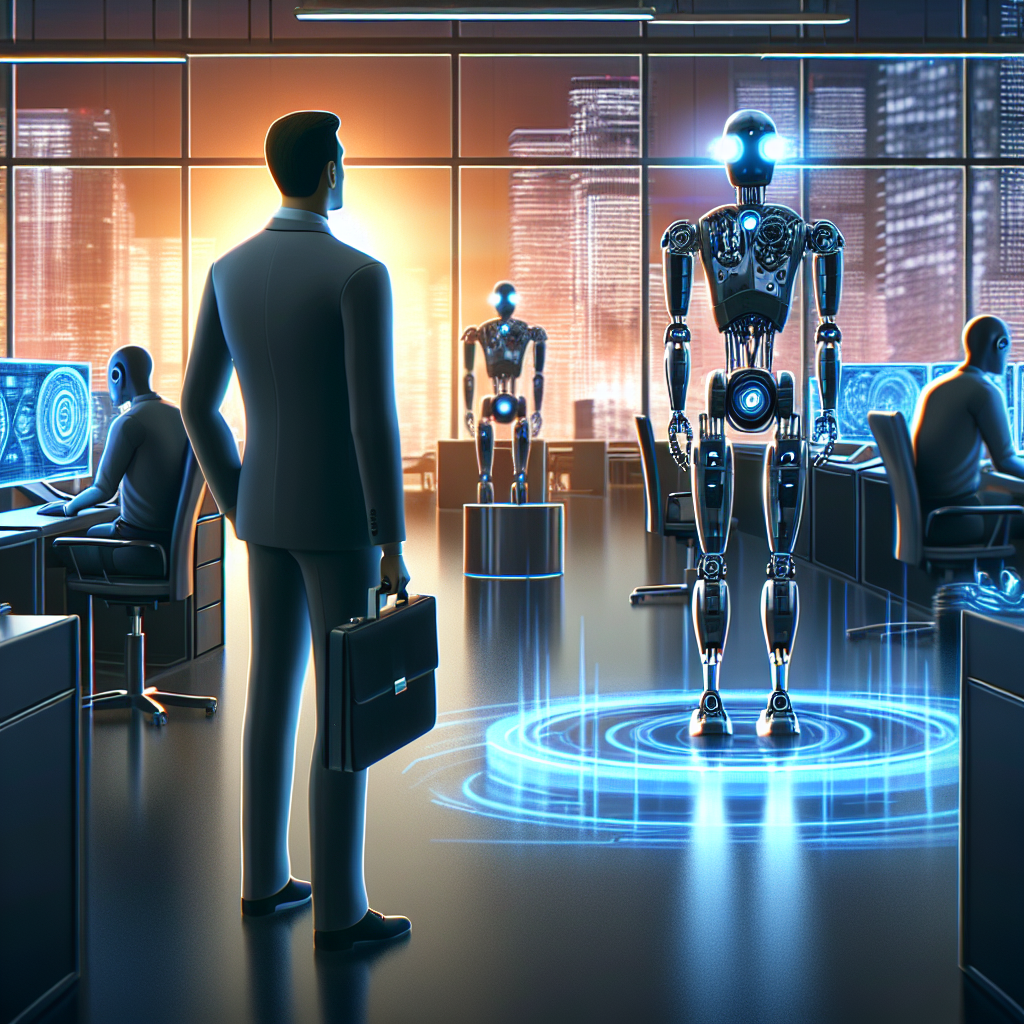
Andrew Yang Warns AI Could Eliminate 40 Million U.S. Jobs
In an era defined by rapid technological advancements, few voices are sounding the alarm louder than entrepreneur and former presidential candidate Andrew Yang. His recent comments highlight a looming crisis: the displacement of tens of millions of American workers by artificial intelligence (AI) and automation. Yang warns that the U.S. economy could see up to 40 million jobs eliminated by 2025 as AI continues its upward trajectory.
The Scale of the Disruption
According to Yang and many tech experts, the rise of AI poses a far-reaching threat to the American labor force. The impact will not just be felt in isolated industries—it will ripple across multiple sectors, transforming the employment landscape on a massive scale.
Key sectors at risk include:
- Transportation – self-driving vehicles threaten to replace millions of truck, delivery, and taxi drivers
- Retail – cashierless checkouts and automated inventory management may reduce the need for human workers
- Customer service – AI-powered chatbots and voice assistants are taking over call center roles
- Manufacturing – robots and machine learning tools improve efficiency while reducing human labor demands
Yang’s forecast is grounded in current trends. As companies prioritize efficiency and cost-cutting, automation provides an attractive solution. While this is good for profitability and scalability, it poses serious challenges for the millions of workers whose roles are considered replaceable by machines and algorithms.
Why Andrew Yang is Sounding the Alarm
Yang has built much of his political and social commentary around the challenges of the “Fourth Industrial Revolution.” With a strong background in technology and entrepreneurship, he has long called attention to the disconnect between innovation and worker protection.
In his view, the U.S. is dangerously unprepared for the speed at which automation—particularly AI—is evolving. Yang describes it as a “tectonic shift on par with the Industrial Revolution,” but without the structural safety nets to protect displaced workers.
According to Yang:
- Automation is exponential, not linear: As AI systems improve, they’re learning faster and becoming more capable at a rate we’ve never seen before.
- The labor market is slow to adapt: Reskilling millions of Americans in emerging fields like data science or renewable energy is not a simple fix—it takes time, infrastructure, and support.
- Traditional safety nets are insufficient: Unemployment benefits and retraining programs are not robust enough to cover the scale and speed of job losses projected.
Displacement Without a Plan
Yang emphasizes that the U.S. needs a comprehensive plan to manage displacement. He argues that relying on market forces alone will result in a “race to the bottom,” where low-wage jobs become even more fragile and income inequality increases.
Without intervention, millions of Americans could be pushed out of the workforce, leading to a host of social and economic problems including:
- Rising poverty and income inequality
- Geographic displacement as people move in search of work
- Strain on healthcare and social services
- Increased political polarization and unrest
Yang likens the social fallout to the aftermath of past economic disruptions but on a much larger scale. “It’s not just one industry or a few jobs—it’s the whole foundation of how millions of people make a living,” he warns.
Can AI and Jobs Coexist?
Despite the grim forecast, not all experts agree that AI spells doom for the labor market. Some argue that automation will create new categories of work, just as the internet did in the early 2000s. Jobs in AI development, machine ethics, cybersecurity, and tech maintenance are likely to grow.
But Yang cautions that the timeline is important. Even if new jobs emerge, they may not materialize quickly enough—or be accessible enough—for displaced workers.
For AI and the American workforce to coexist, Yang recommends:
- Investment in large-scale retraining programs aimed at transitioning workers into growing fields
- Reforming education to prioritize digital literacy, critical thinking, and tech adaptability
- Universal Basic Income (UBI) to provide a financial buffer for those displaced
His proposal of a UBI — a guaranteed, unconditional payment to all citizens — remains controversial but is gaining attention as automation accelerates. Yang believes this could serve as a “dignity floor,” giving people the financial flexibility to reskill, care for loved ones, or pursue entrepreneurial ventures.
What Business Leaders Should Do
Yang also calls on business leaders to act responsibly as AI adoption continues. Rather than cutting jobs for short-term gains, he urges executives to consider the long-term impact of mass layoffs on the economy and social stability.
Key recommendations for businesses include:
- Prioritize ethical technology deployment, considering the social outcomes of AI adoption
- Offer internal retraining programs to help existing employees upskill
- Partner with governments and educational institutions to expand access to tech-forward education
Technological change doesn’t have to mean job loss if business innovation is paired with social responsibility. As Yang points out, businesses that invest in their people often see stronger long-term returns.
A Call to Action
The threat of AI eliminating 40 million U.S. jobs isn’t just a prediction—it’s a wake-up call. Andrew Yang presents a vision not just of potential loss, but of a country that can either lead through change or be overwhelmed by it. The decision now lies in the hands of policymakers, corporate leaders, and everyday Americans.
The clock is ticking, and the future of work will be shaped by the choices made today. Whether it leads to mass unemployment or a more inclusive tech-driven economy will depend on how seriously these warnings are taken and how proactively solutions are developed.