
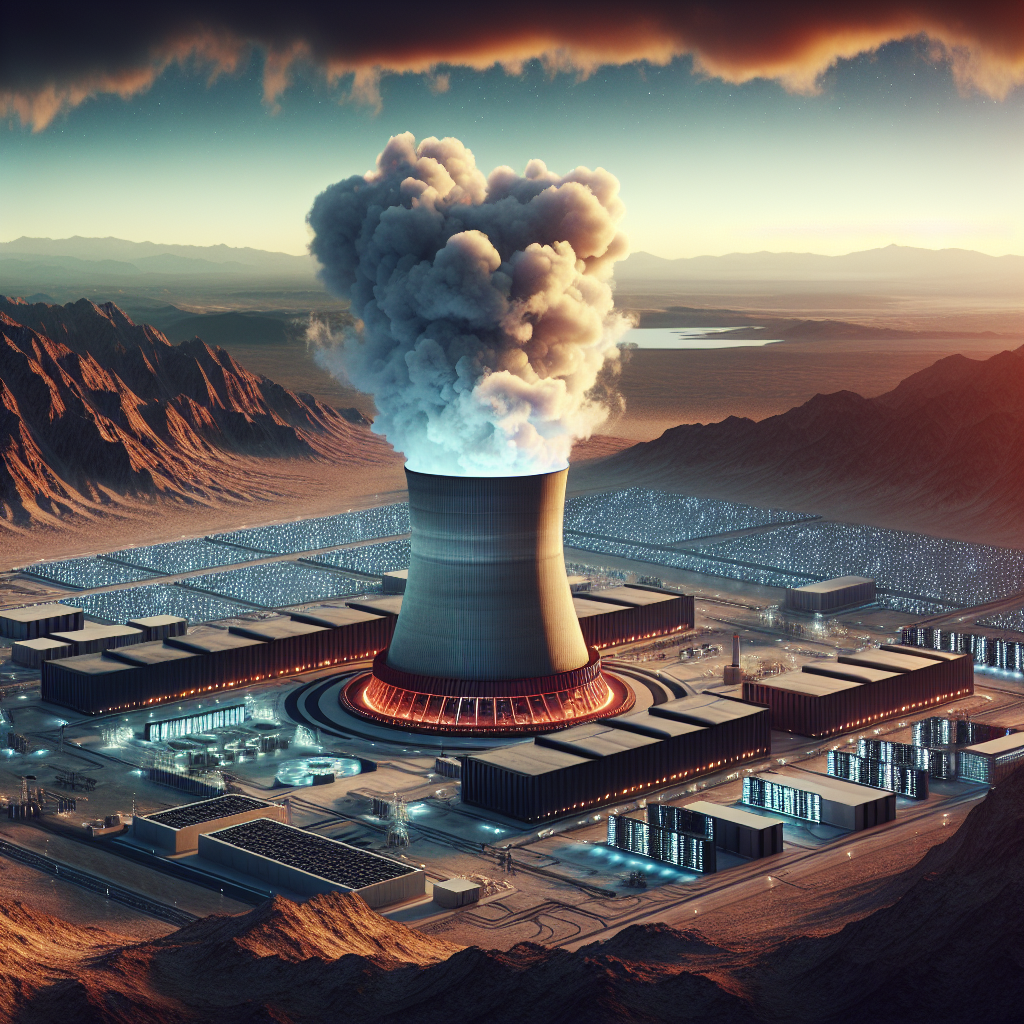
Repurposed Military Nuclear Reactors Could Power AI Data Centers
A Revolutionary Energy Source for a Data-Hungry Future
The explosive growth of artificial intelligence (AI) is driving an equally massive demand for energy. As AI models become more complex and data centers more powerful, there is an urgent need to find clean, reliable, and high-capacity energy sources. In an unprecedented move, the United States is reportedly considering a radical solution: repurposing decommissioned military nuclear reactors to power AI data centers.
This initiative, while still in early stages, signals a significant shift in energy strategy—one that could realign how digital infrastructure and nuclear technology intersect in the future.
The Need: AI’s Unquenchable Energy Appetite
The recent breakthroughs in large language models, image generation, and autonomous systems have put immense pressure on traditional data center infrastructure. Energy consumption in particular has become a focal point, especially as AI training models often use millions of kilowatt-hours per run.
According to industry experts:
- AI workloads are projected to consume 20% of the world’s electricity by 2030, up from 3-4% today.
- Big Tech companies like Google, Microsoft, and Amazon are all hunting for scalable, low-carbon energy solutions.
- Current grid infrastructure is not designed to handle such spikes in power demand efficiently or sustainably.
Enter nuclear power—an often controversial but undeniably potent energy source.
From Weaponry to Workload: Repurposing Military Reactors
The U.S. Department of Energy (DOE) and Department of Defense (DOD) are reportedly exploring whether old military nuclear reactors—previously used for propulsion or cold war defense operations—can be adapted into micro nuclear power plants.
Why military reactors? Because they’re already:
- Built to withstand extreme conditions such as combat or seismic activity
- Compact and transportable, unlike traditional civilian nuclear plants
- Capable of producing consistent baseload power without emitting carbon
These characteristics make them ideal candidates for off-grid, high-demand applications like AI server farms, which can’t afford downtime or power volatility.
Small Modular Reactors (SMRs): The Bridge Between Old Tech and New
While traditional reactors are massive and expensive to build, Small Modular Reactors (SMRs) offer a scalable alternative. Military reactors share several design principles with SMRs and can be seen as precursors that could be adapted for civilian digital infrastructure.
Key advantages of SMRs include:
- Increased safety features through passive cooling systems
- Rapid deployment thanks to factory-built modular components
- Minimal environmental footprint compared to coal or gas plants
With several private companies already investing in SMR development—like NuScale, TerraPower, and X-energy—the groundwork for nuclear-powered data centers has already begun.
Why This Matters: A Clash of Priorities and Paradigms
Repurposing military-grade energy assets for civilian tech use raises both optimism and serious questions. On the one hand, this move could solve multiple problems at once by:
- Reducing the carbon footprint of AI and big data infrastructure
- Utilizing existing, underused military resources
- Shoring up national energy security by decentralizing power grids
However, there are also notable concerns:
- Regulatory challenges: adapting military reactors for commercial use requires oversight from the Nuclear Regulatory Commission (NRC), which could take years.
- Public perception: decades of anti-nuclear sentiment may slow public support for such initiatives.
- Cybersecurity risks: combining military infrastructure with AI processing makes these hubs potential targets for cyber or terrorist attacks.
Balancing innovation with safety and public trust will be critical.
AI and Energy Policy: An Unlikely but Necessary Convergence
As the digital and energy sectors continue to intertwine, it’s clear that new policies will be needed to manage the complexities introduced by such integrations. The Biden administration has already highlighted AI as a national priority, while also pushing for emissions reductions and energy innovation.
Potential actions that could foster smoother implementation include:
- Incentivizing public-private partnerships between energy companies, defense contractors, and cloud providers
- Updating national energy policies to account for AI-specific infrastructure needs
- Establishing fast-track licensing processes for repurposed reactors with proven safety records
The convergence of these priorities isn’t just theoretical anymore—it’s becoming operational reality.
Global Implications: Will Other Nations Follow Suit?
The U.S. isn’t the only nation juggling energy constraints and digital growth. Countries like China, Russia, and the UK are also aggressively investing in both AI and nuclear technology. If the repurposing model proves successful, we could see a global push to adapt military reactors for digital infrastructure.
In fact, some countries have already taken initial steps:
- China is reportedly developing AI-focused data hubs in regions with newly built SMRs.
- Russia has long used military reactors to power remote outposts and may follow suit for AI development.
- The UK and EU are researching how digital and nuclear policies can better align in the coming decades.
This marks a new phase in global technological parity, where energy assets play as crucial a role in digital competition as algorithms do.
The Bottom Line: A Past-Fueled Future?
Reviving dormant nuclear assets to fuel the next generation of technological advancement may seem counterintuitive. But as AI accelerates toward center stage in nearly every industry, energy becomes the backbone on which innovation stands—or collapses.
Using repurposed military nuclear reactors to power AI data centers is more than a novel idea—it may be an inevitable necessity.
Whether it succeeds or not will depend on a delicate interplay between innovation, regulation, public sentiment, and international collaboration. One thing, however, is abundantly clear: the 21st-century tech revolution won’t just be written in code—it will be powered in kilowatts.