
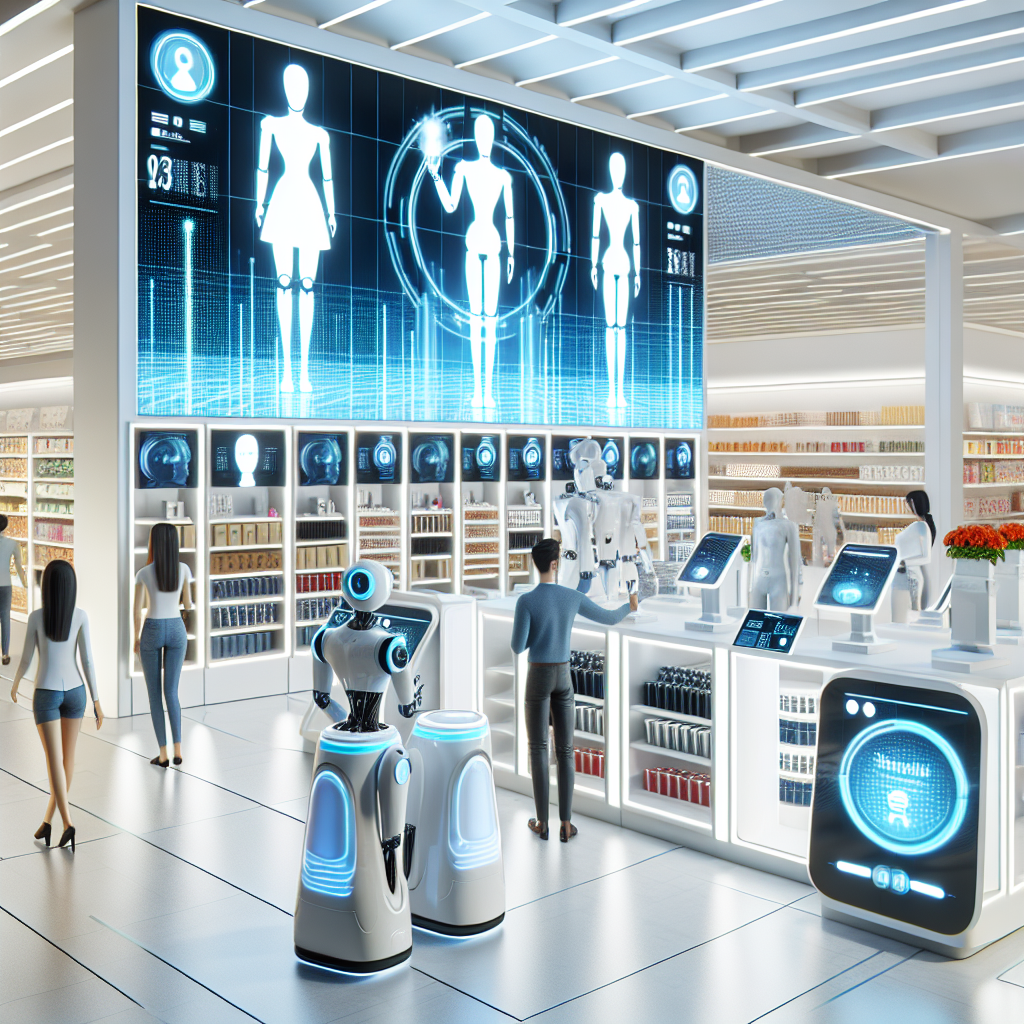
Revolutionizing Retail: The Rise of AI Across the Supply Chain
The retail industry is experiencing a seismic shift, thanks to widespread adoption of artificial intelligence. From inventory management to personalized marketing, tech companies are deploying AI-powered solutions that are reshaping the way retailers operate. With customer expectations evolving rapidly, integrating AI into retail has become not only innovative—it’s essential.
Why AI Is Becoming Ubiquitous in Retail
Retail is no longer about transactional exchanges—it’s about experiences, efficiency, and rapid responsiveness. AI enables that by offering real-time data analysis, automation, and intelligent decision-making tools. This transformation is largely driven by tech giants who are investing heavily in AI strategy and infrastructure.
Three key forces are fueling AI’s growth in retail:
- Consumer Demand for Personalization: Shoppers now expect brands to understand their preferences and shopping behavior.
- Operational Cost Pressure: Retailers are seeking ways to optimize labor, supply chains, and inventory efficiency.
- Tech Accessibility: Cloud computing and open-source AI models have made high-power AI tools widely available to businesses of all sizes.
Big Tech Spearheading the AI Revolution in Retail
Major technology companies including Microsoft, Google, and Nvidia are playing pivotal roles in helping retailers adopt and scale AI capabilities. Their platforms offer cloud-based AI services that don’t require in-house data scientists or massive IT investments.
Microsoft’s End-to-End Retail AI Solutions
Microsoft has integrated AI into nearly all aspects of retail service. Through its Azure cloud platform, Microsoft provides AI tools that power predictive analytics for inventory, cashier-less checkout experiences, and even smart shelf monitoring. Large retail chains use these capabilities not only for automated restocking and loss prevention but also to enhance customer engagement through product recommendations and chatbots.
Google Cloud’s Focus on Omnichannel Retail
Google Cloud’s AI Retail Search and Recommendation AI tools are helping brands tailor content and product listings in real time. Google’s Vertex AI platform also allows companies to build customized machine learning models for dynamic pricing, sentiment analysis, and supply chain forecasting.
What sets Google apart? Their integration of AI directly into advertising insights allows for seamless marketing personalization, improving return on ad spend (ROAS) and customer acquisition strategies.
Nvidia’s Edge in Computer Vision and AI Hardware
As a leading provider of GPUs and AI hardware, Nvidia’s technologies support high-performance AI processing at scale. Retailers use Nvidia-powered systems to implement in-store camera analytics, facial recognition for VIP customer detection, and AI-driven store traffic monitoring.
The result? Enhanced in-store customer experiences and smarter layout designs derived from traffic heat maps and shopper movement patterns.
Real-World Examples of AI in Retail
Across the retail landscape, real-world implementations of AI are driving results and setting new customer expectations.
1. Walmart
Walmart has rolled out AI tools to manage on-shelf availability, anticipate demand, and enhance delivery speed. Through advanced data aggregation and predictive modeling, Walmart is able to anticipate purchasing trends and reduce overstock and understock scenarios.
2. Kroger
Kroger employs AI for dynamic pricing and in-store logistics. By analyzing shopper behavior and weather patterns, their models can suggest pricing adjustments to improve product turnover. They also use IoT sensors to monitor refrigeration units and reduce food waste.
3. Shopify
Shopify has embedded AI into its SMB ecommerce platform. With features like intelligent product categorization, personalized search, and AI-driven product descriptions, even small retailers can compete with giants. Shopify’s connected AI tools also help automate email marketing and customer segmentation based on behavior patterns.
AI-Infused Customer Experience: The New Retail Standard
The most visible impact of AI in retail is the transformation of the customer experience. From tailored online searches to intuitive in-store navigation, brands using AI are delivering faster, more relevant, and more enjoyable shopping experiences.
AI elevates customer experience in five key ways:
- Hyper-personalized Product Recommendations
- Natural Language Search and Voice Shopping
- Chatbots and Virtual Shopping Assistants
- Predictive Customer Service
- Streamlined Checkout and Contactless Payment
Combined, these components remove friction from shopping and elevate brand loyalty in a competitive marketplace.
Challenges in Implementing AI Across Retail Businesses
Despite its benefits, AI adoption in retail still presents a set of challenges, particularly for smaller or traditional businesses.
- Data Management: AI models require vast amounts of clean, structured data—something many businesses are lacking.
- Integration Complexity: Integrating AI into legacy systems and workflows can be costly and time-consuming.
- Ethical Concerns: Use of facial recognition and customer data prompts concerns about privacy, transparency, and regulation.
However, as more turnkey AI solutions are developed and offered as flexible cloud services, these hurdles are becoming surmountable—even for mid-market retailers.
The Future of Retail Is AI-Driven
The entire retail value chain—from product manufacturing to last-mile delivery—is becoming increasingly AI-enabled. As AI becomes more accessible, innovative use cases will continue to emerge. Technologies like generative AI and advanced robotics are poised to redefine everything from in-store signage to warehouse automation.
Retailers that invest in AI now will be best positioned to thrive in the future, offering:
- Highly accurate demand forecasting
- Seamlessly personalized shopping experiences
- Efficient, automated operations across supply chain and logistics
Final Thoughts
The retail industry stands at a critical inflection point. As tech companies continue to embed AI into all layers of retail operations, businesses that hesitate risk falling behind. Adopting a robust AI strategy—with the support of scalable cloud platforms and industry-specific tools—can unlock new pathways to growth, productivity, and customer loyalty.
In a world of “AI everywhere,” the future of retail isn’t just digital—it’s smart, responsive, and predictive. The time to embrace this intelligence revolution is now.