
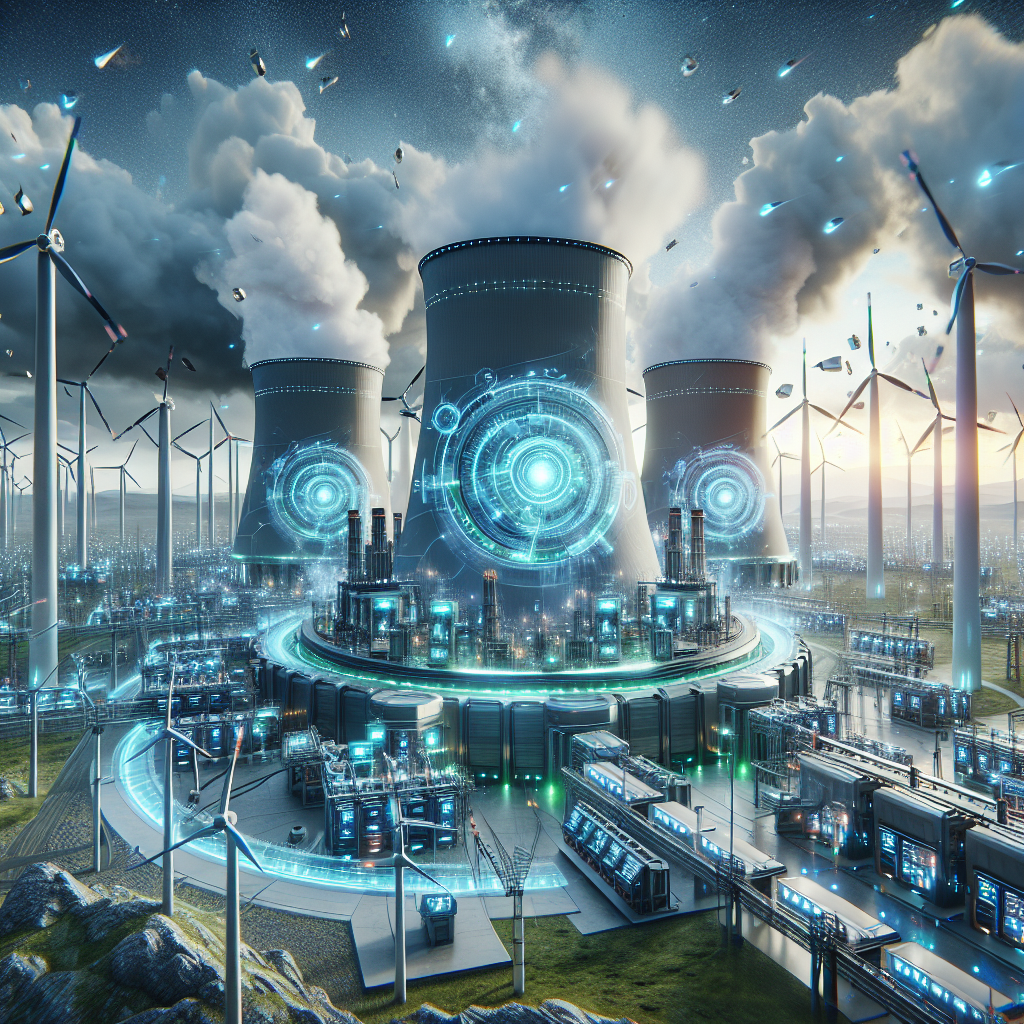
AI Boom Fuels Record US Gas Power Surge, Climate Risks Rise
The Unexpected Energy Cost of the AI Revolution
The artificial intelligence boom, while revolutionizing industries and improving efficiencies, is also intensifying electricity demand at an unprecedented rate. As tech companies race to build and operate cutting-edge data centers capable of powering generative AI systems, the U.S. is turning increasingly to natural gas to meet growing energy needs. This accelerated shift presents a paradox: the very technology that promises innovation and optimization may be powering a surge in greenhouse gas emissions.
Key sectors such as cloud computing, machine learning, and neural networks require immense computational power. This power is largely supplied by energy-intensive data centers that operate 24/7 to keep AI engines running smoothly. With renewable energy sources not scaling quickly enough to meet demand, gas-fired plants have become the fallback.
How Artificial Intelligence Drives Up Power Consumption
AI algorithms process massive quantities of data, often in real time. The infrastructure supporting AI—including GPUs (Graphics Processing Units), cooling systems, and storage facilities—demands constant and reliable power. According to energy analysts, AI-related data centers can consume up to 100 times more electricity than traditional server warehouses.
In recent years, rapid advancements in generative AI—like OpenAI’s GPT, Google’s Gemini, and other language models—have accelerated the need for expansive computing power. These systems require:
- Complex training phases with enormous datasets
- Continuous fine-tuning and inference capabilities
- Multiple redundancies for low-latency response
All of these elements lead to robust, energy-intensive infrastructures being built across the country. The sudden surge in energy needs has outpaced the deployment of clean technologies such as solar, wind, and battery storage.
Natural Gas: America’s Go-To Fuel Source for AI Expansion
As America’s tech giants strive to support their AI models, utilities are increasingly turning to natural gas to power this growth. More than 14,000 megawatts of new gas-fired power capacity are planned or under development across the U.S., the equivalent of powering roughly 10 million homes.
Several states are at the forefront of this power surge, including:
- Georgia: Dominion Energy is investing in multiple new gas units to supply the southeast’s proliferating data centers.
- Ohio: A regional tech hub experiencing rapid AI deployment along with corresponding grid stresses.
- Texas: Already home to many massive data centers and rapidly expanding clean energy, but still reliant on gas to ensure grid reliability.
Natural gas is seen as a “bridge fuel”—cleaner than coal but still a major greenhouse gas emitter. Methane, a potent GHG, is released both during extraction and transportation, contributing significantly to climate change.
Why Renewable Energy Is Struggling to Keep Up
While the AI industry has publicly committed to environmental responsibility, infrastructure constraints and investment lags are slowing the transition to clean energy.
Several factors prevent renewable energy from closing the gap:
- Interconnection delays: New solar and wind farms often wait years to connect to the grid.
- Transmission bottlenecks: Existing electricity infrastructure can’t handle the scale of renewable input required.
- Storage limitations: Battery technologies are advancing but still lack the necessary capacity for consistent backup power.
Even major tech companies like Amazon, Google, and Microsoft—who have long touted 100% renewable pledges—are increasingly relying on gas via indirect power purchases and utility partnerships. While these firms often claim to match their usage with renewable credits, the actual energy fueling many data centers is still locked into traditional, carbon-heavy sources.
The Climate Trade-Off: AI Innovation vs. Emissions
The exponential rise of artificial intelligence presents a difficult conundrum: how to balance transformative digital progress with the urgent need to curb carbon emissions.
Greenhouse gas emissions from the power sector had been falling for over a decade, but this trend is under threat. The reintroduction of gas as a dominant energy source could reverse these gains, making it significantly harder for the U.S. to meet climate targets outlined in the Paris Agreement and the Biden administration’s own zero-carbon pledges.
Some experts warn that the energy demands of AI could soon rival that of entire nations. Already, global data center usage accounts for around 1-2% of total electricity consumption. That figure could double or triple in the coming years driven by AI.
Voices from the Climate Advocacy Community
Climate scientists and environmental groups have raised concerns that short-term gas investments could lead to long-term emissions lock-in. Investing in fossil fuel infrastructure today may lead to decades of continued operation, undermining decarbonization efforts.
Silvio Marcacci of the think tank Energy Innovation noted: “What the AI boom does is increase the urgency of fixing our grid and accelerating the clean energy transition.”
Urban planners and policymakers are now urging for more stringent clean energy mandates, improved efficiency standards, and stricter corporate emissions disclosures for data center developments.
Is There a Greener Path Forward?
Not all hope is lost. Some AI-focused companies are experimenting with greener operations, including:
- Locating data centers in colder regions to reduce cooling needs.
- Investing in on-site solar and wind farms to offset direct consumption.
- Using liquid cooling technologies that lower energy waste compared to traditional air-cooling systems.
- Purchasing time-matched renewable energy credits rather than annual averages.
Still, experts argue that innovation in electricity usage must go hand in hand with AI development. Otherwise, the benefits of machine learning and digital intelligence may come at too great a cost to our planet.
Conclusion: A Crossroads for Energy and Innovation
The AI boom is undoubtedly transformative—reshaping industries, economies, and society—but it also demands a new level of responsibility. As the U.S. energy grid races to keep up, the growing reliance on gas poses significant risks to climate progress already underway.
To ensure a sustainable future, policymakers, tech companies, and utilities must work collaboratively to:
- Accelerate the buildout of renewable energy capacity and infrastructure
- Prioritize green grid investments over fossil fuel expansions
- Create accountability frameworks for data center emissions
- Innovate AI systems to operate more efficiently and sustainably
In the face of soaring demand fueled by artificial intelligence, the U.S. faces a choice: pursue a rapid, clean energy future—or allow short-term power needs to jeopardize long-term climate goals.