
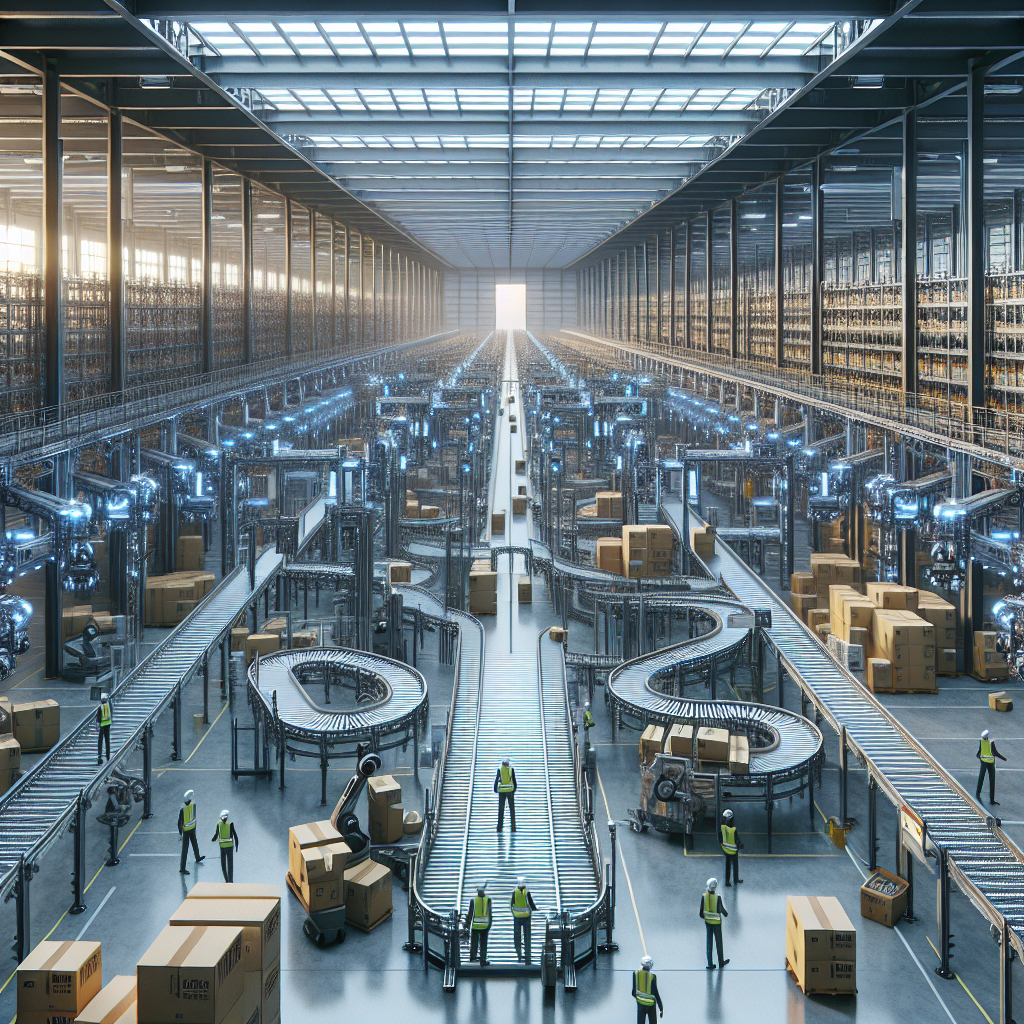
Inside Amazon’s Robot-Powered Warehouse: A Glimpse Into the Future
Revolutionizing Fulfillment: Amazon’s Robotic Workforce
In a bold step toward the future of logistics and automation, Amazon has unveiled one of its most technologically advanced warehouses in Georgia. This cutting-edge facility, guided by artificial intelligence and highly capable robots, provides an intriguing look at how automation is reshaping global commerce.
Unlike traditional fulfillment centers packed with human workers manually picking and packing items, the Georgia warehouse showcases a hybrid workforce. Here, people work alongside intelligent machines in a seamless integration of human dexterity and robotic precision — a partnership that reflects the next frontier in e-commerce logistics.
The Robotics Revelation: What Powers the Warehouse?
Amazon’s latest fulfillment center introduces a suite of proprietary robotics technologies. These are not just simple conveyor belt systems — the robots here make decisions, navigate autonomously, and handle heavy lifting with astounding efficiency.
Key robotic systems include:
- Sequoia Robot Arm: A powerful robotic arm that lifts totes — the plastic containers used to move inventory items — and feeds them into the next stage of processing.
- Digit: A humanoid robot developed by Agility Robotics, equipped with arms and legs designed for handling tasks traditionally done by humans, like moving and inspecting items.
- Cardinal: A high-speed robotic sorting arm capable of moving heavy packages within seconds, dramatically reducing sorting time compared to manual operations.
These machines are all coordinated by Amazon’s proprietary software that leverages real-time logistics data, machine learning algorithms, and cloud scalability to ensure every package moves from shelf to shipment with minimal delay.
Efficiency Meets Precision: Transforming Supply Chain Speed
One of the most profound impacts of Amazon’s robotic fulfillment center is its ability to drastically compress order processing times. The integration of robotics allows the facility to:
- Pick and pack items in minutes instead of hours
- Reduce human walking time by up to 75%, thanks to tote-delivering bots that bring items directly to workers
- Increase storage density by utilizing vertical storage systems accessible by robots
- Operate 24/7 without fatigue, thus maximizing throughput during peak demand seasons
This level of automation not only boosts efficiency but also ensures a reliable and consistent delivery timeline, something Amazon customers have come to expect as standard.
Jobs and Automation: A Symbiotic Relationship
While there’s much public concern that robotic systems may replace human labor, Amazon paints a different picture. The company emphasizes a “collaborative technology” approach where automation augments rather than replaces human capability.
According to Amazon, the Georgia facility will employ over 1,000 human workers. These roles are evolving — instead of simple picking and shelving, warehouse employees are becoming:
- Robotics technicians
- Systems analysts
- Maintenance engineers
- Workflow coordinators
Amazon claims the introduction of automation will lead not to job cuts but an upskilling of its workforce — a transformation that many believe is necessary to keep pace with the digital economy.
Safety and Ergonomics: Prioritizing Worker Wellbeing
A lesser-known benefit of this robotic revolution is the significant improvement in workplace safety. Traditionally, warehouses require workers to lift heavy objects and walk long distances, often resulting in injuries or repetitive strain conditions.
Amazon’s new systems are designed to:
- Eliminate heavy lifting for human workers
- Reduce multiple trips by delivering items directly via mobile robots
- Minimize physical strain with ergonomic workstations and height-adjustable platforms
This smarter environment helps not just with efficiencies but also with workforce retention, creating safer jobs built for long-term sustainability.
Environmental Sustainability Through Smart Architecture
Beyond speed and efficiency, Amazon’s Georgia warehouse is also part of the tech giant’s broader commitment to sustainability. The new facility features:
- Energy-efficient lighting and motion-detecting systems
- Solar panel installations on rooftops
- Advanced HVAC systems to reduce energy consumption
- Electric vehicle (EV) charging banks for transportation fleets
Additionally, the optimized layout of the warehouse means fewer steps and less energy use per package shipped — aligning with Amazon’s stated goal of achieving net-zero carbon emissions across its operations by 2040.
Future-Proofing Logistics: What’s Next for Amazon?
Amazon’s unveiling of this robot-powered warehouse is more than just a technological demonstration—it’s a strategic move in a fiercely competitive industry. Retail giants like Walmart and Target are also investing heavily in automation, but Amazon’s early adoption and unique systems give it a significant advantage.
Looking ahead, expect:
- Broader deployment of robotic fulfillment architecture across Amazon’s entire network
- Greater use of AI for predictive analytics and supply chain management
- Continued partnerships with robotics innovators to bring newer models like Digit to scale
- Expanded customer services with faster delivery windows enabled by robotic precision
The Georgia facility is just a prototype of what’s to come — a glimpse into how AI, automation, and real-time data analytics will merge to define not just the shopping experience, but the entire economic infrastructure of e-commerce.
Final Thoughts: The Dawn of Autonomous Commerce
Amazon’s Georgia warehouse is more than a logistical hub — it’s a symbol of how automation is changing the way goods move, labor is structured, and businesses operate. By blending cutting-edge robotics with human oversight, Amazon is forging a path that many other industries will likely follow.
While concerns about job displacement and technological ethics persist, the truth remains: automation is here to stay, and companies willing to balance innovation with inclusion will define the future market leadership.
Amazon’s bold leap into robotics doesn’t just enhance its bottom line — it redefines what’s possible in the world of fulfillment. Welcome to the future of logistics, one robot at a time.