
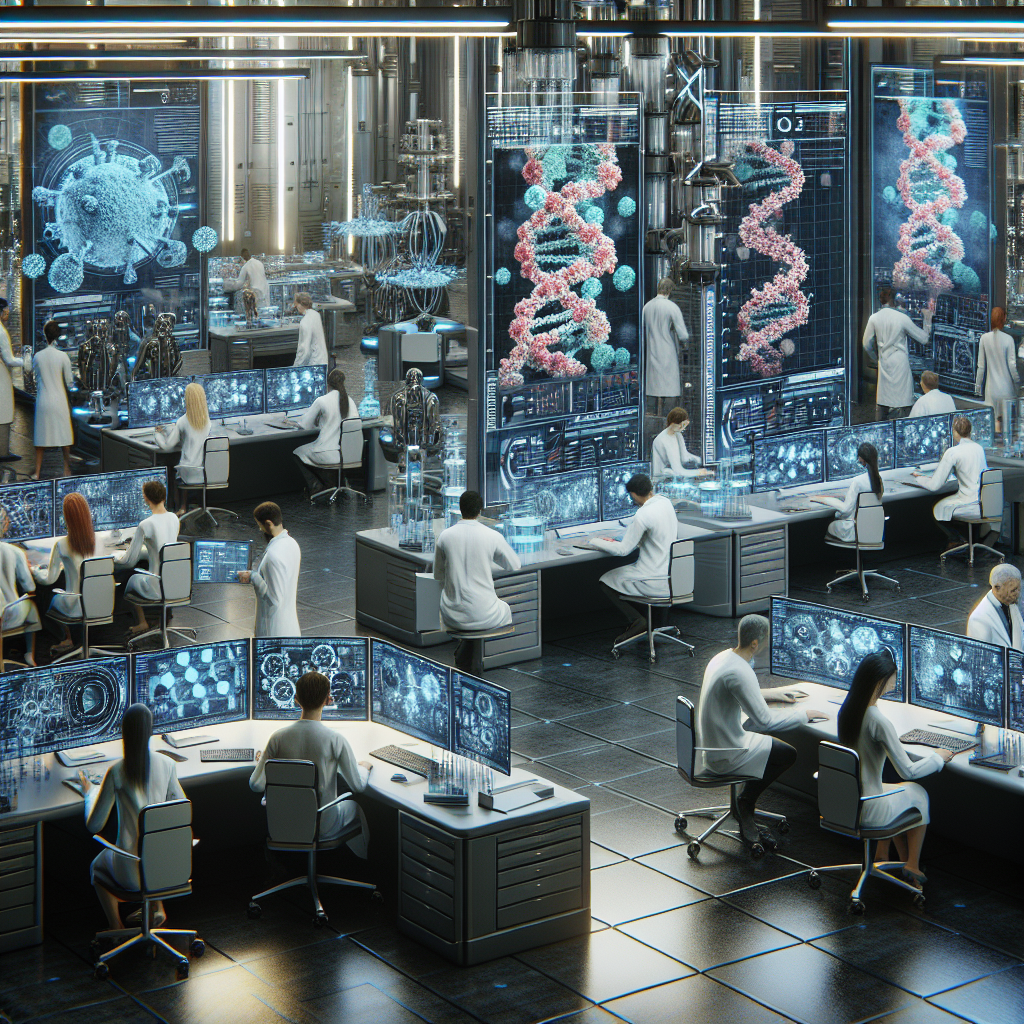
AI-Discovered Antibiotics Offer Breakthrough Against MRSA Superbugs
A New Era in Antibiotic Discovery
The medical world is on the brink of a transformative shift. For decades, the rise of antibiotic-resistant bacteria—particularly Methicillin-resistant Staphylococcus aureus (MRSA)—has posed a grave threat to global health. But now, thanks to the rapid development of Artificial Intelligence (AI), scientists are beginning to unlock new antibiotics that could signal a second “golden age” for infection-fighting drugs.
In a groundbreaking development, researchers have used AI technology to identify potent new compounds capable of killing deadly superbugs, such as MRSA. This breakthrough could change the way we combat antimicrobial resistance (AMR), a problem that, according to the World Health Organization, causes over 1.2 million deaths globally each year.
The Rise of Antibiotic Resistance
Antibiotic resistance is one of the most pressing health crises of our time. Overuse and misuse of antibiotics in both humans and livestock have driven the evolution of “superbugs”—bacteria that are no longer responsive to standard treatments. The danger is most evident in hospitals, where infections like MRSA can turn routine surgeries or minor wounds into life-threatening scenarios.
MRSA Facts:
- Responsible for 100,000 deaths globally each year.
- Can spread rapidly in hospitals and healthcare settings.
- Among the most dangerous pathogens listed by the WHO.
For decades, pharmaceutical companies have struggled to develop new antibiotics largely because of the high costs and long timelines associated with traditional drug discovery. But AI is changing the game.
How AI is Revolutionizing Antibiotic Discovery
Until recently, discovering new antibiotics was a painstakingly slow process, often taking more than a decade from start to finish. However, AI technologies—especially machine learning algorithms—are capable of analyzing massive datasets of chemical compounds in a fraction of the time.
Using neural networks trained to recognize molecular characteristics associated with antibacterial activity, researchers can now scan millions of compounds virtually, identifying which ones are worth investigating further.
Key benefits of AI in antibiotic discovery:
- Speed: AI algorithms reduce the time needed for discovery from years to just weeks or months.
- Cost Efficiency: Reduces the need for expensive trial-and-error lab research.
- Precision: AI models can predict which compounds will target specific bacterial strains with high accuracy.
Meet Halicin: The First AI-Discovered Antibiotic
In 2020, scientists from MIT and Harvard used AI to discover the antibiotic halicin. It was a proof of concept that showed machine learning could be more than just a digital assistant—it could be a life-saving tool. Halicin was shown to be effective against a wide range of pathogens, including some that had developed resistance to all other known antibiotics.
This success paved the way for the latest breakthrough: using AI to tackle the ever-persistent MRSA bacteria.
The MRSA Breakthrough: Novel Compounds Uncovered
In the most recent study, a team led by researchers at the Massachusetts Institute of Technology (MIT) and McMaster University used AI to screen more than 39,000 compounds for anti-MRSA activity. The AI models used deep learning techniques to predict which molecules would be most effective against MRSA, saving researchers enormous time and resources.
Results of the MRSA AI Drug Discovery:
- Two new compounds showing powerful activity against MRSA were identified.
- The compounds worked in vivo, meaning they were effective on infected mice.
- Laboratory tests showed minimal toxicity, making them strong candidates for future clinical trials.
The compounds discovered, named abaucin and halicin-like variants, displayed unique mechanisms of action—meaning that not only are they effective, but bacteria may find it more difficult to develop resistance to them.
Why This Matters: A Second “Golden Age”
Antibiotic discovery has often been described in historical arcs. The first golden age occurred with the discovery of penicillin and other foundational antibiotics. But over time, innovation slowed as bacterial resistance increased. Now, experts believe we’re entering a second golden age, this time driven by advanced AI technologies.
According to Dr. James J. Collins, a biomedical engineer involved in the study, this is “just the tip of the iceberg.” With broader adoption of AI in pharmaceutical research, scientists hope to build an arsenal of novel antibiotics capable of combating all major resistant pathogens.
Implications for global health:
- Reduced mortality: Effective treatments for MRSA could potentially save tens of thousands of lives each year.
- Lower healthcare costs: Fewer complications and shorter hospital stays linked to earlier treatment successes.
- Global preparedness: These advancements strengthen our response to future outbreaks of antibiotic-resistant bacteria.
What’s Next for AI-Discovered Antibiotics?
While the discovery is promising, the road from lab to approval is still lengthy. These new compounds need to undergo extensive clinical trials to ensure their safety and effectiveness in humans. But the foundational work has been done, and more AI-powered discoveries are already in the pipeline.
Governments and pharmaceutical companies are now being urged to invest further in AI-enabled drug research. Global health agencies also recognize the importance of not just finding new antibiotics, but also using them responsibly to avoid repeating past mistakes that led to resistance.
Key Steps Toward the Future:
- Continued AI research and training based on global bacterial databases.
- Increased funding for preclinical and clinical trials of newly discovered compounds.
- International collaboration to share data and regulate responsible antibiotic use.
The Intersection of Technology and Medicine
The use of AI to combat superbugs like MRSA reflects a broader trend of integrating technology with healthcare. From diagnostics and drug discovery to patient care and surgical robotics, AI is set to revolutionize every aspect of medicine.
This latest victory over MRSA is more than just a scientific milestone—it’s a symbol of how technological ingenuity and human innovation can come together to face some of the world’s deadliest challenges.
The bottom line: AI-discovered antibiotics not only offer hope against MRSA but also open the door to a new era of rapid, targeted, and cost-effective drug development—a critical win in the global fight against antimicrobial resistance.