
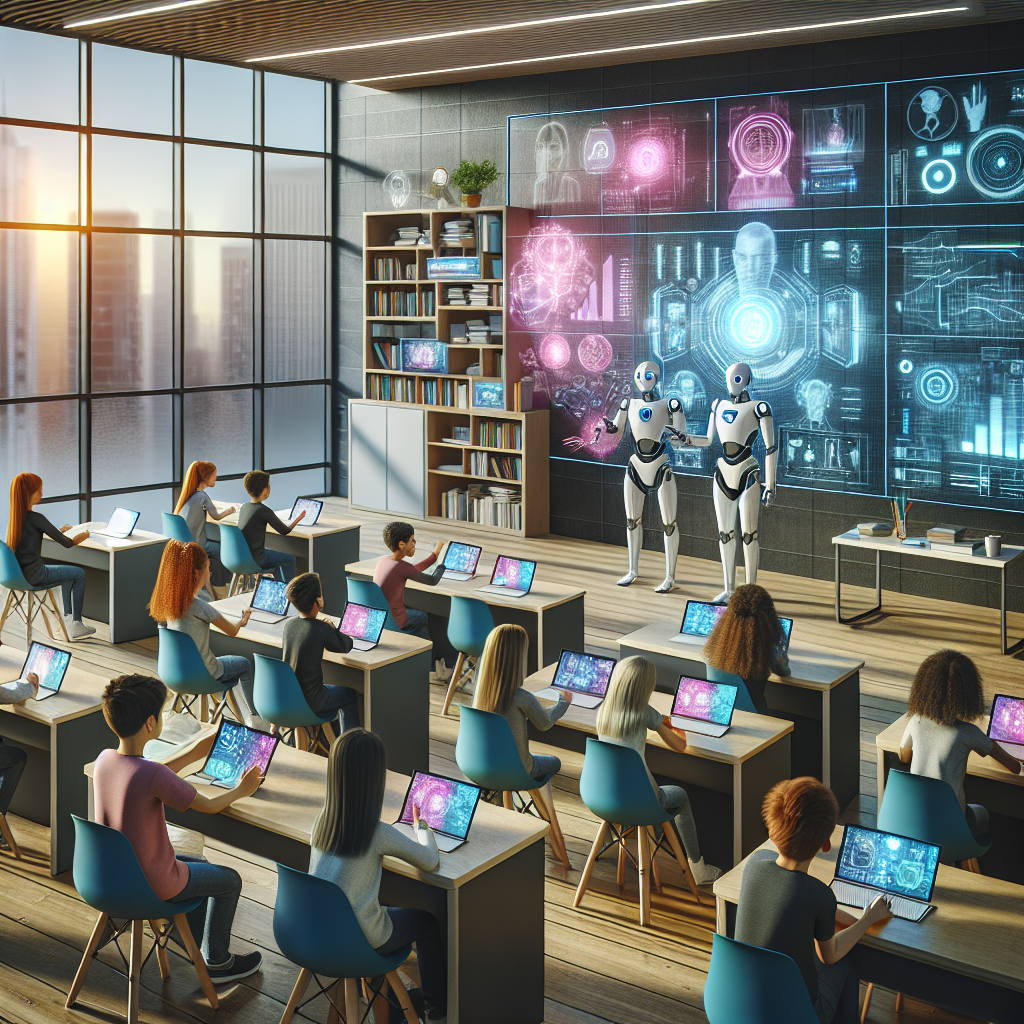
The Rising Tide of AI in Schools: Navigating Opportunities and Addressing Risks
Introduction: The Growing Role of Artificial Intelligence in Education
Artificial Intelligence (AI) has been rapidly integrating into classrooms, reshaping the educational landscape at an accelerating pace. From adaptive learning platforms to AI-powered grading tools, schools are embracing technological solutions that promise efficiency, personalization, and improved educational outcomes. However, a newly released report warns of significant risks that come with heavy reliance on AI in schools—signaling a critical need for caution and regulation.
As AI becomes more entrenched in educational systems, stakeholders must weigh the benefits against emerging dangers associated with privacy, bias, and inequality. This blog explores the findings of the recent report, offering insights into what educators, parents, and policymakers should consider as the future of learning becomes increasingly digital.
Key Findings from the New AI in Education Report
The report, produced by a coalition of researchers and education advocates, emphasizes that unchecked implementation of AI tools in schools can do more harm than good. While AI promises scalable and cost-effective solutions, the report argues that the risks, if not addressed proactively, could significantly undermine student welfare and educational equity.
Main concerns highlighted in the report include:
- Privacy violations: AI tools often collect sensitive information about students, raising concerns about who’s tracking the data and for what purpose.
- Reinforcement of bias: Algorithms trained on flawed datasets can perpetuate systemic biases, leading to unjust outcomes in grading or behavioral evaluations.
- Increased surveillance: AI-powered monitoring tools may cultivate a culture of mistrust within classrooms, affecting student mental health and freedom.
- Commercial exploitation: Private tech companies providing AI services may prioritize profit, resulting in the commodification of student data.
AI and Student Privacy: A Delicate Balancing Act
One of the most pressing issues addressed in the report revolves around data privacy. AI systems used in classrooms often collect a wide range of data points, including:
- Academic performance
- Biometric data (in some high-surveillance schools)
- Browsing and usage patterns on educational platforms
While this information helps tailor educational content to individual students, it may also be accessible to third-party vendors. Without stringent policies, this data can be misused or inadequately protected. The report urges school districts to adopt transparent data governance frameworks and involve parents in consent decisions.
Best Practices for Protecting Student Privacy
- Limit data collection to only what is absolutely necessary for educational outcomes.
- Encrypt and anonymize student data to avoid identification and targeting.
- Vet third-party vendors to ensure they adhere to high privacy standards.
How AI May Perpetuate Bias in Education
AI harnesses large datasets to make user-specific decisions. However, if those datasets reflect past inequities, the technology can inadvertently perpetuate discrimination. For example, an AI-driven grading tool might penalize particular dialects in written submissions or disproportionately flag certain behaviors in minority students as problematic.
The report emphasizes that “data is not neutral”, and the use of biased datasets without proper checks can result in:
- Lower scores for students from marginalized communities
- Increased disciplinary action based on skewed behavioral analytics
- Inaccurate predictions about student potential and learning needs
Steps to Mitigate Algorithmic Bias
- Diversify training data to accurately reflect varied social and cultural contexts.
- Require third-party audits of AI algorithms for fairness and accountability.
- Provide human oversight in all automated decision-making processes.
Surveillance vs. Safety: Where Do We Draw the Line?
Schools are increasingly turning to AI-enhanced surveillance systems under the guise of student safety. Tools include facial recognition software, AI behavior monitoring, and predictive analytics designed to flag at-risk students. While intended to enhance school security, critics argue such tools foster a punitive atmosphere rather than a supportive learning environment.
Concerns associated with classroom surveillance technologies include:
- Normalizing government and corporate surveillance from a young age
- Disproportionate scrutiny of minority and disabled students
- Reduced privacy and freedom of expression in learning environments
The report insists that any AI-based surveillance measure must be:
- Transparent in its function, purpose, and reach
- Accountable to both students and parents
- Justifiable in terms of measurable benefit versus harm
Technology Companies and Educational Influence
Tech companies are playing an outsized role in shaping the direction of public education through AI tools. While their platforms often provide user-friendly and scalable solutions, the profit motive can conflict with the educational mission. The report criticizes the lack of regulatory oversight on these entities, warning that their unchecked involvement often leads to monetization of student data, lack of transparency, and competition-driven compromises in educational ethics.
Recommendations include:
- Requiring school districts to establish public-private partnership guidelines
- Ensuring full financial and operational transparency from tech vendors
- Decentralizing AI decision-making power to local educators
Moving Forward: Building Ethical, Equitable AI in Education
Despite the risks, the report doesn’t suggest abandoning AI in schools altogether. Instead, it advocates for a conscientious and community-centered approach to technology integration. When implemented responsibly, AI offers immense potential to:
- Personalize learning experiences
- Support students with disabilities
- Automate administrative burdens for teachers
However, realizing these benefits depends on the creation and enforcement of rigorous ethical frameworks, teacher training, and sustained dialogue among all educational stakeholders—including students themselves.
Final Thoughts
As our classrooms evolve, the presence of AI in schools is inevitable. But as this comprehensive report highlights, innovation should not come at the cost of student rights, privacy, or equity. Without deliberate and informed steps, we risk creating a learning environment where technology dictates outcomes more than teachers do.
Educators, parents, policymakers, and students must all be part of shaping a future where AI supports learning rather than undermining it. By centering ethics, transparency, and student well-being in our technological choices, we can use AI not just to transform education—but to transform it for the better.