
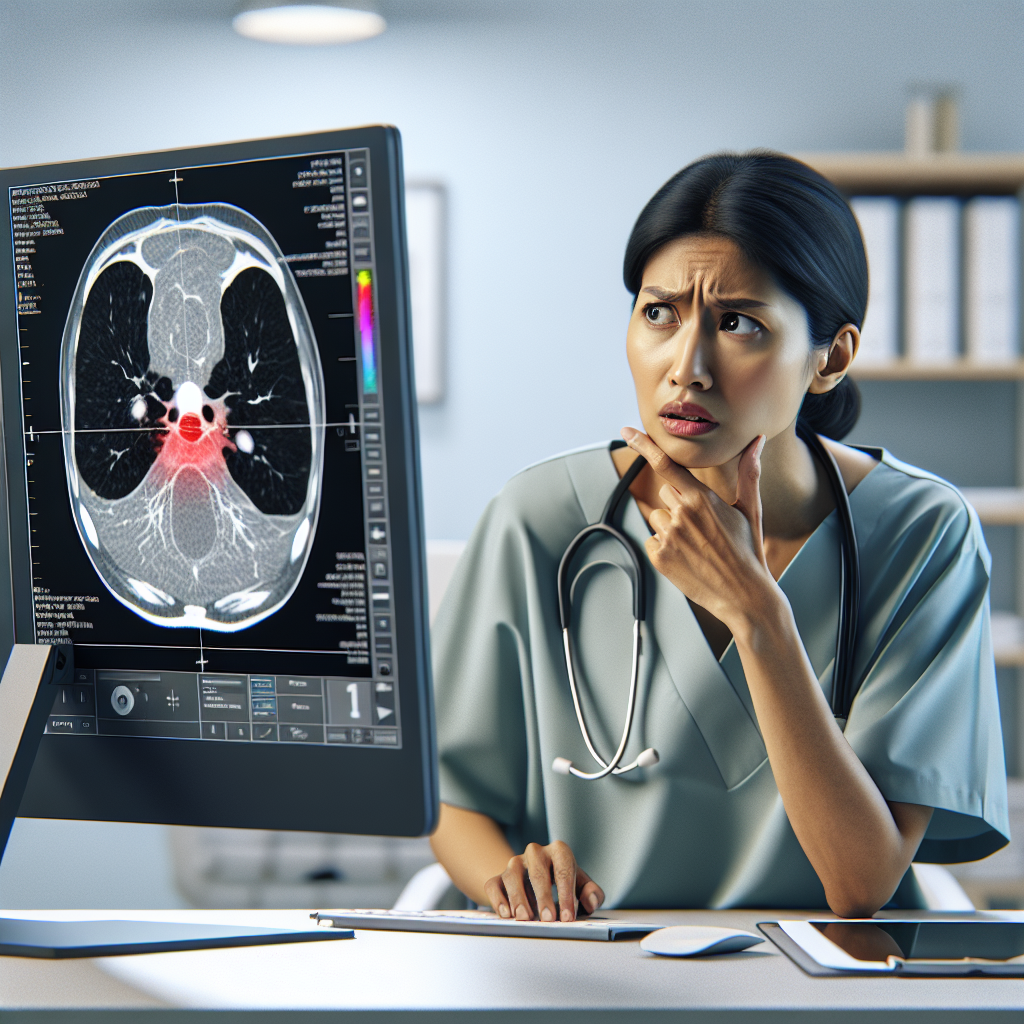
The Impact of AI on Medical Diagnosis: Are Doctors Losing Their Diagnostic Skills?
A New Study Raises Serious Concerns About AI in Cancer Detection
Artificial intelligence has been hailed as a revolutionary tool in healthcare, promising to increase diagnostic accuracy and streamline clinical workflows. However, a recent study has sparked renewed debate over this technology’s unintended consequences. According to new research summarized in Bloomberg’s article, “AI Tools Hurting Doctors’ Cancer Detection Skills, Study Finds,” doctors may be losing their ability to detect cancer when over-relying on AI-aided diagnostic tools.
The study, conducted by a team of international researchers and published in a respected peer-reviewed journal, suggests that the growing dependence on AI in radiology could erode the observational and diagnostic skills of human physicians—potentially reversing years of hard-earned expertise in cancer detection.
AI in Diagnostic Medicine: A Double-Edged Sword
AI-powered tools have shown great promise in healthcare—particularly in imaging-based specializations like radiology and oncology. These algorithms often outperform human physicians in detecting subtle abnormalities within imaging data such as CT scans, MRIs, and mammograms. In some cases, they achieve near-perfect sensitivity and specificity rates. However, the reliance on machine learning carries risk.
While physicians are trained to interpret imaging data visually and contextually, introducing AI tools may alter their cognitive engagement. The study found that when doctors routinely received AI recommendations, their own diagnostic performance began to decline over time.
Key findings of the study include:
- Doctors using AI tools were less accurate at detecting early-stage cancers within just a few months of adoption.
- Participants showed diminished confidence in their own diagnostic decisions.
- Radiologists were more likely to defer to AI results, even when those results were incorrect.
Understanding the Study’s Methodology
The research team examined the performance of hundreds of medical professionals over a six-month period. The participants included practicing radiologists who were asked to interpret imaging scans both with and without AI assistance. The objective was to track how their detection rates changed over time and whether exposure to AI influenced their independent judgment.
What they discovered was concerning: even expert radiologists began missing clear signs of cancer—nodules, mass shapes, and asymmetries—after several months relying on AI tools. These errors were particularly prevalent in early-stage cancers, which are often harder to detect but critical to treat promptly.
Why Are Skills Being Eroded?
The researchers pointed to a psychological phenomenon: automation bias. This bias causes individuals to favor suggestions made by automated systems, sometimes even in the presence of conflicting data. In this study, radiologists began to trust AI outputs more than their own expertise or visual cues.
Factors contributing to skill erosion include:
- Reduced cognitive effort: Physicians pay less attention to raw imaging when AI summaries are presented alongside.
- Shift in workflow dynamics: Doctors may “confirm” AI diagnoses rather than conduct independent reviews.
- Overtrust in AI’s capabilities: Even when AI suggestions were demonstrably incorrect, users hesitated to override them.
Implications for Patient Safety and Medical Training
These findings have raised critical concerns among medical ethicists, healthcare leaders, and patient advocacy groups. If doctors’ skills are diminished by their reliance on AI, the quality of care could be compromised—particularly in rural or understaffed hospitals where AI support is intended to augment limited resources.
Further, educators are now rethinking medical training programs. It’s become clear that AI literacy must be accompanied by ongoing skill reinforcement. Medical schools may need to implement stricter guidelines around clinical exposure, real-time problem-solving, and non-AI-based diagnostic practice.
Protecting Doctors from Overdependence on AI
If unchecked, overdependence on AI could lead to widespread degradation of diagnostic skills. To mitigate this risk, healthcare institutions must proactively implement safeguards.
Recommended strategies include:
- Regular skill assessments for clinicians who use AI systems in diagnostic roles.
- Mandatory “AI-off” periods during training and practice to reinforce traditional diagnostic skills.
- AI Explainability tools that help doctors understand why an AI system reached a particular diagnosis.
- Documented accountability protocols to ensure humans retain the final decision-making responsibility in patient care.
Patient Perception and the Trust Dilemma
Patient trust in healthcare depends not only on outcomes but on the belief that their caregivers are attentive, skilled, and compassionate. If patients begin to perceive that physicians are blindly following AI recommendations, trust in the system at large may erode. Transparency and communication are vital.
Doctors should be able to clearly explain when and how AI is used during diagnosis—and show that they are still actively analyzing and interpreting the medical data themselves. This dual approach is the only path to retaining both technological efficiency and human-centric care.
The Future of AI in Medicine: Striking the Right Balance
AI is here to stay. Its role in predictive diagnostics, personalized treatment planning, and healthcare accessibility is irreplaceable. But the future of medicine depends on balance. AI should enhance, not replace, human expertise. Physicians must remain at the center of patient care—not as passive overseers of algorithms, but as critical thinkers and empathetic decision-makers.
What This Means for Healthcare Providers and Policymakers
Healthcare organizations and regulators must now walk a fine line. They must promote AI as a tool of empowerment, while also putting guardrails in place to protect the human skills that technology can’t replicate—intuition, empathy, and experiential judgment.
Policymakers and healthcare leaders can support this balance by:
- Establishing clear AI usage guidelines for clinical settings.
- Funding longitudinal studies to track AI’s impact on physician performance.
- Promoting interdisciplinary education involving AI developers and medical professionals.
Conclusion: Reimagining a Collaborative Diagnostic Future
The findings from this recent study serve as a wake-up call. While artificial intelligence can dramatically improve cancer detection, it must be used thoughtfully and responsibly. The erosion of doctors’ diagnostic skills isn’t a flaw in AI itself—it’s a call for better system design, oversight, and integration strategies.
Ultimately, the most effective healthcare is a collaboration between cutting-edge technology and skilled human judgment. To realize the full benefits of AI without sacrificing physician expertise, the medical field must evolve—training doctors not just to use AI, but to coexist with it.