
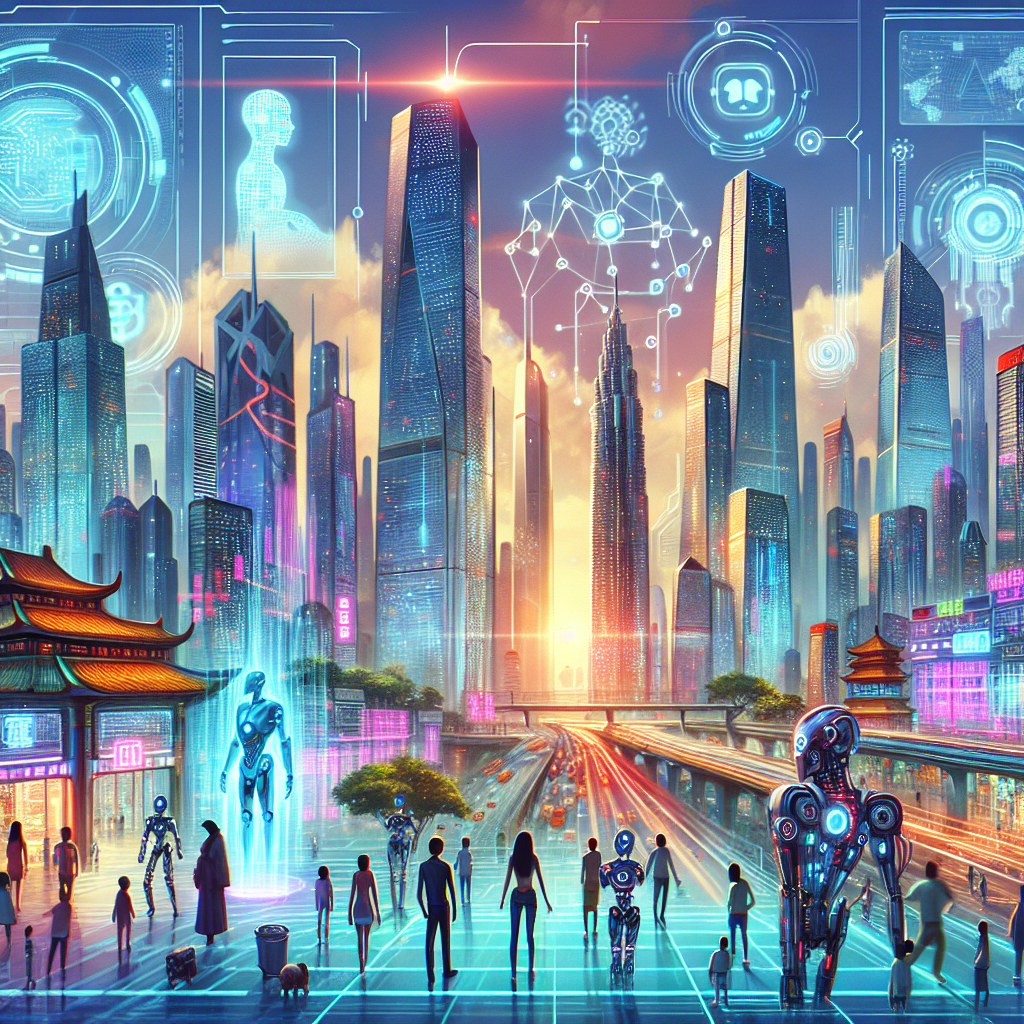
China Unveils AI Action Plan Amid Intensifying Global Tech Race
China Launches Strategic AI Initiative to Lead Emerging Technologies
In a bold move aimed at propelling its artificial intelligence (AI) ambitions, China has revealed a sweeping new AI Action Plan, signaling its intent to take a leadership role in the fiercely competitive global tech landscape. As governments and corporations scramble to develop the next wave of breakthrough AI technologies, China’s latest initiative positions the nation as a formidable player in the global AI race.
The newly announced plan, which spans multiple industries and emphasizes research, infrastructure development, and talent cultivation, adds urgency to the ongoing international rivalry over AI supremacy. By setting specific goals with defined timelines leading up to 2030, Beijing is staking its claim to become a global AI powerhouse.
Key Objectives of China’s AI Action Plan
China’s AI blueprint outlines a comprehensive strategy crafted to integrate AI across various facets of society and industry. According to the plan, the goals are categorized into short-term, mid-term, and long-term milestones. The action plan includes:
- Establishing world-class AI foundations by 2027 through breakthroughs in core technologies such as machine learning, neural networks, and natural language processing.
- Upgrading digital infrastructure nationwide to support large-scale AI implementation, including high-performance computing and next-gen data centers.
- Developing industry-specific AI applications in sectors such as healthcare, manufacturing, agriculture, and fintech.
- Creating a robust regulatory and ethical framework to ensure responsible AI deployment.
- Fostering AI talent through education reforms, public-private partnerships, and research institution incentives.
This step-by-step rollout is designed to build a viable and scalable AI ecosystem that balances innovation with regulation.
Driving Forces: China’s Motivation Behind the Plan
As the global AI race intensifies, China’s strategic approach is driven by several important factors:
- Geopolitical competition with the U.S. and Western allies over technological leadership.
- Economic transformation goals as China seeks to upgrade from a manufacturing-based economy to a tech-driven innovation hub.
- National security concerns emphasizing self-reliance in critical technologies, especially amid rising tensions over semiconductor access and advanced chip design.
- Demographic challenges prompting increased AI automation to counter a shrinking labor force.
China’s leadership sees AI not only as a catalyst for economic growth but also as a strategic lever for enhancing national competitiveness.
Global Implications: A Shifting AI Power Balance
China’s AI Action Plan has already triggered responses across the world. From Silicon Valley to Brussels, policymakers and tech leaders recognize the implications of a more assertive AI strategy out of Beijing.
If successful, this plan could tilt the balance of technological influence in China’s favor by mid-decade, challenging U.S. companies like Google, OpenAI, and Microsoft in areas such as generative AI and robotics.
Analysts predict that the new initiative may accelerate:
- Global R&D spending, with countries emphasizing defense and commercial AI applications.
- Tightening of export controls from the U.S. and allies to limit Chinese access to advanced semiconductors.
- Competing AI policy frameworks as democracies seek to balance innovation with ethical standards and data privacy.
- Increased international collaboration on AI safety and alignment among Western nations.
International Tech Rivalry Redefining Trade and Diplomacy
The new AI strategy is expected to intensify ongoing tech decoupling trends, particularly around hardware, cloud services, and AI chips. Under the plan, China is investing heavily in domestic semiconductors and large-scale AI models to reduce dependence on foreign technology providers.
Meanwhile, Western governments are growing increasingly wary of allowing Chinese-built AI systems to operate within critical national infrastructure, citing concerns over data access and security vulnerabilities.
Integration Across Critical Industries
What sets China’s new AI initiative apart is its emphasis on integrated deployment across multiple sectors. The plan highlights pilot programs and incentives in key industries designed to boost productivity and competitiveness:
- Healthcare: AI-assisted diagnostics, hospital management systems, and personalized treatment algorithms.
- Manufacturing: Smart factories using AI for predictive maintenance, quality control, and supply chain optimization.
- Agriculture: Precision farming technologies and AI-driven crop monitoring systems to improve food security.
- Finance: Fraud detection, credit evaluation algorithms, and intelligent customer service chatbots.
Public-Private Collaboration Key to Success
The Chinese government aims to forge strong partnerships with leading tech firms such as Baidu, Alibaba, Tencent, and Huawei. These companies are being positioned to lead AI adoption across sectors, with government support in the form of funding, data access, and regulatory approval.
Academic institutions and research hubs will also receive substantial funding to produce world-class talent and original AI research. The government is encouraging AI labs to streamline innovation-to-market pipelines with faster commercialization models.
Ethics and Governance: Building an AI Regulatory Framework
A notable feature of the AI Action Plan is its inclusion of comprehensive governance mechanisms. China has stated its intent to be a global model in setting AI standards and ethics.
Key regulatory goals include:
- Establishing national ethical guidelines for AI development and deployment.
- Creating a compliance system to monitor algorithm bias, data misuse, and model explainability.
- Building auditing capabilities using real-time AI supervision tools.
- Promoting international cooperation on AI laws and responsible use frameworks.
While these efforts are positive from a governance standpoint, critics argue that the regulatory environment could also be used to control public data and censor undesirable outputs—raising global concerns over human rights and surveillance.
Looking Ahead: China’s AI Outlook Towards 2030
China’s AI Action Plan is carefully aligned with its broader national strategic goals, including its long-standing “Made in China 2025” initiative and the latest Five-Year Plan.
By 2030, China aims to:
- Become a global leader in AI research and commercialization.
- Establish numerous AI innovation pilot zones throughout the country.
- Have AI accounting for a substantial percentage of GDP growth.
- Set de facto global standards for AI ethics and interoperability.
Conclusion: A New Era in the Global Tech Race
As AI continues to reshape economies and societies, China’s aggressive strategic planning underscores its determination to not only compete but lead in the global technology race. With dedicated national investment, infrastructure, and policy support, China’s AI Action Plan isn’t just rhetoric—it’s a roadmap for dominance in the most critical technology of the 21st century.
Global players must now decide how to respond: through collaboration, competition, or containment. One thing remains clear—AI is the new frontier of geopolitical influence, and China is determined to be at its vanguard.