
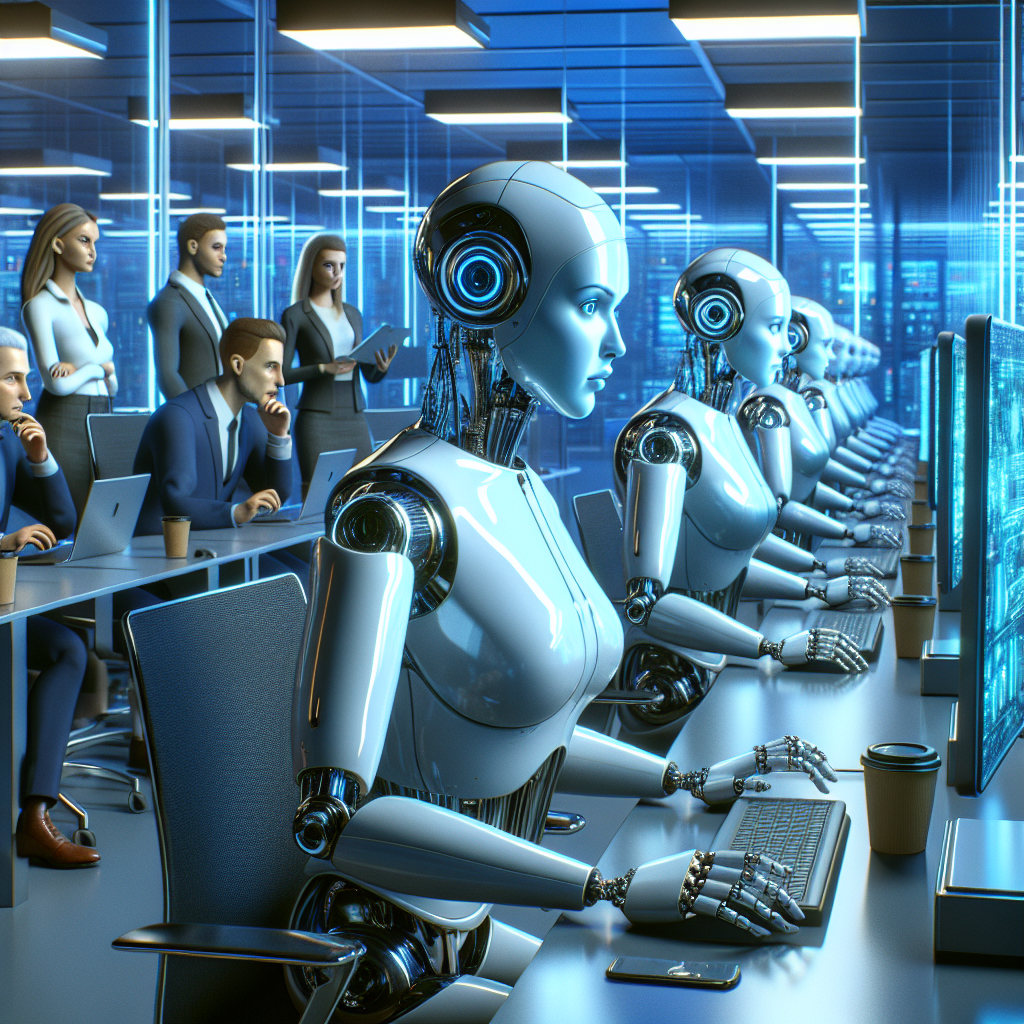
Ed Zitron Critiques Big Tech’s AI Obsession and Human Cost
The Shifting Narrative: From Innovation to Exploitation
In a recent op-ed that has ignited conversations across the tech industry, journalist and media analyst Ed Zitron delivers a stark critique of Big Tech’s relentless obsession with artificial intelligence. Far from basking in admiration for the rapid evolution of generative AI, Zitron sheds light on the darker undercurrents driving this race. According to him, the AI boom isn’t primarily about technological progress—it’s about cutting labor costs, increasing shareholder value, and replacing human creativity with machine-generated output.
Zitron argues that the tech industry has been aggressively pursuing automation not for the benefit of humanity but for the benefit of their bottom lines. This AI gold rush, according to Zitron, reflects a corporate ethos where value is no longer derived from people—but rather from the cost savings of not having to pay them.
The Human Displacement Engine: Profit Over People
At the heart of Zitron’s critique is a troubling premise: Tech companies are increasingly viewing humans as inefficient, expensive, and expendable. Instead of building tools to enhance human potential, major platforms and AI companies are focusing on replacing people altogether.
- Writers are being replaced with AI content generators, minimizing the need for staff and freelance creators in media companies.
- Artists are fighting an uphill battle against generative image platforms that scrape the internet — often without consent — to produce derivative artwork.
- Customer service workers are seeing their jobs outsourced to AI chatbots, marketed as cost-effective and efficient replacements.
Not only does this trend diminish the value of human labor, it also sets a dangerous precedent: human uniqueness is perceived not as a feature worth preserving, but as a cost to be engineered out of existence.
The Illusion of Innovation
Zitron challenges the narrative that artificial intelligence, particularly large language models like ChatGPT, represents a revolutionary leap forward comparable to the internet or smartphones. He suggests this momentum is more illusion than substance—a product of hype, marketing buzz, and a willingness to believe that machines can be creative entities.
In reality, much of today’s AI “innovation” is repackaged automation. While ChatGPT and similar tools can produce content that resembles human language or art, they do so by drawing upon vast troves of existing data generated by humans. There is no consciousness, no creativity, and no understanding—only patterns and probability.
By marketing AI as magical thinking machines, tech companies are manipulating both consumers and investors. The goal, according to Zitron, isn’t to push the boundaries of knowledge or utility, but to create products that appear valuable enough to justify slashing headcount and consolidating control.
Capitalism Glitch: The Forgotten Role of Humans
At its core, Zitron’s essay is a statement about the failure of modern capitalism—specifically the way Big Tech has warped it to function as a system where value is no longer tied to people. In this vision, workers are inconvenient, slow, and politically dangerous. Machines are obedient, scalable, and apolitical.
What tech firms have forgotten, Zitron argues, is the irreplaceable role of human insight, creativity, and empathy—especially in the industries AI is most often deployed.
Whether it’s journalism, healthcare, or customer support, the removal of human judgment and interaction has real consequences:
- Poorer quality services lacking the nuance of human understanding
- Mass unemployment in sectors that previously relied on creative or interpersonal skills
- A growing disconnection between companies and their user bases
Rather than solving problems, AI threatens to deepen social and economic divides, benefiting the few at the cost of the many.
The False Promise of a Post-Work Future
One of the most seductive narratives around AI is the idea that it will liberate humanity from mundane tasks and usher in a post-work utopia. Zitron sees this as a dangerous myth—a convenient talking point wielded by tech executives to justify eliminating jobs.
In practice, AI is not liberating anyone. Instead, it’s enriching shareholders by devaluing labor and leaving thousands of people without livelihoods, often with no meaningful alternative or retraining in place.
Rather than treating work as an opportunity for individuals to thrive, Big Tech is treating employment as a problem to be solved. In many ways, AI has become the metaphorical wrench thrown into the gears of the very economic machine that depends on people being workers and consumers.
Public Sentiment Turns Sour
Ironically, as the tech elite race to automate society, average people are becoming increasingly skeptical of both Big Tech and its AI ambitions. There are growing calls from labor unions, artists, educators, and even politicians to slow down this AI boom before permanent damage is done.
Zitron’s voice is just one among a rising chorus demanding accountability:
- Calls to regulate AI development and transparency in training data
- Demands for legal protections for workers displaced by AI tools
- Increased scrutiny toward hype-driven tech announcements from companies like OpenAI, Meta, and Google
What’s emerging is not just a technical critique, but a moral and societal reckoning. For years, Silicon Valley championed the ethos of “move fast and break things.” Now, the things being broken are society’s safety nets, creative careers, and trust in technology itself.
Reclaiming Humanity in a Machine-Led World
Zitron’s piece ultimately offers a call to action—not just to scrutinize what Big Tech is building, but to ask at what cost it’s being built. We live in an era where technological capacity often eclipses ethical consideration. But as AI begins to fundamentally reshape work, media, relationships, and value itself, it has never been more critical to prioritize the human in “human progress.”
Zitron challenges us to rethink the future we want: one where machines work for us, or one where we are forced to work for the machines.
Conclusion: The AI Reckoning Is Here
AI isn’t going away—but neither should the people it threatens to replace. Ed Zitron’s critique is both timely and urgent, shining a light on the motives behind the AI arms race and its real-world consequences. As consumers, creators, and citizens, we are at a crossroads. The choices we make today will determine whether AI becomes a tool of empowerment—or a weapon of exploitation.
It’s no longer about what artificial intelligence can do—it’s about what we are willing to let it do, and who gets to decide.