
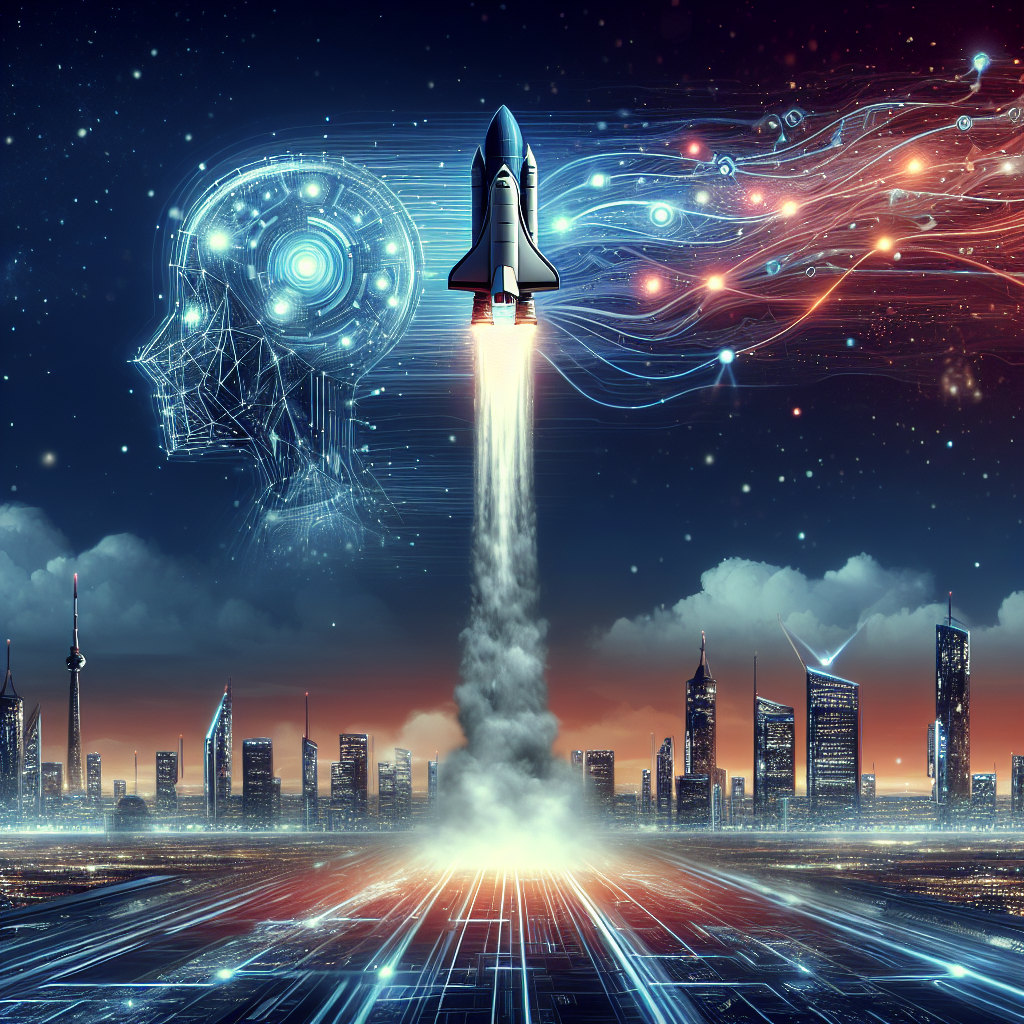
Elon Musk Merges SpaceX and xAI: What It Means
A Bold Move from the Tech World’s Visionary
Elon Musk is no stranger to headline-making innovation, but his latest move has taken even the most seasoned industry observers by surprise. In early February 2026, Musk announced the merger of two of his most influential ventures: SpaceX, his pioneering space exploration company, and xAI, his artificial intelligence startup. This unprecedented decision brings together the realms of space and AI in a way that signals not just business integration, but a strategic transformation of his long-term vision.
The big question many are asking: Why? And more importantly, what does this mean for the future of space exploration, artificial intelligence, and humanity itself?
The Motivation Behind the Merger
This merger may seem like an unlikely pairing at first glance, but it sheds light on one of Musk’s most consistent themes: creating synergy between technologies to accelerate human progress. According to Musk, the combination of xAI’s advanced artificial intelligence capabilities with SpaceX’s mission to colonize Mars is more of a necessity than a choice.
The key motivations behind the merger include:
- Enhancing autonomous decision-making in space missions
- Boosting AI safety through real-world deployment in complex environments
- Forming a cohesive ecosystem for technological development that aligns with Musk’s multi-planetary vision
The integration is not just about operations — it’s about ideology. Musk has repeatedly warned of the potential existential risks posed by uncontrolled AI. Marrying AI with a mission that he sees as critical to the survival of the human race brings more hands-on oversight and aligns both projects with his long-term vision.
How This Changes the Future of Space Exploration
SpaceX has been a driving force in the commercial space race, having achieved milestones such as reusable rockets, the all-civilian Inspiration4 mission, and the Starship development program. However, there’s always been an Achilles’ heel: the vastness and unpredictability of space make manned missions vulnerable and expensive.
By integrating xAI’s accelerating capabilities in machine learning and autonomous systems into SpaceX, Musk addresses a key pain point. Here are some potential applications:
- Smarter Robots on Mars: AI can facilitate real-time problem-solving without waiting for directions from Earth, crucial for Mars rovers and outpost maintenance.
- AI-Copiloted Starships: Future missions might feature autonomous craft capable of analyzing environmental data, making course corrections, and ensuring safety all without constant Earth-based input.
- Optimized Launch Schedules and Payload Management: xAI algorithms could analyze launch windows, fuel efficiency, and payload integration to reduce costs and improve turnaround times.
Essentially, the merger enhances SpaceX’s ability to minimize human error, reduce costs, and increase the survivability of interplanetary missions.
AI in the Harshest Environment: Space
Trialing artificial intelligence in outer space isn’t just a cool concept — it’s actually a critical testing ground. Space offers a highly unpredictable environment, where AI models can be stress-tested like nowhere else. Whether navigating electronic interference or zero-gravity emergencies, deploying AI in such conditions pushes the boundaries of what these technologies can handle.
Musk believes that truly reliable AI has to be adaptable enough to operate even in a Martian dust storm.
This puts xAI in a unique position within the global AI race. While rivals like OpenAI, Anthropic, and Google DeepMind perfect AI tools in virtual environments, xAI now gains real-world training that could make its technology significantly more robust.
What Does This Mean for the Broader AI Industry?
With this merger, Musk’s xAI is no longer just another AI company — it is now the only one embedded in hands-on, high-stakes, real-world applications. This creates major ripple effects across the artificial intelligence sector:
- A new benchmark for useful AI: While competitors develop virtual assistants and creative tools, xAI focuses on AI that operates under extreme conditions and contributes to mission-critical decision-making.
- Pressure on regulators: Governments may now need to revisit rules on AI deployment in aerospace and defense sectors, as this merger breaks previous boundaries.
- AI safety takes center stage: Musk has long advocated for responsible AI development. This integration allows safety protocols to be applied in real-world high-risk scenarios, providing vital data to inform future rules and standards.
Economic and Strategic Implications
From an economic perspective, this move consolidates two sectors that are both seeing explosive growth. SpaceX, already a $150+ billion company, is now positioned to capitalize on the booming AI market, estimated to reach over $1.8 trillion by 2030.
Merging these sectors gives Musk strategic leverage in multiple domains:
- Defense and Aerospace Contracts: A joint venture widens the scope for securing lucrative government collaborations focused on both AI weaponry and space infrastructure.
- Technological Sovereignty: By controlling both the transportation and intelligence layers, Musk ensures independence from other Big Tech players and rivals like China in space-AI integration.
- Increased Investor Confidence: While the move carries risks, many investors view the merger as a strategic masterstroke that brings more vertical control under one umbrella.
What Critics Are Saying
Of course, not everyone is convinced this is a wise decision. Skeptics worry that merging two massive operations could lead to management complications, diluted messaging, or even overreach. Others reference Musk’s controversial leadership style and fear that centralizing so much technological power under one individual or company sets a dangerous precedent.
Furthermore, some AI ethicists warn that using space missions to accelerate AI development may prioritize technological readiness over ethical safeguards. However, proponents counter that testing AI in controlled space environments may actually be safer than deploying it at scale among human populations prematurely.
The Final Frontier: Synergy or Speculation?
Ultimately, this merger reflects Musk’s belief that our future must be shaped by technologies that work together — not in silos. By uniting SpaceX and xAI, he is not just forming a bigger company; he’s laying the groundwork for a self-sustaining, intelligent human presence beyond Earth.
The implications are vast: from autonomous planetary habitats to self-governing AI-led spacecraft, the fusion of space and artificial intelligence could be the key to unlocking the next phase of human evolution.
In a world racing toward machine intelligence and interstellar ambition, Musk’s move may not just be smart — it may be inevitable.
Stay tuned
If you’re following the future of AI, space travel, or Musk’s ever-expanding empire, the merger of SpaceX and xAI is one development you won’t want to ignore. It could reshape not only how we deploy technology — but where.