
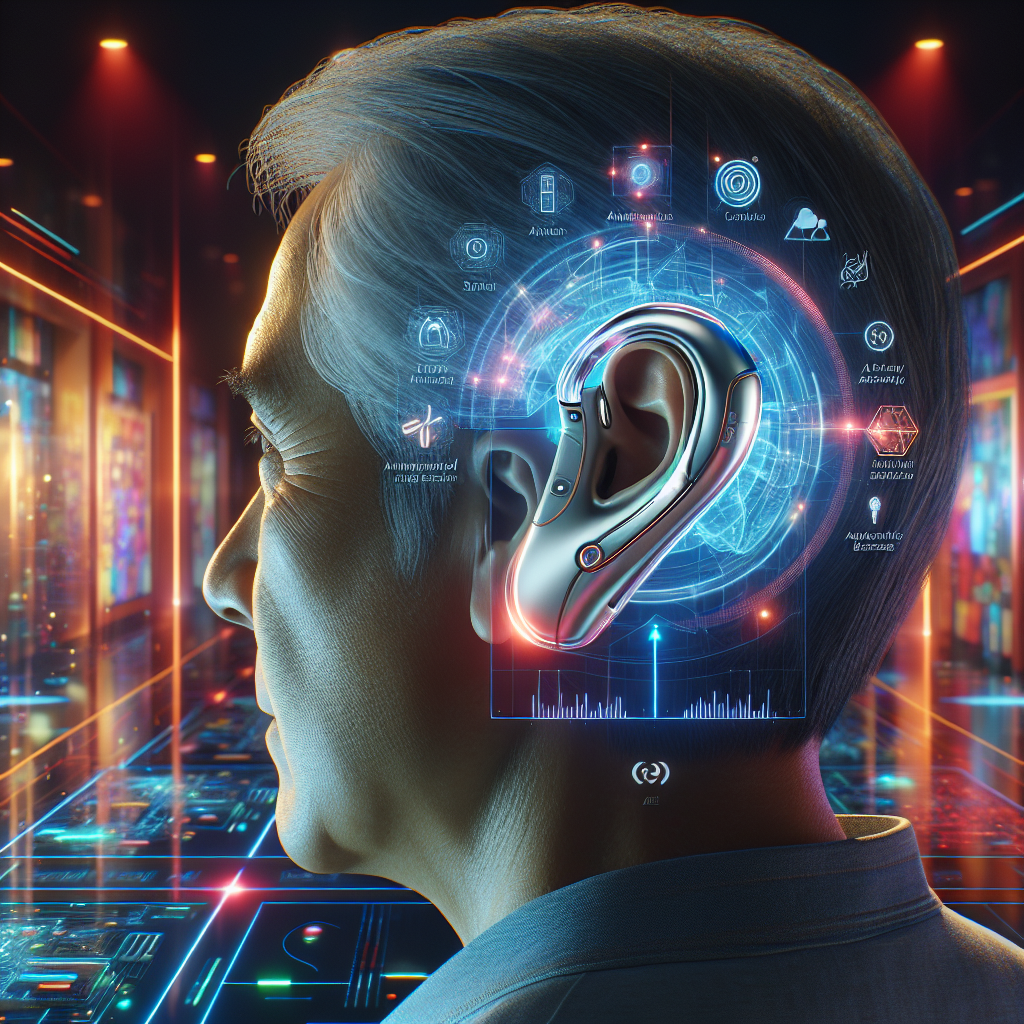
Revolutionizing Hearing with AI: The Rise of Fortell
What Happens When Cutting-Edge AI Meets Hearing Tech?
In a healthcare landscape that’s increasingly powered by artificial intelligence, one startup is turning heads — and ears — with its revolutionary approach to hearing aids. Fortell, a relatively quiet entrant into the medical device space, has quickly found itself at the center of attention thanks to a word-of-mouth surge. This startup is reimagining the hearing aid not just as a medical necessity but as a smart, AI-powered device that’s personalized, discreet, and hyper-functional.
The buzz around Fortell isn’t built on flashy ad campaigns. Instead, it’s the real-world effectiveness of their AI-enhanced hearing aid that’s turned early users into passionate evangelists.
Designed by Those Who Know the Problem Best
Fortell isn’t your typical Silicon Valley startup. The team behind the brand combines deep expertise in artificial intelligence with firsthand experience of hearing loss. CEO Rasmus Hellberg, who himself suffers from hearing impairment, co-founded Fortell with a mission to solve the daily frustrations he personally experienced with conventional hearing aids.
What sets Fortell apart? The company approached hearing tech with the assumption that what you need to hear most — human speech — should always be prioritized by the device.
AI at the Core of the Listening Experience
The defining feature of Fortell’s hearing aid is its proprietary AI model, which works similarly to the way large language models interpret speech. Instead of simply amplifying sound, Fortell’s device predicts and reconstructs speech in real-time, distinguishing it from background noise with incredible precision.
Key features driven by AI include:
- Dynamic voice enhancement: AI separates human speech from environmental noises.
- Adaptive learning: The device adjusts to users’ preferences over time.
- Real-time transcription and caption support: Users get on-screen captions via a Bluetooth-connected app.
- Edge computing for speed: Processing happens locally, ensuring low latency.
For wearers, this translates into a vastly improved experience — one that feels more like having natural hearing restored, rather than dealing with electronic amplification.
Why Fortell’s Word-of-Mouth Success Matters
The hearing aid market isn’t new, but it’s been long dominated by a few major players using traditional designs. Despite the technological potential of AI, true innovation in the hearing aid space has been slow. Enter Fortell: a nimble newcomer that’s arguably doing what tech giants haven’t—creating an affordable yet advanced product grounded in user experience and advanced machine learning.
And it’s making waves. Fortell began offering its hearing aid only to select users through a private waitlist. Yet even without a marketing push, the company found itself inundated with thousands of requests—thanks purely to word-of-mouth recommendations from early adopters.
What’s driving this organic traction?
- An intuitive, user-first experience that appeals to tech-savvy and older users alike.
- Custom AI modeling tuned to the individual’s hearing patterns and situations.
- No requirement for painful molding or expensive fittings.
- Discreet and stylish design with near-invisible form factors.
Real-Life Impact: More Than Just Better Hearing
For many users, Fortell isn’t just a useful gadget — it’s life-changing. Better hearing restores confidence, social interaction, and mental health, especially in aging populations. Studies have linked untreated hearing loss with cognitive decline, isolation, and even increased risk of dementia.
By breaking down usability barriers and improving clarity in dynamic sound environments like crowded restaurants or bustling office meetings, Fortell’s device is giving users a renewed connection to the world around them.
One early adopter described the Fortell experience as “stepping into a different auditory dimension — I didn’t realize how much I was missing until I got it back.”
Disruption in an Aging Market
Hearing aids have long struggled with poor public perception — clunky design, inconsistent performance, and social stigma. Compounding the issue, regulatory and insurance hurdles often prevent people from pursuing treatment until their hearing loss is severe.
Fortell is rewriting that playbook.
Here’s how the brand is disrupting established norms:
- User-controlled customization instead of one-size-fits-all functions.
- Over-the-counter availability that dodges costly audiologist fees.
- Tech-integrated design that resembles wireless earbuds more than medical devices.
- Mobile app syncing that allows real-time updates, transcription, and settings changes.
Targeting the Younger Hearing-Impaired Set
Where traditional hearing aid manufacturers have focused primarily on seniors, Fortell is taking a more expansive view of the potential customer base. The device is built for people who’ve grown up with tech — users who expect easy Bluetooth pairing, speech-to-text functionality, and aesthetic appeal. Even people with mild hearing challenges are finding value, thanks to the AI’s ability to personalize support in real time.
What’s Next for Fortell?
Fortell’s product is still in limited release, with waitlist access available through invitation or referral. The company is scaling cautiously, focusing on perfecting the AI while gathering feedback from its initial user base to further fine-tune its algorithms.
But demand is showing no signs of slowing.
With regulatory changes opening the door for over-the-counter hearing aid sales in the U.S., companies like Fortell are poised to capitalize on a market ripe for reinvention. According to the National Institute on Deafness and Other Communication Disorders (NIDCD), nearly 30 million Americans could benefit from hearing aids—yet less than 20% of them currently use one.
This gap represents both a challenge and an opportunity for Fortell. With the right mix of scalable AI, user trust, and product design, the company could redefine what hearing support means in a hyper-connected world.
Conclusion: Hearing the Future
What Fortell has accomplished so far is nothing short of transformative. By combining cutting-edge AI technology with a deep understanding of auditory needs, they’ve created a hearing aid product that doesn’t just assist but actually empowers its users.
As the digital health space continues to evolve, Fortell stands out as a model of tech-enabled inclusivity and user-centered innovation. With word-of-mouth demand already booming, the startup’s AI-powered hearing aid may soon become the industry standard — not just for restored hearing but for reimagined living.
If you’re ready to hear the future, Fortell might just be the sound of things to come.