
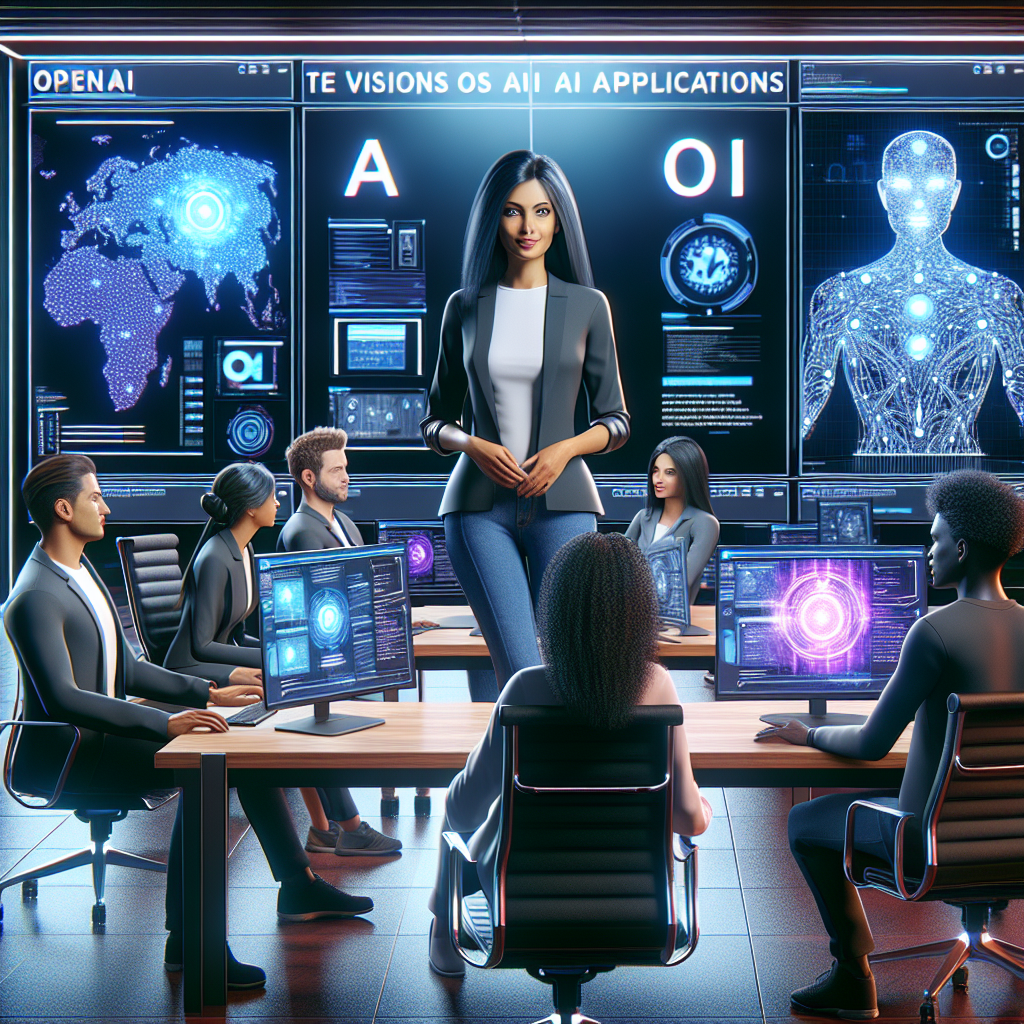
Fidji Simo Unveils Vision as OpenAI Applications CEO
A New Chapter at OpenAI Begins
As of August, Fidji Simo will formally step into her new role as CEO of OpenAI’s Applications Division, a pivotal moment not only for the company but also for the broader artificial intelligence industry. Known for her previous work as the CEO of Instacart and product leadership at Facebook, Simo brings a bold, user-centric approach to how AI applications can evolve and permeate everyday life.
Her appointment marks a strategic shift in OpenAI’s focus towards making its technology more accessible, practical, and integrated within consumer and business workflows. As AI becomes ever more embedded in modern life, Simo aims to oversee a transformation in how human-centric AI applications are built, deployed, and improved.
Bridging the Gap Between Research and Real-World Use
OpenAI, famed for ground-breaking innovations like ChatGPT and DALL·E, has mostly been known for its research-heavy direction. Simo’s arrival signifies an increased focus on turning these technologies into scalable software products.
“The goal is to make OpenAI’s applications indispensable in people’s personal and professional lives,” Simo stated in a recent announcement. Her vision rests on building cutting-edge AI applications that focus on usability, trust, and long-term value creation.
Key Pillars of Fidji Simo’s Vision
During her inaugural announcement, Simo laid out her foundational strategies for expanding the reach and impact of OpenAI applications. These include:
- User-Centric Design: A renewed focus on intuitive, frictionless interfaces to make AI tools easy to adopt and use.
- AI with Purpose: Building applications that solve real user problems in areas like education, productivity, creativity, and communication.
- Ethical Integration: Ensuring responsible AI development with built-in compliance mechanisms and transparent data usage.
- Customization and Control: Giving users greater flexibility to shape AI tools to their specific needs and preferences.
Simo’s approach echoes her consumer tech background, emphasizing interface simplification and personalized experiences. This shift towards mass applicability could pave the way for OpenAI’s tools to become as common as Google’s Search or Microsoft’s Office Suite.
Transforming ChatGPT into a Daily Utility
One of Simo’s immediate goals is to deepen the relevance and usage of ChatGPT, OpenAI’s flagship product.
While ChatGPT already commands a strong user base of over 100 million weekly active users, Simo emphasized turning it into a “daily utility, not just a curiosity.”
She noted that most users today explore ChatGPT out of novelty, but there’s enormous untapped value in integrating the tool more seamlessly into their routines. In her vision:
- Students use ChatGPT as a study partner and course assistant.
- Professionals rely on the AI for drafting emails, writing code, and generating reports.
- Creative users leverage the assistant for storyboarding, editing, and content ideation.
She highlighted the importance of fine-tuning ChatGPT for specific tasks and industries, thereby increasing its utility and stickiness across demographics.
Push into Business Productivity Tools
Simo aims to take OpenAI’s offerings deeper into the enterprise world. While Microsoft integration through tools like Copilot has opened many doors, Simo’s focus is on crafting native OpenAI applications dedicated to productivity, collaboration, and decision-making.
OpenAI may soon launch an AI-native productivity suite that can compete with existing software by offering highly personalized, responsive, and context-aware tools.
“AI should not just assist — it should anticipate your needs and act as a true collaborator,” she explained. This suggests a roadmap where OpenAI’s applications evolve from being simple assistants to becoming co-creators and decision-makers.
Unlocking Creativity with Next-Gen Tools
A notable part of Simo’s previous success has been enabling creators—from amateur social media users to professional marketers. At OpenAI, she plans to extend that philosophy by supercharging tools like DALL·E and Whisper.
Simo pointed out that beyond writing and chatting, AI holds transformative potential in visual content creation and audio transcription. Streamlining tools for:
- Graphic design and concept art generation
- Social media automation with personalized copy and imagery
- Podcast editing and video subtitling using Whisper
…are all on her radar.
She also hinted at collaborative tools for teams, where multiple stakeholders can interact with the same AI agent in real time to co-create presentations, documents, or visual assets.
Focusing on Personalization and Privacy
Simo acknowledged growing concerns around data privacy and user control in AI use cases. Her vision includes robust frameworks for data ownership, transparency, and ethical considerations.
Future releases may prioritize:
- Client-side data processing where feasible
- Clear opt-in/opt-out choices for learning and personalization
- Customizable AI personas tailored to individual user profiles
Such features are not only aligned with evolving regulatory climates in the EU and beyond but also essential for cultivating long-term user trust.
Collaboration, Not Competition
Simo made it clear that she sees OpenAI’s growing ecosystem of applications not as replacements for human ingenuity, but as enhancers and amplifiers.
“We need to empower people — not replace them. AI should expand your capabilities, not substitute them,” she emphasized.
This people-first messaging will likely be a cornerstone of OpenAI’s upcoming branding and marketing initiatives under Simo’s leadership. It’s also a clear nod to educators, artists, and professionals who fear being displaced by the very tools they’re encouraged to adopt.
Looking Ahead: A Unified Ecosystem
Perhaps the most ambitious part of Simo’s vision is creating a cohesive suite of AI applications that feel tightly integrated while remaining purpose-built for different domains.
Think of an environment where:
- ChatGPT handles written content and communication.
- DALL·E manages creative visuals and mock-ups.
- Whisper transcribes meetings and generates editable notes.
- An upcoming AI scheduler or organizer manages your time intelligently across apps.
These tools won’t just exist next to each other—but work together seamlessly to amplify daily productivity.
Conclusion: The Road Ahead for Fidji Simo and OpenAI
Fidji Simo takes the reins at a crucial juncture in OpenAI’s journey—from research dominance to mainstream adoption. Her blueprint combines technical excellence with human-oriented design philosophy, aiming to place OpenAI applications at the center of how people live and work.
As she officially starts her role in August, the tech world will be closely watching how her leadership reshapes the consumer face of artificial intelligence. If her track record is any indication, OpenAI is poised for a phase of hyper-growth, design reform, and global user empowerment.
Stay tuned — the era of human-first, AI-powered applications is just beginning.