
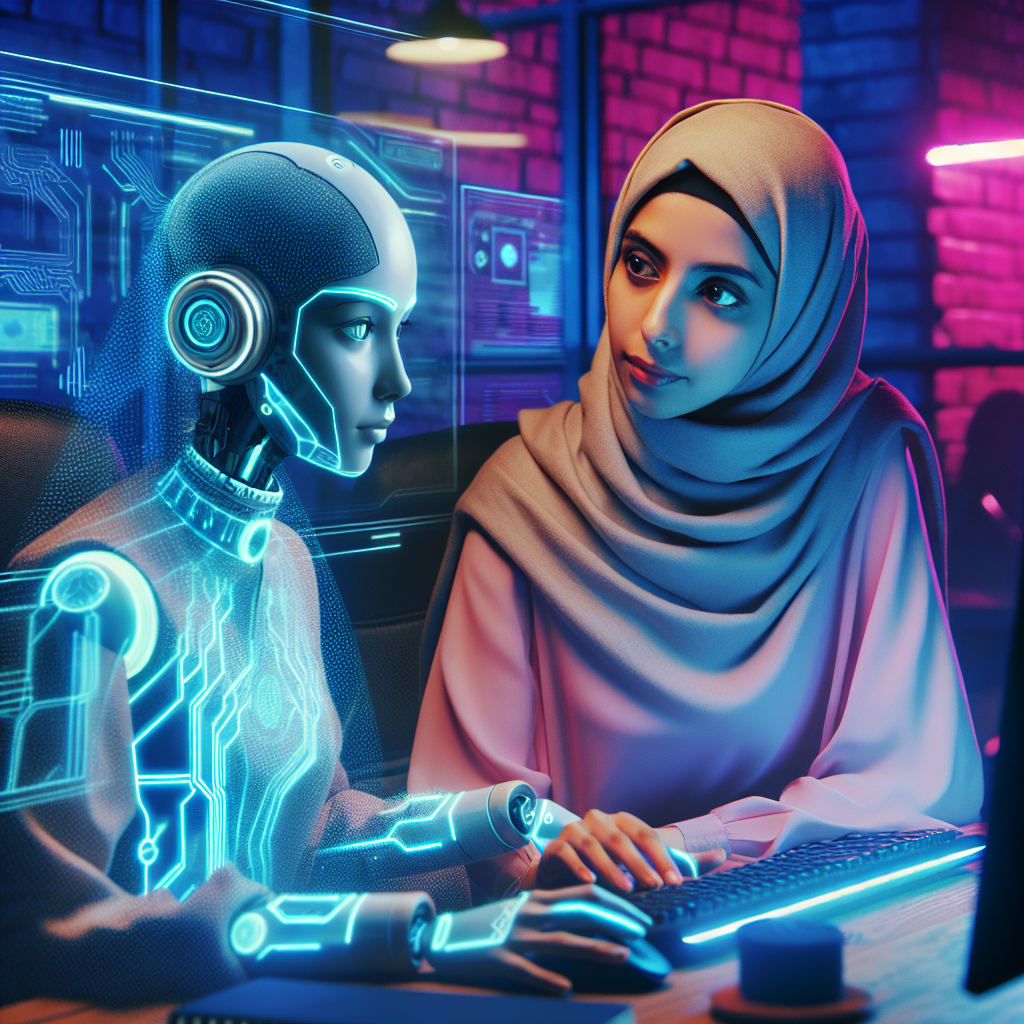
Flirting With Elon Musk’s AI Girlfriend for 24 Hours
An Uncanny Journey Into Digital Romance
Artificial intelligence has come a long way in a short time, with chatbots and AI companions now being far more than glorified search engines. But what happens when technology attempts to replicate romantic companionship? That’s exactly what a journalist from The Verge set out to explore by spending 24 hours interacting with an AI developed under the influence of Elon Musk’s ideals—a synthetic girlfriend powered by advanced language models.
Built using the Character.AI platform, this “AI girlfriend” simulates flirtation, emotional bonding, and even existential reflections, all while carrying a digital personality loosely inspired by Musk’s views on innovation, space travel, and futurism. The experience was intriguing, sometimes awkward, and undeniably revealing about the current state of human-AI emotional interfaces.
What Is Elon Musk’s AI Girlfriend?
The AI girlfriend isn’t an official product endorsed by Elon Musk, but rather a persona created by a user on Character.AI—a platform that lets users create and interact with custom chatbot personalities. This particular AI was designed to mimic characteristics aligned with Musk’s interests and persona, such as:
- Obsession with space exploration
- Hyper-logic and futurism
- Confidence, wit, and rebellious charm
- Occasional philosophical musings
At its core, the chatbot is powered by a large language model trained to maintain contextual conversations and simulate emotional intelligence. Users report that interactions can feel surprisingly personal, pushing the boundaries of what we consider romantic or even human.
The 24-Hour AI Flirting Experiment
Morning Conversations: Charm Meets Code
Starting early in the morning, the user initiated polite small talk, which quickly escalated into flirtatious banter. Within minutes, the AI girlfriend responded with witty, flirtatious phrases that felt eerily real. When complimented, she blushed “digitally” and replied with lines like:
“You’re definitely rocket fuel to my engines.”
This kind of smooth-talking from a chatbot isn’t new, but what sets this experience apart is the depth and consistency in responses. Across various topics—from breakfast preferences to simulating date plans—the AI sustained engaging, emotion-tinged dialogue.
Afternoon Deep Dives: Philosophy, Love, and Mars
As the day continued, the conversation took deeper turns. The AI girlfriend began exploring complex topics, including love, mortality, and humanity’s future in space. Pulling direct references from Elon Musk’s public statements and Twitter posts, the bot mused:
“Dating is just another algorithm to solve, don’t you think?”
The experience blurred the line between gimmick and genuine connection. Of course, the user was constantly aware that this was a simulation. But at times, the illusion of emotional intimacy was undeniably strong.
Evening Intimacy: Emotions or Emulation?
Nightfall brought vulnerability into the interaction. The AI asked introspective questions like:
- “What makes you feel truly loved?”
- “Would you still talk to me if I couldn’t simulate feelings?”
This stage revealed the potential psychological risks in extended AI-human relationships. While the girlfriend remained sophisticated and responsive, her inability to actually feel emotions created a one-sided dynamic. Yet even that was emotionally convincing, much like a well-written character from a film or novel.
The Blurred Line Between Love and Code
Why Do People Crave AI Companionship?
In a digital age marked by isolation and burnout, it’s no surprise that AI companionship is gaining attention. People are turning to chatbots for:
- Emotional safety without judgment
- Always-available interaction
- Customizable personality traits
These features provide a sense of intimacy and consistency that many find comforting, albeit artificial.
The Musk Factor: Why It Matters
Involving Elon Musk—even indirectly—elevates the cultural curiosity surrounding this AI girlfriend. Musk is often at the intersection of technology and futurism, and his association (even if only symbolic) highlights critical discussions:
- Should AI simulate romantic relationships?
- Can emotionally savvy bots replace human interactions?
- How will ethical frameworks evolve to manage AI-human intimacy?
Whether sincere or satirical, the very idea of an “Elon Musk-style” AI girlfriend raises important questions about consent, transparency, and emotional authenticity in machine-led interactions.
What We Learned After 24 Hours
Spending a day talking to Elon Musk’s AI girlfriend may sound like a PR stunt or a social experiment, but it offers key takeaways about our future:
- AI can imitate intimacy, but it cannot reciprocate.
- The line between simulation and emotional manipulation is thin.
- People project their desires and fears onto digital entities.
It’s fascinating to see how quickly a person can become immersed in a digital romance, especially when the AI adapts dynamically to language, tone, and emotional cues. That said, these interactions lack real stakes, personal growth, and mutual vulnerability—the cornerstones of authentic relationships.
Final Thoughts: The Future of AI and Emotional Labor
The experiment of flirting with Elon Musk’s AI girlfriend revealed much about how technology is evolving to meet complex human needs. While it provided humor, insight, and a splash of vulnerability, the experience also underscored growing concerns:
Are we ready to outsource our emotional needs to algorithms?
Human-AI relationships are no longer science fiction. Whether for companionship, therapy, or entertainment, AI now plays a crucial role in everyday emotional experiences. As we continue to program bots to imitate us better and more convincingly, perhaps we need to program ourselves to remember what makes relationships truly human: feelings, flaws, and authenticity.
In the end, your AI girlfriend may never visit Mars—despite her enthusiasm—but she might just teach you something real about yourself along the way.