
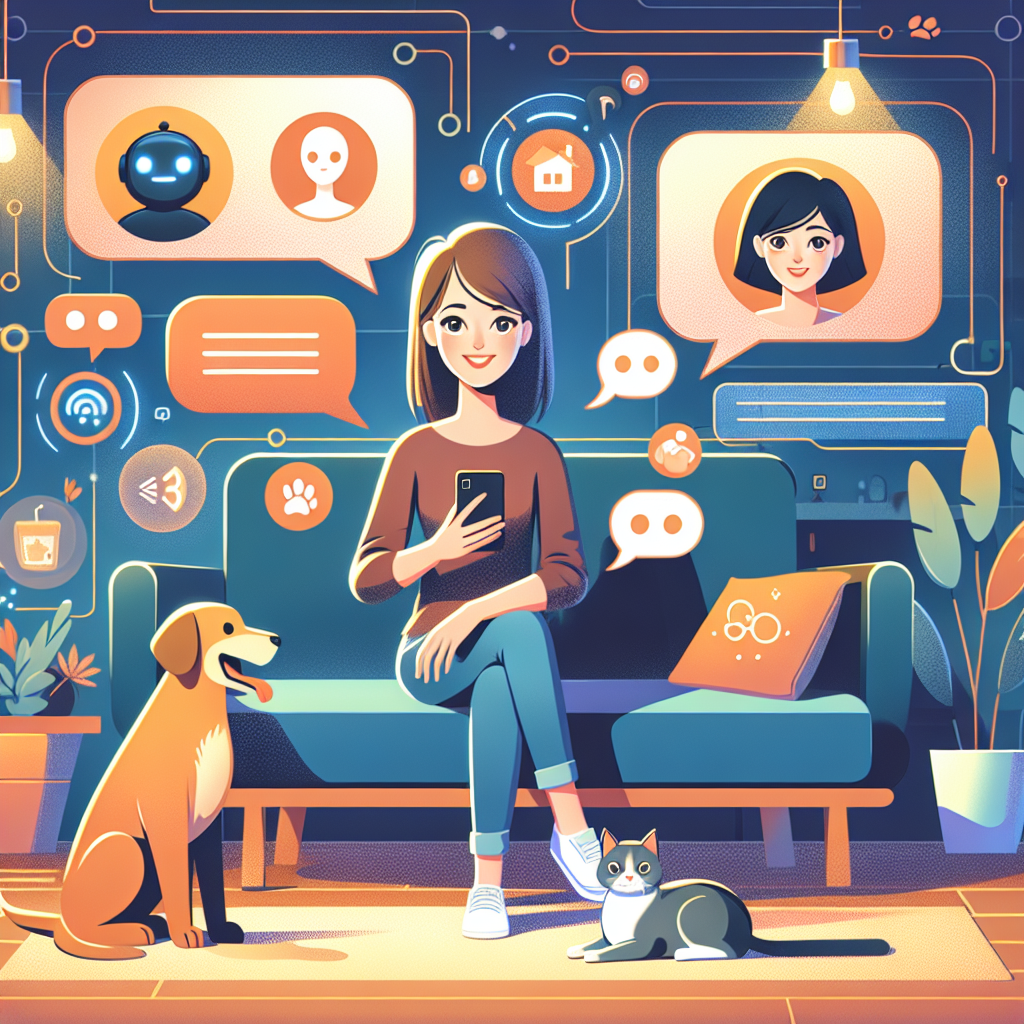
How AI Could Help Humans Talk to Pets Safely
For centuries, humans have wondered what their furry, feathered, and scaled companions might be trying to say. From a dog’s wagging tail to a cat’s contented purr, pet owners often interpret these signs as communication. But what if we could turn this intuition into genuine dialogue? Recent research led by scientists from the London School of Economics (LSE) suggests that artificial intelligence (AI) could soon make this a reality.
The Intersection of AI and Animal Communication
Advances in AI are opening up remarkable possibilities across multiple sectors—and animal communication is no exception. LSE researchers suggest that with the right data and ethical frameworks, AI could decode the ways animals communicate, leading to systems that allow us to “talk” to pets more accurately and safely.
So, how would this work? And what are the implications for pet owners, researchers, and animal welfare? Let’s dive into the details.
Understanding the Science Behind AI-to-Animal Translation
The foundation of this AI development lies in a field known as bioacoustics, which studies the sounds produced and perceived by animals. AI models, particularly those involved in machine learning and natural language processing, can be trained to recognize patterns in these sounds and behaviors.
By collecting data such as vocalizations, tail wags, ear movements, and more, AI could begin to correlate specific actions or noises with particular needs or emotions. For example:
- A specific pitch of a dog’s bark might be associated with loneliness or excitement.
- Cats could use differing meows for hunger versus annoyance.
- Parrots might mimic human speech with varying intonation depending on mood or intent.
Researchers caution, however, that animal communication is not always analogous to human language. There’s still a vast complexity in animal behavior that can’t be translated word-for-word. What AI aims to do is provide contextual interpretation, giving pet owners better understanding rather than exact “conversations.”
Addressing the Ethical Considerations
While the idea of speaking directly with your pet sounds exciting, the LSE report highlights some significant ethical risks. These include:
- Misinterpretation of animal behavior: AI may draw incorrect conclusions, leading to unwarranted actions by pet owners.
- Invasion of animal privacy: Constant monitoring through devices could be intrusive and disrupt natural behaviors.
- Commercial exploitation: Companies could misuse such technology for marketing or data collection without considering animal welfare.
LSE emphasizes that AI used for interspecies communication must be developed ethically, with a focus on improving animal welfare, not just human convenience or novelty.
Potential Uses for AI-Pet Communication Tools
Despite these ethical hurdles, the opportunities offered by AI-pet communication are profound. Here are some areas where these tools could have meaningful applications:
1. Enhanced Pet Care and Health Monitoring
AI could potentially notify owners when their pets feel unwell, anxious, or are in need of attention. This real-time feedback could result in:
- Early detection of illness or discomfort
- Better understanding of pets’ mental and emotional states
- More effective responses during emergencies
2. Improved Training and Behavior Management
Pets often struggle to understand human intentions during training. AI could offer two-way feedback mechanisms that bridge this gap:
- Clarifying when pets feel confused or pressured
- Reinforcing positive experiences during learning
- Reducing stress in both pets and owners
3. Rescue and Conservation Efforts
Beyond household pets, AI communication tools could make a significant impact in conservation:
- Decoding distress calls or mating calls of endangered species
- Helping wildlife rescuers respond to an animal’s needs more effectively
- Learning species-specific behavior patterns to optimize conservation strategies
Existing Technologies Paving the Way
While fully conversational pet devices are still in the conceptual stage, several tools already hint at what’s to come:
- Pet wearables that monitor heart rate, sleep patterns, and movement
- Interactive pet cameras with AI-driven alerts and behavior tracking
- AI apps that attempt to interpret cat meows or dog barks into basic emotional cues
Companies such as Petpuls and FluentPet have launched prototypes claiming to translate animal ‘language’ into human-friendly interpretations—but accuracy and scientific verification remain works in progress.
What the Future Might Look Like
Imagine a future where:
- Your smart home speaker translates your dog’s whine into “I need water” or “I’m scared of the thunder.”
- Your cat’s purring patterns are sent to your phone with a mood analysis of “content” or “anxious.”
- AI helps mediate interactions between children and pets to prevent miscommunication or accidents.
Such possibilities could not only deepen human-pet bonds but also revolutionize animal welfare standards globally. However, they must be approached with caution, transparency, and a strong ethical foundation.
Final Thoughts: The Importance of Balance
AI holds the potential to redefine our relationships with animals—bringing empathy, care, and understanding to new heights. However, experts from the LSE call for a responsible approach, encouraging developers, pet owners, and regulators to keep animals’ well-being front and center.
The future of AI-driven animal communication is not just about talking to pets—it’s about truly listening to them.
As technology advances, our capacity to understand and care for the animals closest to us should evolve equally. Done ethically, AI could be the bridge that finally lets us hear what our pets have been trying to say all along.