
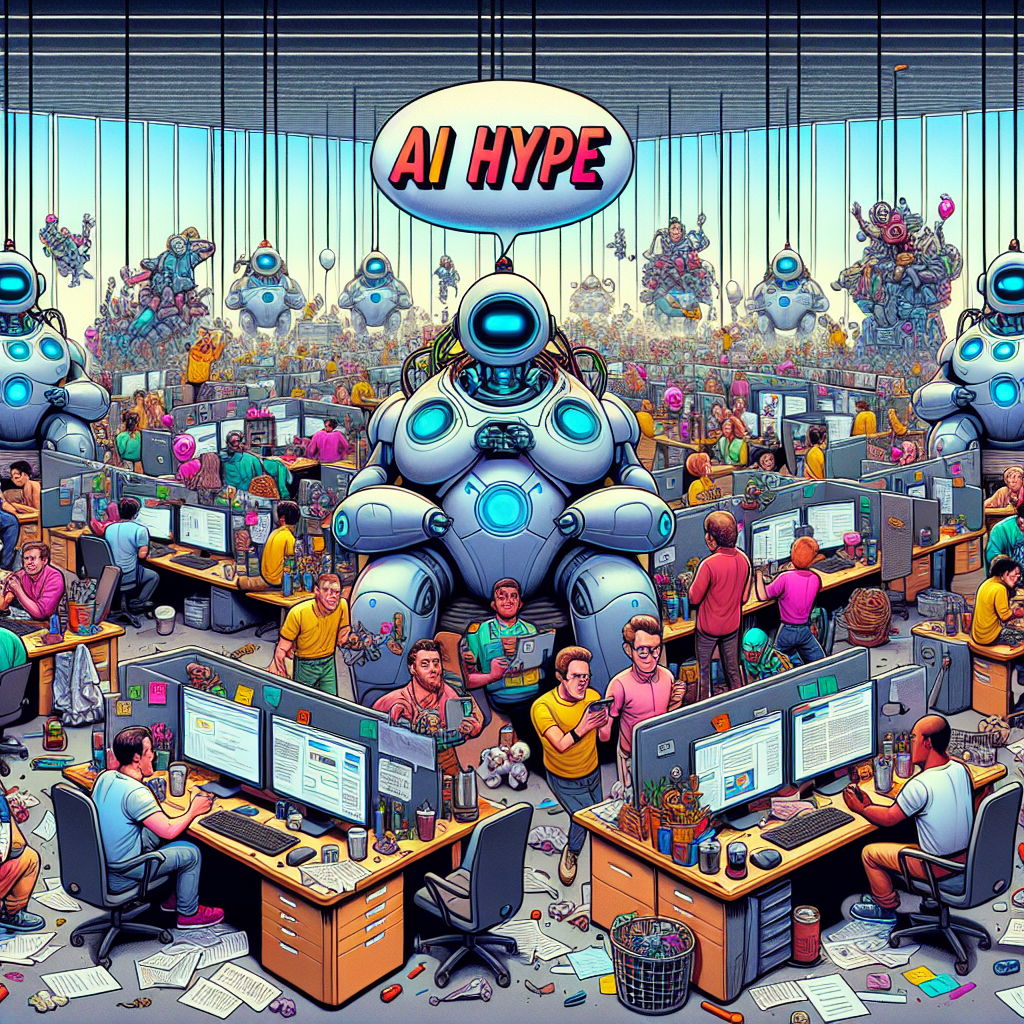
Understanding the AI Investment Boom — and the Risks of the Burst
Artificial intelligence has been celebrated as a transformative force across industries — unlocking novel technologies, automating tasks, and even altering how we perceive creativity. Over the last few years, eye-catching investments and dazzling promises have driven an AI gold rush, drawing billions of dollars into startups and large tech firms alike. But now, as signs point towards an AI investment bubble finally showing signs of popping, it’s critical to ask: how do we navigate this shift responsibly?
The Growth and Hype Behind the AI Boom
Backed by staggering valuations and high-profile launches, generative AI tools — like ChatGPT, Midjourney, and other large language models — emerged as the poster children of this revolution. Investor excitement mirrored the early dot-com era, with venture capital funds pouring money into any startup sporting the AI label.
However, many of these investments were based more on potential than actual profitability. Startups raised hundreds of millions in funding without clear business models, as companies raced to stake their market claim. But like any speculative boom, reality eventually catches up.
Early Signs That the AI Bubble Is Deflating
The beginning of 2026 has brought whispers — and beams of spotlight — spotlighting a cooling in AI investments. Hinting at a classic tech bubble, we’re now seeing:
- Downrounds and Valuation Cuts: Numerous startups have been quietly slashing valuations, unable to meet growth targets or revenue expectations.
- Reduced VC Appetite: Investors are re-evaluating portfolios and becoming more selective with their capital deployment.
- Slower Adoption Rates: Many businesses are facing challenges in integrating AI into their operations efficiently, especially with mounting regulatory scrutiny.
The once sky-high expectations are starting to encounter the hard boundaries of infrastructure costs, data privacy concerns, and ethical usage limitations — not to mention actual product performance.
Lessons From Past Tech Bubbles
The dot-com bubble of the late ‘90s offers a useful analogy. Back then, companies with no profits and little more than a domain name attracted astronomical investment. When the bubble burst, thousands of companies collapsed — but some foundational players like Amazon and Google endured and ultimately reshaped the digital economy.
The lesson? Not all is lost when a bubble pops. What remains is a more grounded, realistic field in which the true AI innovators can differentiate themselves.
Navigating the AI Crash: Responsible Strategies for Investors and Startups
As we rethink our approach in this post-hype phase, both investors and companies must evolve their strategies. Here’s how we can responsibly make it through the AI investment correction.
1. Focus on Real-World Use Cases
Forget theoretical capabilities — what matters now is value delivery. AI startups should prioritize products that solve tangible problems with measurable outcomes.
- Healthcare applications that improve diagnostics or reduce administrative burdens.
- AI-enhanced cybersecurity that detects anomalies and prevents breaches.
- Business process automation that reduces operational inefficiencies.
Emerging AI solutions that align with unavoidable business or societal needs are more likely to weather the downturn.
2. Prioritize Ethical AI and Transparency
In a maturing AI landscape, responsible development is no longer optional. Trust is paramount — and companies that ignore bias, privacy, and transparency concerns are unlikely to thrive long-term.
To navigate this shift sustainably, companies should:
- Implement explainable AI models that allow users and stakeholders to understand how decisions are made.
- Adopt open-source or hybrid models that enable greater scrutiny and collaboration.
- Maintain strong data governance policies that protect user privacy and ensure data quality.
Mozilla’s call for resilient, open technology systems is a timely reminder that today’s choices set the foundation for tomorrow’s trust.
3. Embrace Open Innovation and Collaborative Ecosystems
The AI boom was characterized by fierce proprietary competition — think massive closed-door models with billion-parameter scale. But as the returns on sheer size begin to diminish, we’re moving toward a more sustainable model:
- Community-driven innovation like Open-Source AI (e.g., Hugging Face’s transformers or Stability AI).
- Cross-industry partnerships that promote interoperability and co-creation.
- Public sector engagement for responsible AI regulation and oversight.
The golden era of AI won’t be built in isolation. It requires open standards, shared learning, and value-driven leadership.
4. Investors: Rethink Capital Allocation
In a fizzy environment, it’s easy to chase hype over fundamentals. Now, venture capitalists and institutional backers must revert to first principles. Key considerations include:
- Backing AI with clear monetization paths and evidence-based traction.
- Valuing responsible governance as much as technical sophistication.
- Diversifying across implementation verticals rather than focusing solely on foundational models.
By supporting mission-aligned, resilient startups, the investment community can shape a healthier tech ecosystem.
5. Plan for Long-term AI Integration
Beyond hype cycles, AI remains a critical enabler of future growth. Both public and private sector stakeholders must plan for AI integration as a marathon, not a sprint.
That means:
- Investing in worker reskilling and AI literacy programs.
- Building transparent policies for responsible AI use.
- Developing internal capabilities for AI deployment and risk assessment.
An AI-fueled economy will reward long-term thinking — not lightning-in-a-bottle moonshots.
What’s Next for AI Post-Bubble?
While inflated valuations may deflate, the core advancement around artificial intelligence will continue to accelerate. But the center of gravity will likely shift—from a handful of mega-corporations owning generic foundations, toward more diverse, domain-specific, and trusted systems.
Organizations like Mozilla are at the forefront of pushing for a healthier internet — one where technology serves people first. In the wake of the AI investment correction, this perspective becomes not just noble, but necessary.
Conclusion: A More Accountable Future for AI
Every tech revolution experiences cycles of over-exuberance before stabilization. While the bursting of the AI investment bubble poses short-term uncertainty, it presents a once-in-a-generation opportunity for a reset.
The way forward is clear:
- Focus on human-centric, measurable impact.
- Prioritize ethics, transparency, and collaboration.
- Resist hype in favor of ecosystems that deliver real value.
In the end, the AI bubble’s burst may finally separate real innovation from empty promises — and that’s a good thing. It clears the way for sustainable, trust-based advancement. By embracing this maturity, we can all help shape a more accountable and equitable AI future.