
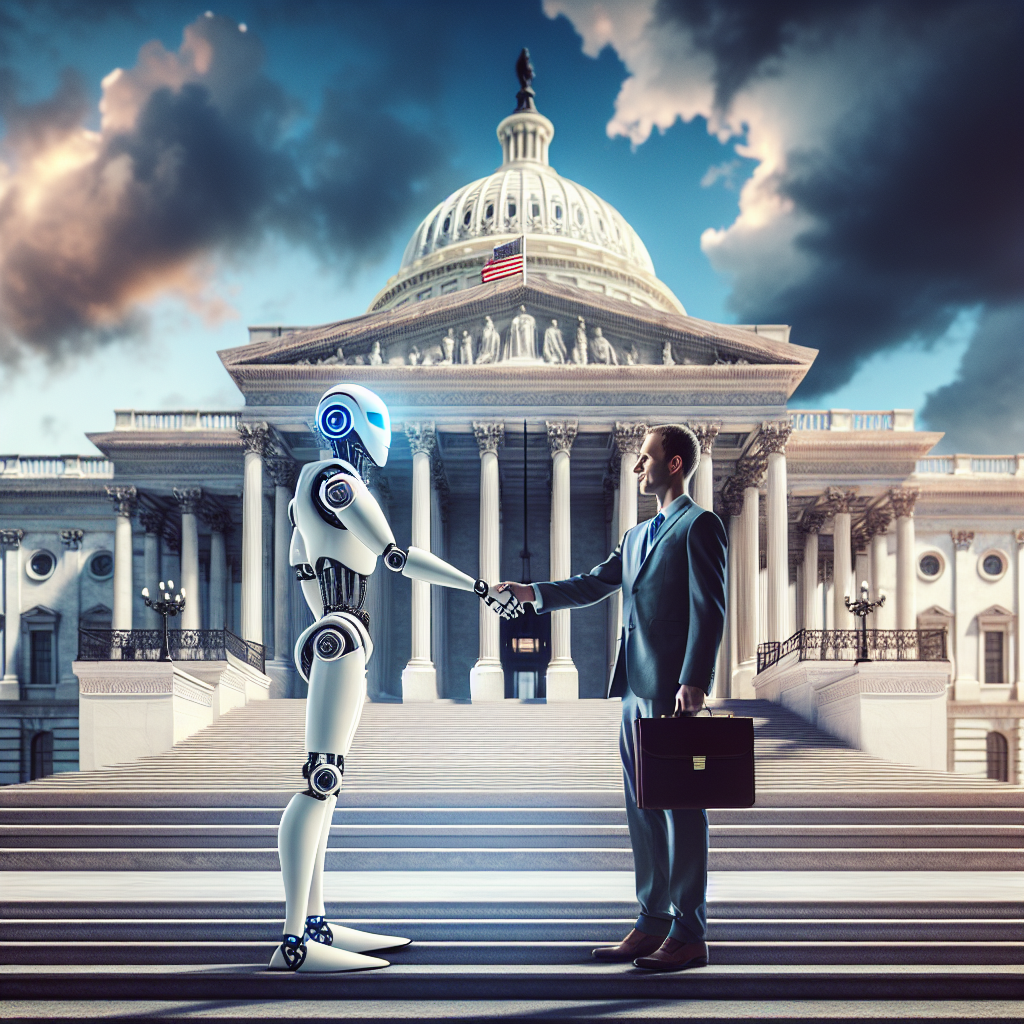
Klobuchar Opposes Trump’s AI Policy Shift to Executive Orders
Controversial AI Policy Shift Draws Strong Opposition
Senator Amy Klobuchar has pushed back vehemently against former President Donald Trump’s recent decision to redirect the path of national artificial intelligence (AI) policy using executive order powers. In a growing political debate, Klobuchar warns that the Trump-led approach risks centralizing too much control over an emerging and transformative technology — without proper legislative oversight or transparent ethical frameworks.
According to Klobuchar, this move not only undermines bipartisan efforts in Congress to regulate AI but also poses significant risks to American competitiveness, public safety, and civil liberties. Her response underscores a deepening divide over who should govern the future of AI — lawmakers or the executive branch.
Klobuchar’s Core Concerns with Executive AI Policy-Making
In a public statement and a series of opinion pieces, Klobuchar has outlined several reasons why she believes the Trump-era AI initiatives could have dangerous long-term implications. The senator from Minnesota, long known for her work in tech regulation, emphasized that the use of executive authority to bypass Congress minimizes public accountability and exacerbates the risk of short-sighted or biased implementations.
Here are the core issues she highlights:
- Lack of Congressional Approval: Klobuchar argues that bypassing Congress excludes essential bipartisan dialogue, shutting out legal and ethical concerns raised by experts.
- Insufficient Public Transparency: Executive orders on AI policy are not subjected to the same public debate as congressional bills, which can result in poorly designed regulation and oversight.
- Unchecked Expansion of AI in Surveillance: There’s concern that executive-led AI development could prioritize surveillance technologies over ethical, privacy-driven applications.
- Weakened Global Leadership: Klobuchar emphasized that turning AI into a partisan issue might damage the credibility of the U.S. at the global table when negotiating international AI standards.
AI Policy: A Technical Issue or a Political Chessboard?
The friction between Trump and Klobuchar is an example of how AI has increasingly become a political battleground rather than just a scientific or economic issue. While Trump argues that executive orders enable “fast and efficient adaptation” to tech developments, critics like Klobuchar say that speed should not come at the cost of checks and balances.
Senator Klobuchar’s position revolves around these key AI legislative principles:
- Ethical AI Deployment: Ensuring AI systems are tested for bias, harm, and fairness before public rollout.
- Data Privacy and Civil Rights: Developing robust legal protections for individuals impacted by AI decision-making.
- Labor and Workforce Protections: Preventing displacement without appropriate worker retraining programs.
What Was in Trump’s AI Executive Orders?
Although the Trump administration has not fully disclosed all the specifics of the recent slew of AI-related executive orders, some common themes have surfaced:
- Increased Federal Investment in AI: Orders have directed billions of dollars toward military-grade AI technologies and private-public partnerships.
- Private Sector Autonomy: Trump favors loosening AI development restrictions on companies to stimulate growth.
- Streamlined Government Use: New directives promote the adoption of AI across all federal agencies — with few checks on application scope.
These aggressive moves are framed as part of Trump’s “America First AI Innovation” initiative, aimed at beating China and Europe in the AI arms race. However, critics worry this could foreshadow a rollback of ethical constraints designed to prevent discriminatory or malicious use cases.
Bipartisan Fractures Begin to Show
Even within the Republican party, there’s not full alignment on using executive power to shape AI policy. Some lawmakers have expressed concerns that setting such a precedent could backfire when the presidency changes hands. Others warn that bypassing public engagement could increase resistance to AI innovations from communities feeling overlooked or exploited.
On the Democratic side, Klobuchar has found support in a growing chorus of lawmakers calling for comprehensive legislation that includes consultation from:
- Ethicists
- Tech industry leaders
- Public interest groups
- Academic researchers
The Broader Risks of an Executive-Driven AI Policy
AI is simultaneously promising and peril-ridden. From automating health diagnostics to generating synthetic media, the technology holds the power to transform nearly every aspect of daily life.
But when such change is driven unilaterally from the presidency, several dangers emerge:
- Erosion of Public Trust: People worry that AI programs, especially those used for law enforcement or public service, may be weaponized against marginalized communities.
- Tech Industry Cronyism: Executive orders could incentivize favoritism toward firms aligned politically rather than technically or ethically competent.
- Innovation Bottlenecks: Lack of proper regulation may lead to rushed deployments, causing failures that stall industry confidence.
Klobuchar has consistently emphasized the need for an “AI Constitution” — a legal framework built through open legislative processes, not rushed executive action.
Public Sentiment Aligns with Oversight
Recent polls show that the majority of Americans support congressional oversight and clear regulatory frameworks for artificial intelligence. Public opinion appears to side with Klobuchar’s cautionary stance, pushing against the perception that AI policies should be shaped solely by presidential authority.
Key Takeaways for the Future of AI Governance
As the AI debate heats up, Klobuchar’s opposition could set the stage for a more defined battle over the role of government in technology stewardship. Her insistence on democratic process over political expediency may resonate with a populace increasingly aware of AI’s power and pitfalls.
Key points include:
- Technology governance requires public scrutiny, not just executive decision-making.
- AI development must balance innovation with accountability.
- Partisan use of technology policy may harm U.S. leadership and global cooperation.
Conclusion: The Need for a National Tech Dialogue
Senator Klobuchar’s vocal criticism of Trump’s executive-ordered AI strategy reflects a broader call for collaborative, transparent, and ethical AI policy-making. As artificial intelligence continues to influence every sector, leaders from all parties will need to come together to ensure policy keeps pace with innovation — without sacrificing the values of democracy, privacy, and human dignity.
The fight over how AI policy should be made is far from over, but it is undeniably one of the defining political issues of our time.