
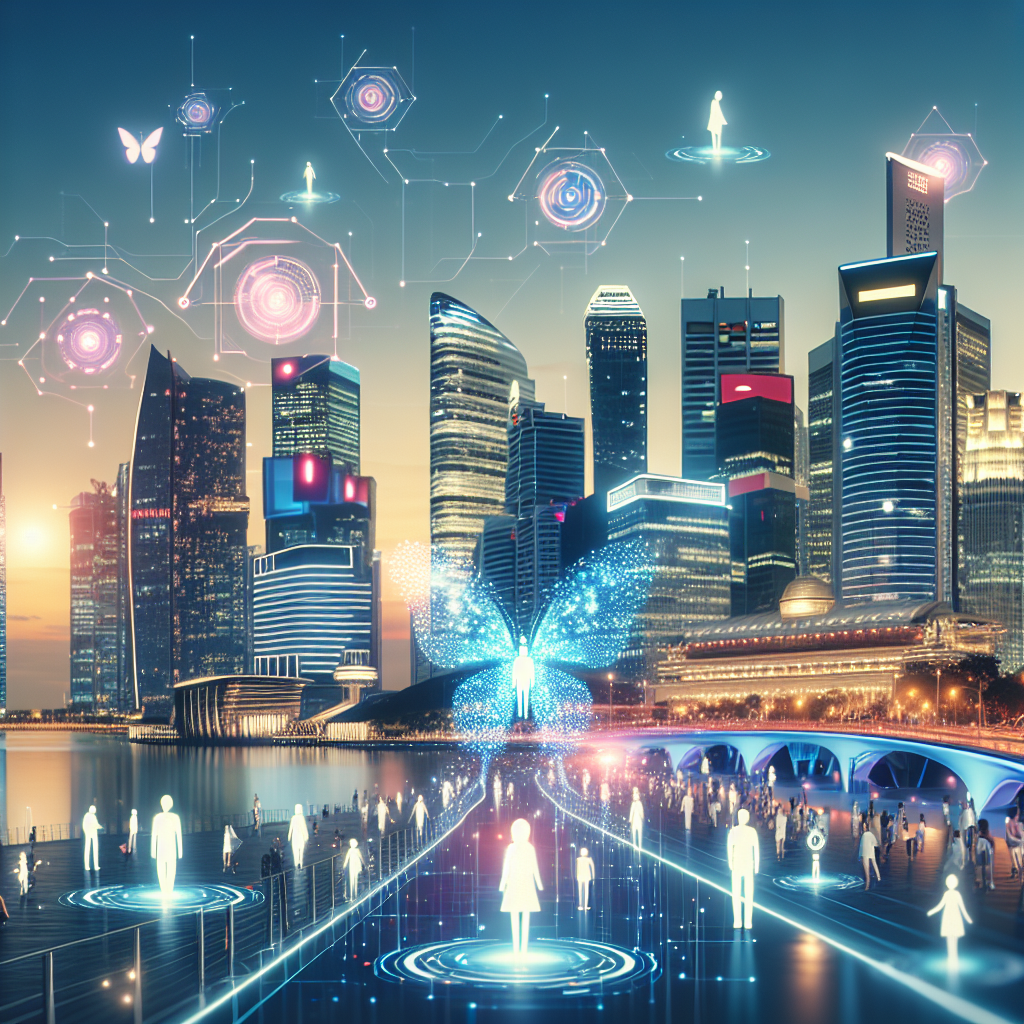
Meta’s Strategic Move Signals AI Arms Race
Meta Platforms Inc., the tech giant behind Facebook and Instagram, has announced the acquisition of Singapore-based artificial intelligence firm Manus, marking a bold and strategic step to solidify its global dominance in AI agent technology. As digital assistants and autonomous systems become increasingly central to our everyday lives, this acquisition not only enhances Meta’s portfolio but could shape the trajectory of AI development worldwide.
Who is Manus and Why Does It Matter?
Manus, a lesser-known but highly sophisticated AI company based in Singapore, specializes in the development of AI agents capable of operating independently with advanced decision-making capabilities. These agents have attracted attention for their ability to manage complex tasks with minimal human guidance, particularly in sectors such as customer service, software development, and even healthcare.
Key achievements of Manus include:
- Proprietary reinforcement learning models fine-tuned for real-world problem solving.
- Development of MonicAI, an AI assistant with multilingual support and cross-industry adaptability.
- Collaborations with government agencies and private sectors across Asia.
The acquisition is notable for its timing and strategic value. With increasing pressure from competitors like Google, OpenAI, and China-based AI entities, Meta’s move signals its commitment to AI dominance beyond social media and into core technology infrastructure.
MonicAI: The Crown Jewel of Manus
At the heart of Manus’s appeal is MonicAI, a groundbreaking AI agent platform that combines contextual awareness, memory, voice interaction, and real-time analytics to emulate human-like conversation and behavior. Unlike traditional chatbots or voice assistants, MonicAI is built to learn from its interactions, bridging the gap between scripted automation and dynamic personalization.
Features of MonicAI that attracted Meta:
- Contextual awareness: Understands not just queries but the context around them.
- Adaptive algorithms: Continuously improves by learning from each interaction.
- Multilingual capabilities: Seamlessly supports over 50 languages, expanding global usability.
This is particularly crucial as Meta continues to position itself as a leader in the evolving AI agent landscape. As tech firms race to build the most intuitive, responsive, and adaptable AI companions, MonicAI gives Meta a powerful tool to integrate across its platforms and develop new ones.
Asia’s AI Ecosystem is Rapidly Evolving
The acquisition not only underscores Meta’s ambition but also highlights the increasing role of Asia—especially Southeast Asia—in shaping the future of artificial intelligence. Manus represents a new wave of AI talent and innovation coming from outside the traditional powerhouses of Silicon Valley and Beijing.
Why Southeast Asia is becoming a key AI battleground:
- Growing tech infrastructure: Governments across the region are investing heavily in digital capabilities.
- Rich talent pool: Educational and research institutions are churning out highly skilled engineers and scientists.
- Multilingual and multicultural advantage: A natural testing ground for truly global AI products.
Meta’s decision to tap into Asia’s AI ecosystem via Manus indicates recognition of the global talent shift in AI. This move also signals that the next generation of AI solutions might emerge from hubs that were previously considered secondary markets.
Implications for Meta’s AI Roadmap
Meta has been investing aggressively in AI, with initiatives ranging from the development of AI-driven content moderation on Facebook, to enhancing Instagram’s recommendation engine, and integrating large language models across its products. With Manus and MonicAI now in its arsenal, these strategies will likely accelerate.
How this acquisition fits into Meta’s broader AI strategy:
- Boosting LLM integration: MonicAI’s adaptive learning can empower Meta’s large language models with real-time contextual data.
- Creating smarter virtual environments: Seamless AI agents can amplify user experiences in the metaverse and on VR platforms like Meta Quest.
- Next-gen customer interaction tools: Businesses using WhatsApp or Facebook Messenger could soon deploy intelligent agents powered by MonicAI.
According to insiders, Meta is also exploring integrating MonicAI into its Reality Labs division, potentially creating AI-driven avatars that assist users in immersive digital environments.
The “Butterfly” Effect: What’s Happening in China
Another critical layer to the story involves China’s growing influence in AI. While Meta’s move is largely focused on expanding its technological assets, analysts believe it’s also defensive—meant to counteract the growing influence of firms like Baidu, Tencent, and startups backed by Beijing.
China’s recent AI developments include:
- State-sponsored LLM initiatives to rival ChatGPT.
- Government directives supporting AI in manufacturing, surveillance, and communication tools.
- Strategic acquisitions and global partnerships aiming to export Chinese AI solutions worldwide.
Given this context, Meta’s acquisition of Manus may be viewed as not just a tech acquisition, but a geopolitical move in the increasingly tense AI arms race between West and East.
What Comes Next?
With the acquisition expected to close in early 2026, industry experts are watching closely to see how quickly and effectively Meta can integrate MonicAI into its existing ecosystem. More importantly, developers, businesses, and end users alike are eager to see how this will transform the way intelligent agents operate on global platforms.
Analysts predict the following:
- Expect Meta to begin rolling out MonicAI-powered features on Messenger and WhatsApp within the next 12 months.
- Major updates to Meta’s virtual reality platforms, including smarter NPCs and immersive user assistant tools.
- Partnerships with corporations and governments to develop domain-specific AI agents in healthcare, finance, and education.
Final Thoughts
Meta’s acquisition of Manus is more than a business deal—it’s a milestone in the evolution of artificial intelligence. As the battle for AI dominance intensifies, the integration of MonicAI into Meta’s infrastructure could redefine how AI agents work, behave, and learn in a digitally connected world.
For businesses, developers, and consumers, this means AI agents that are more proactive, localized, and capable of deeply personalized experiences. For Meta, it’s a giant leap toward reclaiming its position as a tech innovator—and setting the stage for the next evolution in human-machine interaction.
Stay tuned as the AI agent revolution unfolds—powered by Meta, enabled by Manus.