
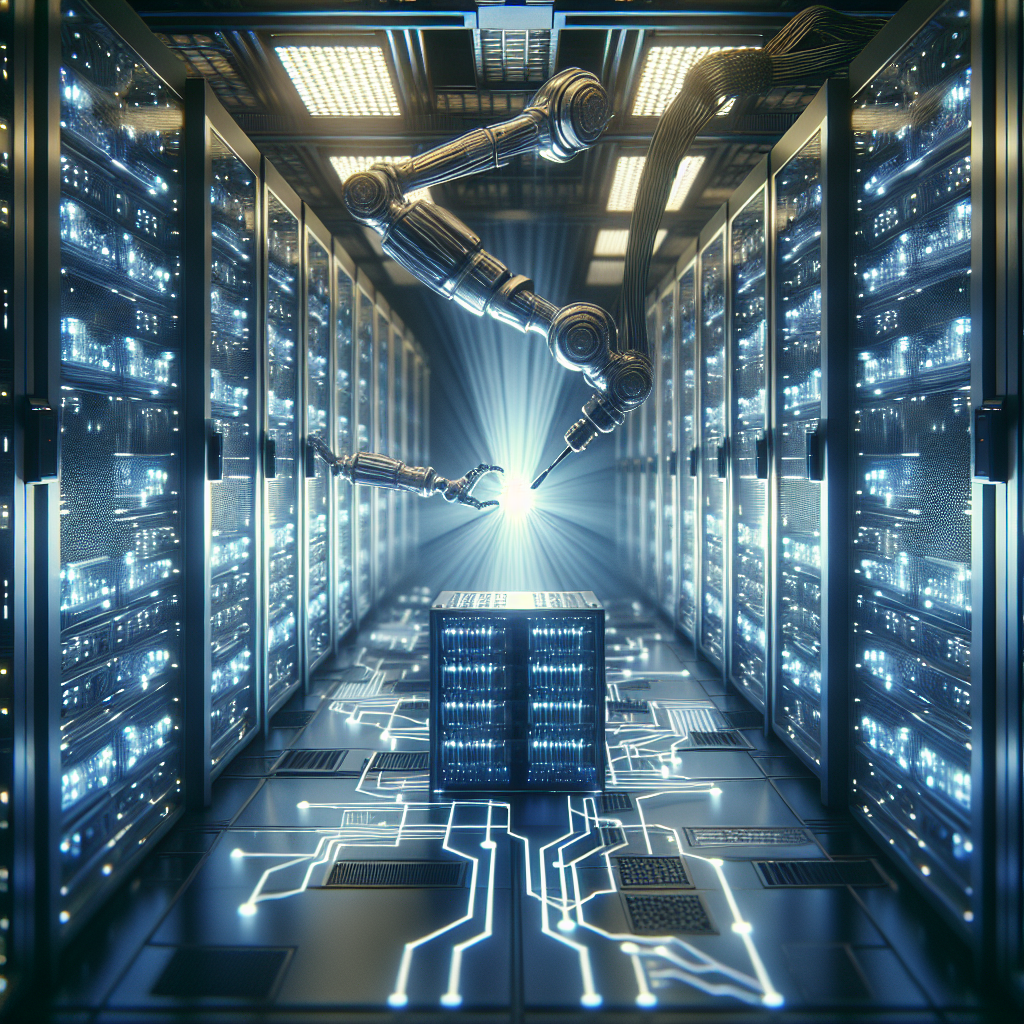
Nvidia CEO Criticizes U.S. Data Center Construction Delays
Data Center Delays Threaten AI Growth, Warns Nvidia’s Jensen Huang
Nvidia CEO Jensen Huang has raised serious concerns over the slow pace of data center construction in the United States, highlighting this as a major roadblock in the rapid expansion of artificial intelligence (AI) technologies. Speaking during a recent appearance, Huang expressed his frustration with regulatory hurdles and local infrastructure bottlenecks that are impeding data center development just as demand for AI computing reaches unprecedented levels.
“The limiting factor is the speed at which we can install data centers, not build them,” said Huang, emphasizing that while the demand for AI infrastructure is endless, physical deployment is being hampered by bureaucracy, underdeveloped power grids, and land-use restrictions.
Why Data Centers Are Crucial to AI Advancement
At the heart of today’s AI revolution lies massive compute infrastructure powered by advanced GPUs — many of them designed and produced by Nvidia. These high-performance data centers are the backbone of:
- Large language models (LLMs) like ChatGPT and Google Gemini
- AI services in cloud computing platforms from Amazon AWS, Microsoft Azure, and Google Cloud
- Enterprise-level applications across healthcare, finance, logistics, and automotive industries
As Huang noted, organizations worldwide are investing heavily in AI capabilities, but the rising demand for data center capacity must be met in order to unlock the full potential of these technologies.
“The technology is ready,” said Huang. “But it takes far too long to build the physical infrastructure needed.”
The Bottleneck: Regulation, Permits, and Power
One of the biggest blockers, Huang explained, is the regulatory and permitting environment in the U.S., which often slows down data center deployment. Building new facilities frequently involves multiple layers of government approvals, zoning board reviews, and environmental assessments — processes that can stretch over years.
Another major concern is the availability of power. AI data centers consume enormous amounts of electricity due to the intensive compute resources required to process and train AI models.
“We need access to large volumes of power, quickly and reliably,” Huang pointed out. Unfortunately, many local grids aren’t equipped to handle large-scale demand surges, and utility upgrade timelines are simply too long to keep up with technological progress.
Key Challenges Slowing Data Center Construction:
- Lengthy permit processes at municipal, state, and federal levels
- Land-use regulations that limit large-scale industrial developments
- Electric grid limitations in regions not designed for high-density computing
- Community opposition due to environmental and noise concerns
The Global Arms Race for Data Infrastructure
While the U.S. struggles with internal delays, other nations are moving swiftly to build out AI infrastructure. Countries like the United Arab Emirates, China, and Singapore are fast-tracking data center construction by providing power access, relaxing land use laws, and offering incentives for AI innovation.
“If we fall behind in infrastructure, we fall behind in AI,” Huang warned, stressing how vital this infrastructure war is to global competitiveness.
He also applauded countries that are proactively overcoming such barriers and investing in large-scale, AI-dedicated data centers in partnership with cloud hyperscalers and chipmakers like Nvidia.
The Economic Impact of AI and the Data Infrastructure That Supports It
Nvidia’s position as a leader in GPU-powered AI systems has given it unique insight into how data infrastructure drives economic growth. AI workloads are growing exponentially, and the economic output generated by AI applications is expected to reach trillions of dollars in value globally.
Yet that growth is only possible if nations maintain sufficient infrastructure capacity.
Economic Benefits from AI-Ready Data Centers:
- Job creation: roles in engineering, maintenance, and cloud operations
- AI-driven innovation: breakthroughs in drug discovery, autonomous vehicles, and more
- Improved business agility: giving enterprises faster data analysis and decision-making ability
- Boost to GDP: as AI enhances worker productivity and process efficiency
Without the data centers to power AI growth, the economic ripple effects could be dampened — a risk the U.S. can’t afford if it hopes to retain its leadership in global technology development.
Nvidia’s Investment in the Future of AI Infrastructure
Despite the challenges in the U.S., Nvidia is doubling down on investments in AI infrastructure, collaborating with cloud providers and hyperscale customers to accelerate the deployment of data center solutions worldwide. The company has also rolled out its next-generation GPUs, including the H200 and upcoming Blackwell platform, to meet soaring AI demand.
However, Huang emphasizes that next-gen chips and software alone aren’t enough. Infrastructural readiness is now the biggest barrier.
“We’re doing everything we can to deliver the technology,” Huang said. “Now we need the rest of the ecosystem to catch up, especially in physical build-outs.”
Recommendations for Policymakers and Industry
To close the gap, Huang and industry leaders are urging U.S. lawmakers to adopt a more proactive stance toward AI infrastructure. Key initiatives could include:
- Creating fast-track permitting lanes for AI data centers
- Providing federal incentives or tax breaks for high-performance computing (HPC) hubs
- Modernizing the energy grid to support power-hungry compute clusters
- Collaborating with private industry on shared buildouts and regional innovation corridors
Without intervention, Huang fears that U.S. competitiveness will decline relative to nations with more agile development frameworks. Now more than ever, public-private partnerships will be critical to ensuring the nation’s infrastructure is ready for tomorrow’s AI needs.
Conclusion: Infrastructure is the Backbone of the AI Revolution
Jensen Huang’s warnings should not be taken lightly. As the AI race accelerates, the ability to quickly, efficiently, and sustainably expand data center infrastructure will directly shape who wins in this new industrial revolution. It’s no longer just about groundbreaking chips or world-class algorithms. Physical infrastructure has now become the ultimate bottleneck — and unlock — for artificial intelligence.
For the U.S. to dominate in AI, it must first learn to build faster, smarter, and stronger.