
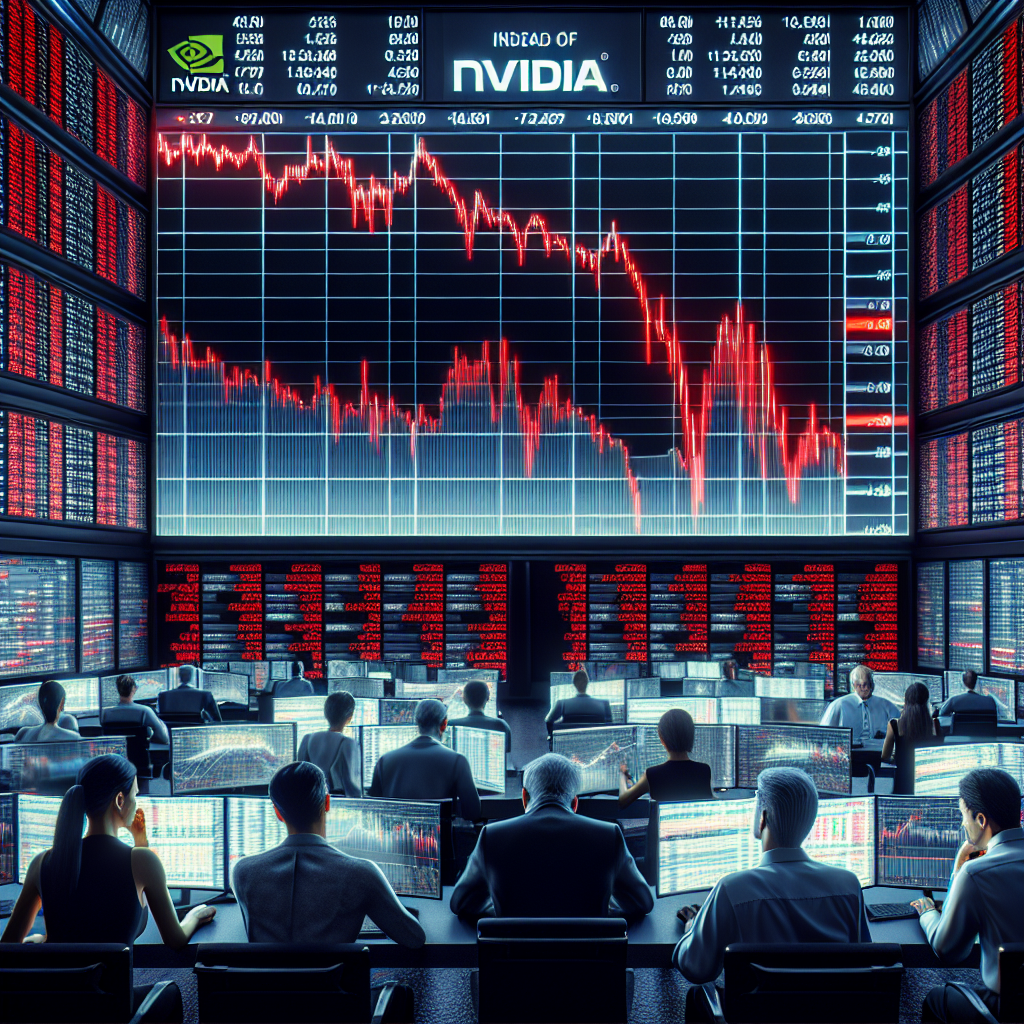
Market Sees Sharp Reversal as Tech Stocks Fall
Wall Street witnessed a dramatic shift on Thursday as a strong market rally gave way to a tech-led pullback, with Nvidia (NVDA) at the forefront of the reversal. After a string of gains across major indexes, the Dow Jones Industrial Average (DJIA), the S&P 500, and the Nasdaq Composite all slid into negative territory. This sudden downturn highlights the fragile nature of the current market sentiment amid growing worries about overvaluation in the tech sector.
Nvidia Sparks Broader Tech Selloff
Nvidia, one of the most prominent tech darlings of the year, experienced a sharp decline after a meteoric rise that pushed the company to the center of the AI-driven tech boom. The chipmaker’s shares fell by over 3% on Thursday, which had a ripple effect across the tech-heavy Nasdaq Composite, dragging it down by 0.8% by the end of the trading session.
The move lower came despite investor optimism earlier in the day, as stocks initially pointed higher on upbeat economic indicators and overall bullish sentiment. However, the market reversed course around midday, driven by profit-taking and traders reassessing risk exposure in the high-growth tech sector.
Why Nvidia’s Slump Matters
Nvidia’s correction is significant for several reasons:
- Market Cap Influence: As one of the largest U.S. companies by market capitalization, Nvidia has a major sway over the broader indexes, especially the Nasdaq and S&P 500.
- AI Sector Barometer: Nvidia has come to symbolize the market’s appetite for AI-related investments. Any weakness in Nvidia is often seen as a gauge of overall enthusiasm, or hesitation, in AI growth projections.
- Valuation Concerns: Some analysts have warned that tech valuations, Nvidia included, may be frothy. Even with strong earnings, price-to-earnings ratios for big tech players are beginning to raise red flags.
Broader Index Reaction
Alongside Nvidia’s decline, other major tech stocks followed suit. The S&P 500, which had been trading near its all-time high, closed down 0.4%, while the Nasdaq Composite fell further into red territory.
Meanwhile, the Dow Jones Industrial Average, which has been less reliant on high-growth tech shares, held up better but still ended the day down by 0.1%. The modest movement in the Dow serves as a reminder that while tech continues to drive market sentiment, other sectors remain relatively insulated from tech-led volatility.
Big Tech Pullback Highlights Fragility
Among the notable declines:
- Apple (AAPL): fell 1.1%
- Microsoft (MSFT): dropped 0.9%
- Alphabet (GOOGL): slid 1.2%
- Meta (META): ended down 1.3%
This broad pullback suggests that while tech has been leading the bull market for much of the year, the foundation of this rally may be thinner than many investors had hoped.
Economic Data Offers Mixed Signals
Adding to the market’s turbulence was a mixed set of economic data. Investors digested a batch of economic reports that painted a complicated picture:
- Initial jobless claims were slightly better than expected, totaling 221,000 for the week, beating forecasts of 235,000—suggesting ongoing strength in the labor market.
- Retail sales came in below expectations, rising just 0.1% in May, hinting at softer consumer spending—an indicator that might point to slowing momentum in the U.S. economy.
- Producer Price Index (PPI) unexpectedly fell 0.2%, suggesting inflationary pressures at the wholesale level may be easing.
Traders remain focused on the Federal Reserve’s next move, with market participants closely monitoring data for signals on the timing of the first interest rate cut. While inflation appears to be cooling off, the Fed has made it clear that a cautious approach will dictate its future decisions.
Investor Sentiment Turns Cautious
Thursday’s pullback underscores a shift in investor mood, from bullish exuberance to cautious rebalancing. After weeks of strong performance in the Nasdaq and chip stocks, the selloff reflects a realization that valuations are reaching stretched levels without fresh catalysts to fuel further gains.
Technical traders also pointed to indicators showing overbought conditions for many tech stocks, prompting a natural point for pullbacks. As the momentum wanes, institutional investors are taking profits and reallocating capital toward more defensive sectors, such as consumer staples and healthcare.
Flight to Safety on the Rise
Amid risk-off sentiment, other asset classes saw increased interest:
- U.S. Treasury yields fell slightly, indicating a move into bonds as investors sought safety.
- Gold prices ticked higher, another traditional safe haven that benefits when equity markets become volatile.
- Utilities and consumer staples sectors within the S&P 500 saw modest gains, another sign of risk-averse positioning among investors.
Looking Ahead: Is This a Temporary Blip or a Trend Reversal?
The big question on Wall Street is whether this sudden downturn is merely a short-term correction or the beginning of a broader rotational shift away from tech. While the fundamentals for many AI and semiconductor companies remain strong, market psychology can often supersede logic in the short term.
Many analysts still view the AI trend as a transformative force for the economy, suggesting any pullbacks may be attractive entry points for long-term investors. However, the days of unchecked growth in tech stocks may be tempered by increasing scrutiny on earnings and valuations.
Key Factors to Watch Moving Forward
- Federal Reserve communications: Any new statements from Fed Chair Jerome Powell or other members will be scrutinized for hints on interest rate plans.
- Corporate earnings season: Upcoming tech earnings in Q2 will need to justify high stock prices. Misses or lowered guidance could spark more selling.
- Geopolitical events: U.S.-China relations, global supply chain issues, and tech regulation will continue to play a role in market trajectory.
Conclusion
The sharp reversal in technology stocks led by Nvidia serves as a reminder that markets do not move upward in a straight line. As valuations become stretched, the volatility increases, especially in high-growth sectors. While the long-term outlook for tech, particularly AI, remains positive, investors should brace for more volatility in the short term.
The coming weeks will provide more clues about market direction, but for now, Wall Street appears to be entering a phase of consolidation after a strong rally. Keeping an eye on earnings, economic indicators, and central bank policy will be essential for navigating these uncertain waters.