
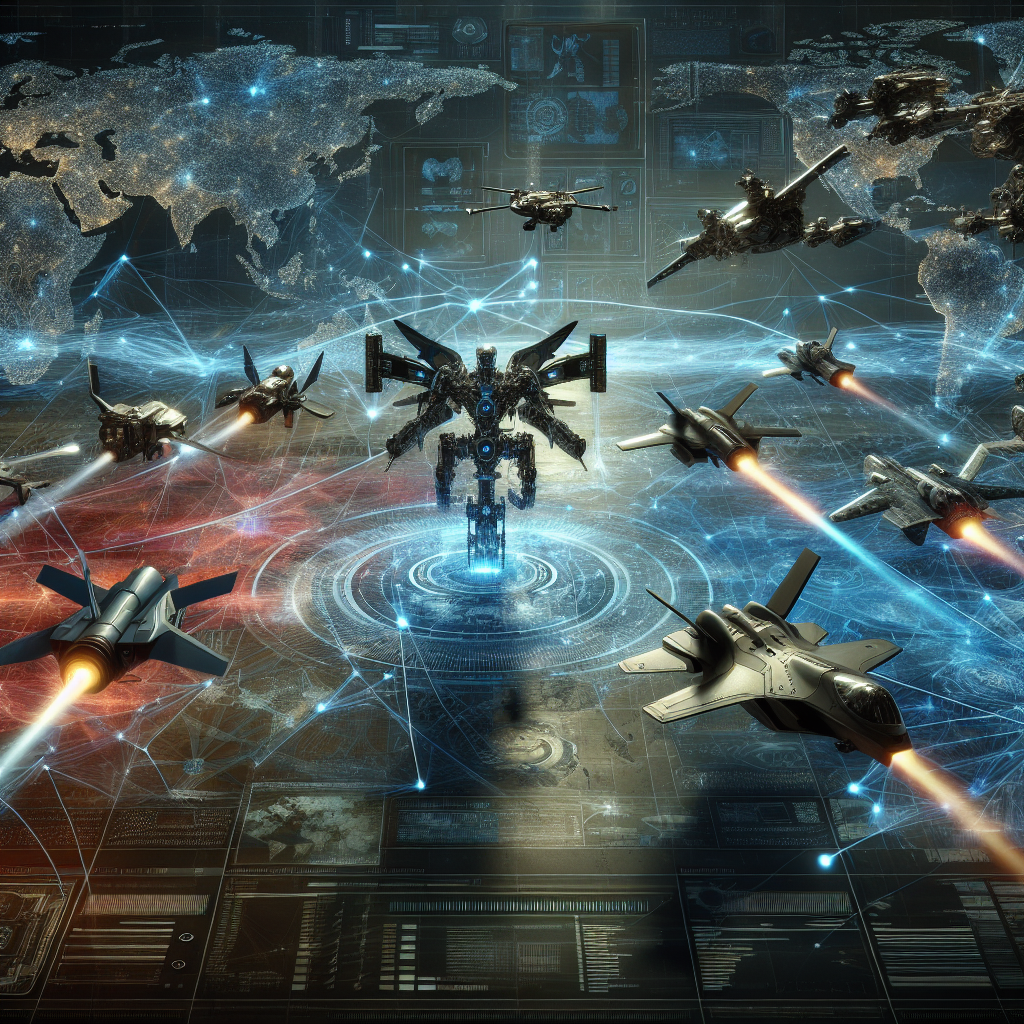
The Global Surge in A.I. Defense Technologies: An Arms Race
The rapid advancement of artificial intelligence (A.I.) is reshaping the future of warfare, creating a new battleground where nations are racing to harness these technologies for defense purposes. As the leading countries in A.I. development, the focus primarily includes the United States, China, and Russia. The implications of this global surge in A.I.-driven military strategies are monumental and necessitate an in-depth understanding of its dynamics.
The Rise of A.I. in Military Applications
Humanity has always leveraged technology to gain a military advantage, and the introduction of A.I. into defense systems marks a significant evolution. From autonomous drones to sophisticated surveillance systems, the integration of A.I. technologies has revolutionized military strategies. This shift not only enhances the capabilities of armed forces but also poses numerous challenges concerning security, ethics, and global power dynamics.
Key Drivers Behind the A.I. Arms Race
Several factors are fueling the current A.I. arms race among nations:
- Technological Superiority: The quest for technological dominance is a primary motivator. Each nation seeks to outperform others in military capabilities by leveraging A.I.-driven solutions.
- Strategic Defense Imperatives: Nations are increasingly perceiving A.I. as crucial for national security. The ability to process vast amounts of data and make rapid decisions is invaluable in modern warfare.
- Economic Incentives: Beyond military applications, the A.I. industry represents significant economic benefits, driving investments in A.I. research and development.
A.I. Military Innovations Across Leading Nations
The battle for A.I. supremacy is observed most intensely between the U.S., China, and Russia, each contributing uniquely to the development of these defense technologies.
United States: Combining Innovation with Strategy
The United States has long been a leader in military technology and is deeply invested in A.I. innovations. The nation is focusing on developing systems that offer precision, minimal human risk, and maximum operational efficiency. U.S. investments emphasize:
- Autonomous Drones: For both reconnaissance and combat missions, reducing risks to pilots.
- Cyber Defense Systems: Using A.I. to anticipate and counteract cyber threats that could compromise national security.
- Intelligence and Surveillance: Improving the accuracy and speed of threat detection through advanced data analytics.
China: The Strategic Ascendant
China’s emergence as a tech powerhouse has directed its focus toward becoming a global leader in both civilian and military A.I. applications. The Chinese military strategy encompasses:
- Swarm Technology: Development of swarm drones capable of executing complex coordinated attacks.
- AI-Enhanced Cyber Warfare: Investing in hacking capabilities with a focus on disabling infrastructure through cyber means.
- Automation in Warfare: Aiming to streamline military operations through automation and logistical efficiencies.
Russia: Innovation on a Budget
Despite facing economic constraints, Russia continues to prioritize its A.I. military capabilities:
- Robotic Warfare: Development of unmanned ground vehicles to minimize troop risk.
- AI-Driven Propaganda: Utilizing A.I. in information warfare to influence global narratives.
- Hyper-Speed Weaponry: Integration of A.I. in targeting mechanisms for high-speed weapons.
Ethical and Security Challenges
While the benefits of A.I. in military contexts are evident, they come with ethical and security challenges that need addressing:
- Decision-Making Autonomy: The potential of machines making life-or-death decisions without human intervention.
- International Arms Control: The lack of a global regulatory framework for A.I. weapons could lead to uncontrollable arms proliferation.
- Data Privacy and Cybersecurity: The threat of data breaches and malicious attacks exploiting A.I. systems.
The Future of A.I. in Defense
As the capabilities of A.I. continue to evolve, the future of military operations will likely witness a further blurring of lines between human and machine-controlled warfare. This trend necessitates international dialogue and cooperation to establish norms and regulations, ensuring that the advantages of A.I. are responsible and controlled.
Conclusion
The global surge in A.I. defense technologies highlights a complex and rapidly changing landscape. While technological advancements present unprecedented strategic opportunities, they also call for prudent management to mitigate the associated risks. International collaboration, ethical considerations, and robust regulatory frameworks will be critical to navigating this new era of A.I.-driven military capabilities responsibly. The world stands at a crossroads, and the choices made today will define the future of global security and peace.