
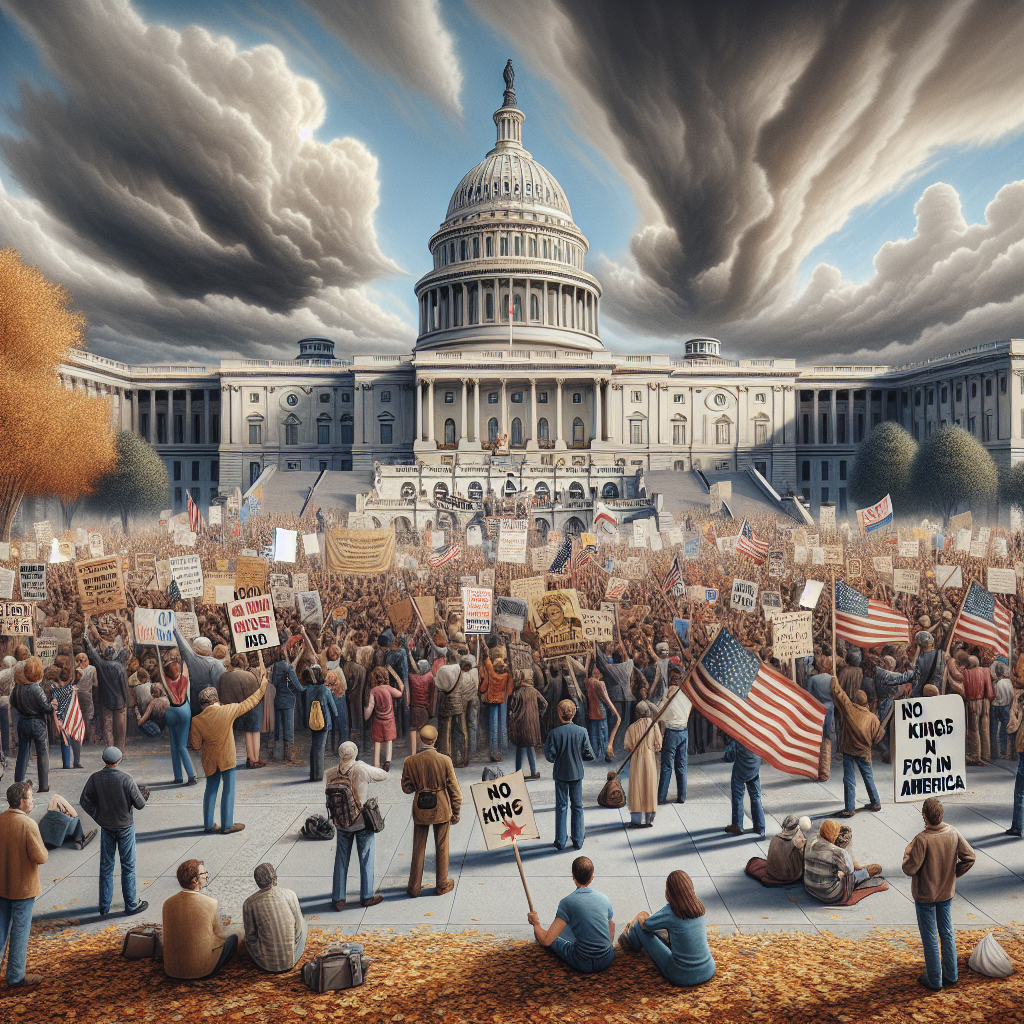
Trump Mocks ‘No Kings’ Protesters with Crown AI Videos
Protests Spark a Digital Response from Trump
Former President Donald Trump, never one to shy away from showmanship, has reignited political tensions following a wave of protests accusing him of overreaching presidential ambitions. The protests, many of which featured the slogan “No Kings in America”, have prompted Trump to fire back using the latest in AI-generated content — featuring himself adorned in elaborate, regal crowns.
As his campaign trail heats up leading into 2025, Trump has embraced this controversy, co-opting the imagery meant to criticize him and turning it into viral content across his social media platforms.
The Origin of the ‘No Kings’ Movement
The chant “No Kings” has become a popular catchphrase among groups concerned with the former president’s perceived authoritarian tendencies. Recent rallies and demonstrations have been held in key battleground states such as Pennsylvania, Georgia, and Arizona. These gatherings include:
- Peaceful marches with signs comparing Trump to monarchs of the past
- Viral protest videos featuring people wearing mock crowns and capes
- Public speeches invoking the founding principle that America rejects hereditary rule
At the heart of the protests is a growing concern among critics that Trump’s past and current political behavior suggests ambitions far beyond a democratic presidency.
Trump’s AI-Generated Response: Crowns and Comedy
Instead of dismissing the accusations, Trump has chosen to mock them — in classic Trump fashion. Joining the digital wave, he posted AI-generated videos and memes of himself wearing bejeweled royal crowns, sitting on digital thrones, and even waving aristocratically from golden carriages.
The videos, allegedly created using AI video generation platforms such as MidJourney and RunwayML, were posted to Trump’s Truth Social account and quickly circulated among his supporters.
Examples from the viral campaign include:
- A video of Trump walking through clouds with angelic music, wearing a glowing crown and robe
- A meme of Trump’s image on a dollar bill wearing a monocle and royal coat
- A parody trailer titled “King of the Constitution: The Trumpening”
While some see the content as light-hearted political trolling, others view it as a tone-deaf response to serious democratic concerns.
Supporters Applaud, Critics Alarmed
Trump’s base has largely embraced the videos, praising them as bold and humorous. Supporters claim the AI content is an effective way to own the narrative and highlight how “ridiculous” the accusations against him are.
According to one Truth Social comment with over 15,000 likes:
“If he’s the king, then call me a royalist!”
Others have amplified the content, remixing it further and spreading it on TikTok, X (formerly Twitter), and Instagram. The hashtag #TrumpKing has trended multiple times in political sub-communities.
On the flip side, critics argue the use of such imagery reinforces their message about authoritarian behavior. Political analysts and advocacy groups argue that Trump is not simply mocking the protesters — he’s actively desensitizing the public to authoritarian imagery.
Political Repercussions and Analysis
While the videos are gaining traction, they also raise serious political and ethical questions. Does mocking legitimate criticism with regal imagery reflect poor judgment — or shrewd political strategy?
Key concerns include:
- The normalization of authoritarian symbolism through satire
- Undermining of democratic institutions and protest movements
- Escalated political division as a result of meme warfare
Political scientist Dr. Emily Cartwright of the American Democracy Project commented,
“The concern isn’t whether Trump sees himself as a king, but whether his followers begin to see the system as needing one.”
Some political strategists believe the crown videos could backfire among undecided voters, especially independents wary of strongman politics. Others believe the move cleverly turns a critique into a viral badge of honor.
A New Frontier: AI in Political Messaging
This incident underscores how AI is not just transforming business and art, but also reshaping political discourse. Trump’s use of AI-generated content isn’t just satire — it’s a strategic form of political messaging.
Why AI-generated content is powerful in politics:
- Speed: Content is produced and shared within hours of breaking news
- Virality: Short, visual media is more likely to be shared across platforms
- Ambiguity: Satire provides plausible deniability while still spreading ideas
Other politicians may soon follow Trump’s lead, experimenting with AI videos that amplify campaign messages or reshape their public personas. With elections approaching, AI could be the new battleground for hearts, minds — and headlines.
The Historical Irony
Ironically, Trump’s crown imagery flies in the face of one of America’s core revolutionary values: rejection of monarchy. The founding fathers made deliberate efforts to prevent another King George-style authority, building mechanisms of checks and balances into the Constitution.
That Trump would respond to democratic critique by donning a digital crown — even jokingly — has not gone unnoticed by historians and constitutional scholars.
Professor Darrell Hamlin, American history scholar, noted:
“Whether serious or not, invoking kingship in American politics is a third rail. Even satirical references awaken centuries-old anxieties about tyranny.”
Where This Leaves the 2025 Race
Though the 2025 presidential election is still months away, incidents like this reveal the tenor of the upcoming campaigns. In a media environment driven by memes, social virality, and symbolic battles, the traditional tools of political dialogue are rapidly being replaced.
Trump continues to set the tone, leveraging controversy to keep himself in the spotlight and energize his base. Meanwhile, his critics are doubling down on turnout efforts, warning that democratic norms are at stake.
Expect to see more creative entries into this high-stakes political theater—both from Trump and his rivals.
Final Thoughts
The AI crown videos won’t end Trump’s critics, nor will they silence protesters. But they’ve sparked essential conversations about political culture, democracy, and how technology is reshaping the narrative arena.
In today’s world, where viral content can shape public opinion faster than any debate stage, the crown might have been intended as a joke — but its implications are anything but trivial.
Ultimately, America must decide: is this political entertainment — or a warning signal dressed as satire?
The crown may be digital, but the consequences could be very real.