
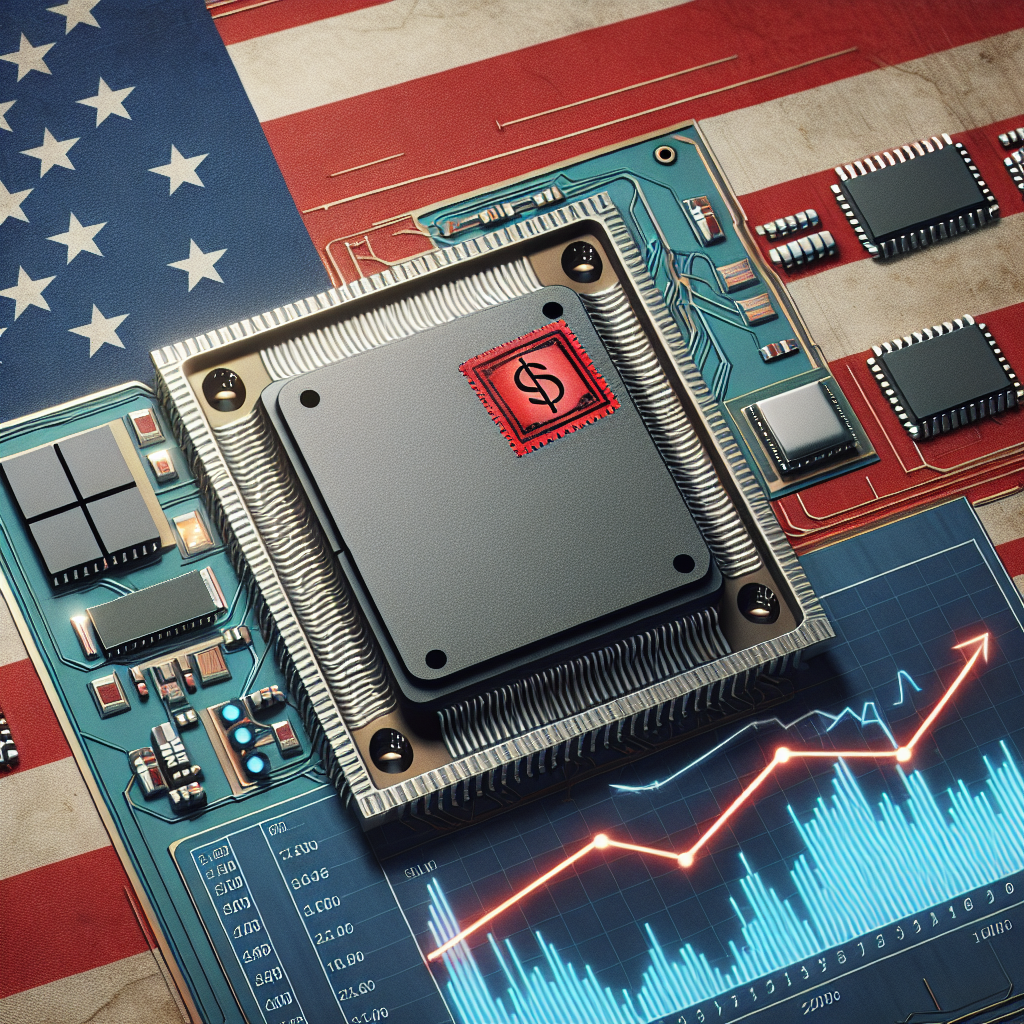
How Trump’s Proposed Tariffs Could Impact Nvidia and AMD’s Sales to China
Introduction: A New Chapter in U.S.-China Trade Tensions
The Trump administration’s announcement of new tariffs targeting the U.S. semiconductor industry has sent shockwaves through financial markets and tech companies alike. One of the most immediate and profound impacts is expected to be on two American chip giants: Nvidia and Advanced Micro Devices (AMD). These companies have long relied on China as a key market for their high-performance computing chips, and the new tariffs threaten to upend that relationship.
As geopolitical tensions escalate, these tariff proposals raise critical questions: Will U.S. chipmakers lose access to the lucrative Chinese AI market? Can they find new revenue streams elsewhere? And how will this tariff war shape the future of global semiconductor leadership?
Overview of the Proposed Tariffs
The proposed tariffs are part of a broader economic strategy aimed at restricting China’s technological advancement, particularly in artificial intelligence (AI), military applications, and surveillance technologies. Though details are still emerging, the tariffs would potentially limit or entirely block the export of high-end GPUs (graphics processing units) and other semiconductors to Chinese firms.
The products affected include:
- High-performance GPUs used in AI computation and data centers
- Advanced chipsets essential for cloud platforms
- Components used in surveillance technologies and military-grade systems
These categories directly impact Nvidia and AMD, both of which have a significant presence in the Chinese tech ecosystem.
Why Nvidia and AMD are at Risk
Heavy Dependence on the Chinese Market
China accounts for a substantial portion of both Nvidia’s and AMD’s revenue. For Nvidia, this dependency is particularly acute. According to their 2024 annual report, over 20% of its data center revenue originates from China, despite earlier regulatory constraints from the U.S. Department of Commerce restricting shipments of high-end AI chips.
AMD’s stakeholder relationship with China is slightly less aggressive but still substantial. The company has seen major growth in China due to its partnerships with large OEMs and data center providers.
- Nvidia’s A100 and H100 chips are considered vital for China’s AI ambitions
- AMD’s EPYC server processors dominate parts of China’s enterprise IT infrastructure
If the proposed tariffs go into effect, it could significantly hamper both companies’ sales projections, potentially leading to billions in lost revenue.
Product Categories Under Scrutiny
The U.S. has already imposed license requirements to restrict the export of Nvidia’s most advanced chips, including the A100 and H100, to China. AMD has similarly been affected by constraints on selling high-bandwidth AI/data center chips.
The proposed Trump tariffs aim to deepen these restrictions, potentially tightening existing regulations and requiring additional compliance layers.
Market Reactions and Industry Response
Wall Street Feels the Chill
Almost instantly after the announcement, share prices for both Nvidia and AMD dipped. Investors are increasingly concerned that intensifying trade barriers could:
- Stifle growth in emerging markets
- Lead to excessive inventory buildup due to falling Chinese demand
- Delay or cancel major strategic partnerships in the APAC region
The semiconductor industry, often viewed as a bellwether for global technology innovation, is suddenly grappling with the uncertainty of localization and regional protectionism.
Tech Titans Lobby for Flexibility
Nvidia, AMD, and other Silicon Valley players are actively lobbying the White House, hoping for carve-outs or export license waivers that would allow them to continue limited business operations in China. Industry groups like the Semiconductor Industry Association (SIA) have also voiced strong opposition to sweeping sanctions, arguing that:
- U.S. chipmakers could lose global market share to rivals in Taiwan, South Korea, and Europe
- The tariffs hurt America’s own innovation and R&D pipelines
- China could accelerate its own semiconductor independence due to increased hostilities
China’s Response and Potential Retaliation
China has not remained silent. While no formal retaliatory measures have been announced yet, Chinese officials have hinted at potential counter-sanctions and intensified support for domestic chipmakers through its “Made in China 2025” initiative.
Key areas China may target:
- Export bans on rare earth minerals critical for chip manufacturing
- Increased investment in domestic giants like Huawei, SMIC, and Alibaba’s chip divisions
- Policy-driven consumer shifts favoring local tech brands over American products
This could have long-term implications for the global semiconductor supply chain, as China accelerates efforts to reduce reliance on U.S.-based technology providers.
Broader Impact on the Global Tech Ecosystem
Supply Chain Disruptions
Even companies not based in China or the United States may find themselves affected. That’s because the semiconductor supply chain is deeply interconnected. Any disruption to a key node of that network—especially in a dominant market like China—can create a ripple effect across:
- Fabrication timelines
- Component pricing structures
- R&D cooperation between international partners
A Push Toward AI Self-Sufficiency
Both China and other nations might interpret these tariffs as a signal to invest more heavily in self-sufficiency. The past few years have already witnessed billions of dollars pouring into native chip development through public and private funding, but this new development could act as another catalyst.
For example:
- China may double down on its AI chip startups and AI accelerators
- The EU may pursue its “Chips Act” with greater urgency to avoid being caught in crossfire
- Emerging markets like India and Southeast Asia could look to fill supply gaps
What’s Next? Forecasting the Fallout
Could It Backfire on U.S. Tech Leadership?
While the intent behind the tariffs is national security, many analysts warn that excessive protectionism could undermine American leadership in the semiconductor industry. Loss of revenue, slowed innovation cycles, and alienation of international clients are all potential risks.
Opportunity for Competitors
If Nvidia and AMD are locked out of China’s tech ecosystem, companies like Taiwan’s TSMC, South Korea’s Samsung, and even European firms could step in to fill the gap. Chinese demand for high-end compute will not disappear—it will simply be rerouted.
Final Thoughts: Strategic Patience or Escalation?
The tech cold war between the United States and China is entering a critical phase. The Trump administration’s proposed tariffs are more than just an economic tool—they are a geopolitical signal.
For Nvidia and AMD, the road ahead is uncertain. Their ability to navigate regulatory constraints, diversify their customer bases, and influence trade policy will determine not just their bottom lines, but the future of U.S. dominance in the increasingly strategic semiconductor sector.
As this unfolds, all eyes will be on Washington, Beijing, and Silicon Valley. The stakes are high—and the chips are literally on the table.